

An expensive cinema camera package will never fix an undisciplined frame. Too many artists shoot on high-resolution sensors only to end up with footage that feels flat, sterile, and distinctly amateur. The truth is that high production value music videos don't stem from inflated gear lists or runaway budgets. True cinematic authority is built through deliberate lighting, tactile production design, and uncompromising visual storytelling.
You already know the frustration of watching resources evaporate on set while your musical tone fails to translate into a cohesive world on screen. It's difficult to pinpoint exactly where pre-production focus should go to deliver that unmistakable prestige look. You don't need an oversized crew to achieve visual elegance; you need a sharp, disciplined strategy. This guide breaks down the core visual techniques, pre-production workflows, and creative benchmarks that yield cinema-grade results. From framing and intentional lighting to aligning with the right boutique production team, here is how you transform raw sonic identity into commanding cinematic craft.
Key Takeaways
- Cinematic authority comes from deliberate lighting, art direction, and visual storytelling rather than excessive gear rentals.
- Discover how high production value music videos rely on disciplined color palettes and camera movement to amplify lyrical themes.
- Airtight pre-production treatments, storyboards, and skilled department heads preserve resources while elevating on-screen polish.
- True visual scale adapts across genres, translating minimalist performances and narrative epics into immersive cinematic worlds.
- Partnering with an artist-led boutique studio bridges the gap between raw musical emotion and precision film production.
What Defines High Production Value Music Videos in Modern Cinema?
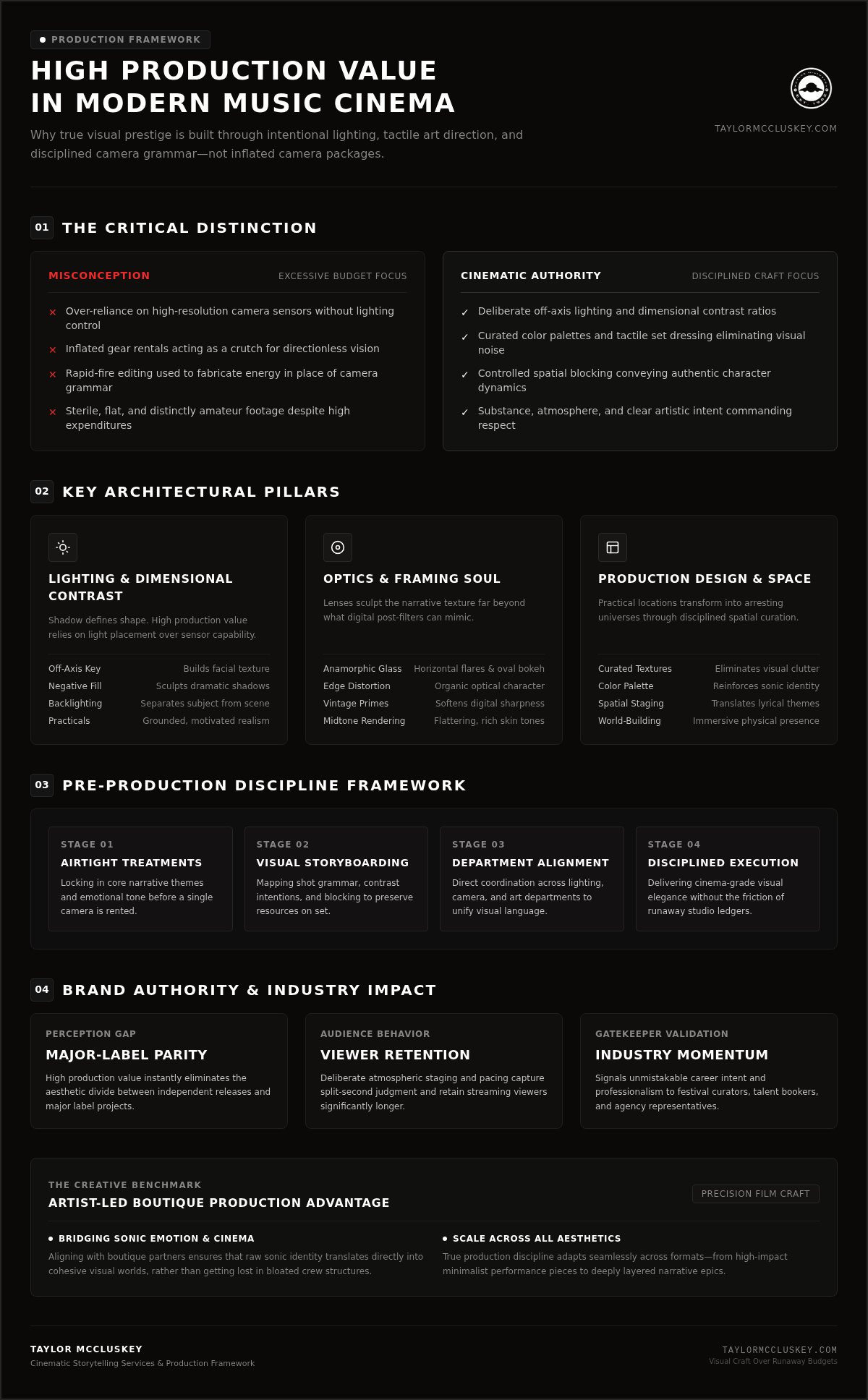
High production value does not mean spending without restraint. In contemporary visual media, genuine cinematic polish is defined by intentional craft, visual discipline, and narrative cohesion. Too often, industry roundups equate production excellence purely with runaway studio ledgers or gratuitous visual effects. But modern audiences quickly see past empty spectacle. They crave substance, atmosphere, and clear artistic purpose.
True fidelity begins with foundational lighting control, camera movement, and meticulous frame composition, not just high-resolution camera bodies. Even the most ordinary practical location can become an arresting cinematic universe when the art department exercises clear aesthetic command. Mastering the primary stages of video production ensures that technical choices reinforce emotional resonance rather than cluttering the screen.
The Distinction Between Excessive Budget and Visual Craft
Bloated production budgets frequently act as a crutch for unfocused creative visions. Stacking high-end rentals on a set cannot rescue a directionless visual identity. By contrast, precision staging, curated color palettes, and focused production design generate an undeniable presence on screen. To bring genuine cinematic power to your project, explore cinematic storytelling services that anchor dynamic visuals directly to your narrative foundation.
When every frame is deliberate, raw footage commands attention:
- Intentional Contrast Ratios: Shaping light with negative fill and motivated practicals delivers dimension that digital sensors cannot generate alone.
- Curated Set Dressing: Thoughtful, unified textures eliminate visual noise and ground the world of the song.
- Disciplined Camera Grammar: Controlled blocking conveys subtle character dynamics without relying on rapid-fire edits to fabricate energy.
The Psychological Impact of High-End Aesthetics on Artist Brand
The aesthetic polish of a release defines how the broader industry evaluates an artist's trajectory. When an independent artist delivers high production value music videos, that visual authority instantly closes the perception gap between them and major-label releases. Audiences make split-second judgments; a cinematic frame commands immediate respect.
This prestige directly impacts real-world metrics. Polished visual releases retain streaming viewers longer, signal serious intent to festival bookers, and build momentum with agency gatekeepers. By investing in deliberate visual execution, artists establish an authentic, high-impact brand identity that sets them apart in an overcrowded market.
Key Architectural Elements of Cinematic Music Video Production
A cinematic frame never happens by accident. Achieving the look of high production value music videos requires a calculated synthesis of light, optics, and spatial staging. Tracing the historic evolution of music videos reveals that technical advancements only succeed when anchored to artistic intent. Every frame must actively translate sonic rhythm and lyrical narrative into compelling physical dimensions.
Cinematic Lighting and Dimensional Contrast Ratios
Shadow defines shape. Flat, uninspired lighting immediately reveals an inexperienced set, no matter how capable the camera sensor is. True visual weight relies on precise contrast ratios. Placing a powerful key light off-axis builds subtle texture across a subject's face, while controlled negative fill sculpts dramatic shadows on the opposite side.
Strategic backlighting separates the artist from background elements, cutting through murky environments with theatrical precision. When every light source appears motivated by practical fixtures within the scene, the imagery retains a grounded, cinematic realism that holds audience attention.
Optics, Aspect Ratios, and Camera Movement
Lenses define the visual soul of your project. High-end productions rely on carefully chosen glass to sculpt the narrative texture:
- Anamorphic Glass: Imparts organic horizontal flares, distinct oval bokeh, and natural edge distortion that digital filters cannot mimic.
- Vintage Spherical Primes: Soften modern digital sharpness, rendering flattering skin tones and rich midtones.
- Widescreen Framing: Utilizing cinemascope proportions (such as 2.39:1) establishes immediate theatrical scale and directs eye tracking across the frame.
Camera motion must mirror musical progression. Static setups suit intimate verses, while fluid dolly tracks, jib sweeps, or stabilized gimbal paths amplify the emotional release of a chorus.
Production Design, Location Staging, and Spatial Depth
Space requires layering to feel real. High production value music videos build depth by orchestrating distinct foreground, midground, and background elements. Placing textured architectural features or subtle atmospheric haze in the foreground draws viewers deep into the world of the performance.
Color theory must remain unified across set construction, props, and wardrobe. When set palettes clash with talent styling, the frame feels chaotic and uncalibrated. Review this comprehensive visual storytelling for musicians guide to study how staging choices reinforce theme. If you need bespoke direction to execute your vision seamlessly, partnering with experienced film production services ensures every technical element serves your artistic identity.
Examples of High Production Value Across Modern Music Video Styles
High production value music videos are not confined to a single musical genre or aesthetic formula. Mainstream commentary often assumes that prestige visuals belong exclusively to chart-topping pop or hip-hop releases with runaway budgets. In practice, visual authority commands screen presence across any style, from grand cinematic stories to stark, stripped-back performance vignettes. The key lies in selecting a visual architecture that mirrors the musical arrangement.
The Narrative Short Film Format
Treating a track as the score to a self-contained film elevates lyrical themes into compelling drama. This format demands strict continuity, nuanced blocking, and meticulous character wardrobe. Lighting must adapt across distinct story beats, shifting tonality between scenes to visually chart emotional arcs.
Instead of merely illustrating the lyrics, a narrative video creates parallel subtext. For directors seeking to build worlds with emotional staying power, review our reference guide to original cinematic storytelling to master the mechanics of script-driven visual design.
The High-Concept Minimalist Aesthetic
Visual restraint often projects more luxury than an overcrowded frame. A single-location concept relies on surgical precision to keep viewers engaged:
- Geometric Lighting Design: Sharp, razor-thin shafts of light or massive soft diffusers establish an architectural framework in empty spaces.
- Tactile Wardrobe Texture: Without elaborate set builds, the camera focuses on bespoke fabrics, structured silhouettes, and subtle movements.
- Calculated Choreography: Deliberate body language and controlled pacing hold tension across extended takes, drawing the audience straight to the performer.
Stripping away clutter highlights emotional vulnerability. When execution is precise, minimalism feels premium rather than cheap.
Kinetic Performance and Theatrical Staging
Performance-driven videos translate raw sonic power into physical movement. This approach relies on tightly synchronized visual cues rather than literal plot points. Programmed DMX lighting rigs, custom tube arrays, and motivated practicals shift rhythmically with drum transients and guitar drops.
Wide-angle cinema primes capture the physical intensity of live playing, while multi-camera synchronous setups provide matching coverage across every take. This method gives editors the coverage needed to build an escalating tempo during the final post-production finishing. Regardless of format, true scale in high production value music videos stems from unwavering clarity of intent.
Strategic Framework: How to Achieve Premium Production Value
Executing high production value music videos requires an operational roadmap that eliminates waste before the camera rolls. Production value is won or lost during pre-production planning. Without a systematic workflow, projects burn capital on set solving preventable problems. A disciplined five-step architecture protects your vision and ensures every invested dollar shows on screen.
- Treatment Architecture: Lock a comprehensive visual deck and narrative script that defines the aesthetic baseline.
- Department Allocation: Invest directly in seasoned department heads instead of redundant gear packages.
- Spatial Control: Secure controllable sound stages or verified locations that remove environmental variables like fluctuating weather.
- Shot-List Engineering: Structure setups logically by lighting reset rather than chronological track order.
- Finishing Precision: Reserve resources for dedicated post-production color mastering and dynamic foley design.
Meticulous Pre-Production and Lookbook Architecture
A vague concept guarantees an undisciplined shoot day. High-end visual execution demands comprehensive lookbooks that establish concrete color palettes, wardrobe silhouettes, and exact framing ratios. Constructing technical floor plans alongside detailed storyboards allows gaffers and camera operators to anticipate every lighting position and dolly run.
This rigorous preparation eliminates guesswork on set. It preserves creative momentum, letting directors focus on eliciting authentic performances from the talent.
Crew Specialization Over Gear Accumulation
Cameras don't make movies; craftspeople do. Too many independent artists drain their resources renting top-tier camera bodies, only to leave them in the hands of understaffed teams. Visual authority requires skilled specialization:
- Gaffers and Key Grips: Shape physical light, balance contrast ratios, and control dynamic range with cinematic nuance.
- Production Designers: Source tactile set dressing and materials that prevent backgrounds from appearing artificial or hollow.
- First Assistant Camera (1st AC): Maintains critical focus during complex tracking moves, ensuring ambitious visual takes remain tack-sharp.
The Finishing Suite: Color Grading and Visual Dynamics
Raw camera captures are merely raw materials. True cinematic luxury is realized in the color grading suite, where a dedicated colorist balances skin tones, manages shadow roll-off, and applies tailored film grain emulation. Softening modern sensor sharpness imparts the coveted tactile texture of classic celluloid.
Pairing these graded visuals with subtle sound design gives weight to opening title cards and environmental moments before the music enters. When you are ready to implement this disciplined approach across your upcoming release, explore full-service film production services designed to bring turnkey cinematic standards to your music.
Collaborating with a Boutique Production Partner: The TaylorMade Advantage
Large commercial agencies often treat musical projects like corporate commercials. Layers of account managers, creative directors, and detached executives dilute original ideas and siphon capital away from physical sets. Producing high production value music videos requires agility, direct artistic alignment, and fierce creative protection. Boutique production houses solve this friction by keeping lines of communication lean, ensuring every dollar and decision directly benefits the final picture.
At TaylorMade Films, visionary direction pairs with disciplined execution. Visual storytelling should feel like a natural extension of an artist's catalog, not an artificial corporate product.
Why Artist-Led Film Production Resonates Deeper
There is a massive communication barrier between technical film directors and recording artists. When a director has never stepped into a vocal booth or performed under stage lights, they struggle to translate musical nuances into visual language. Taylor McCluskey brings multi-disciplinary expertise as a professional songwriter, actor, and director, bridging this divide instantly.
Visual pacing connects directly to arrangement changes, downbeats, and harmonic tension. Explore our comprehensive philosophy on artist-led film production to understand how multi-hyphenate leadership fundamentally deepens audience resonance.
Streamlined Vision from Script to Screen
Boutique production models cut out unnecessary administrative bloat, allowing creative teams to iterate quickly and adapt in real time:
- Agile Timelines: Direct communication between artist and director speeds up treatment approvals and shooting schedules.
- Turnkey Execution: TaylorMade Films oversees every phase under one roof, from initial concept scripts to final color grading.
- Brand Continuity: Custom visual worlds are designed around your long-term creative trajectory, avoiding one-off, throwaway concepts.
Initiating Your Next Cinematic Project
Creating high production value music videos starts long before the production truck unloads. Begin by evaluating your upcoming release slate. Pinpoint the specific single that demands a powerful visual anchor to drive streaming attention and lead your promotional campaign.
Consolidate your core sonic influences, character ideas, and thematic goals into a focused brief. From there, collaborate with a boutique partner who respects your musical roots and commands high-end cinema workflows. When rigorous narrative craft meets raw performance energy, the resulting music video commands the cultural spotlight it deserves.
Bring Cinematic Authority to Your Next Visual Era
True visual prestige isn't purchased through runaway equipment rentals; it is engineered through creative discipline. Producing high production value music videos requires intentional lighting ratios, curated spatial depth, and airtight pre-production planning that honors the sonic arrangement. When every aesthetic choice reinforces the lyrical emotion, your music gains staying power that cuts through digital noise.
Under the TaylorMade Films banner, multi-disciplinary artist Taylor McCluskey unites professional songwriting, acting, and directing into a comprehensive, turnkey film pipeline. Across national projects, our studio eliminates corporate bureaucracy to keep creative focus directly on the screen. Stop settling for flat visuals that undermine your catalog. Collaborate with TaylorMade Films on your next visual project to transform your sound into an unforgettable cinematic world.
Frequently Asked Questions
What makes a music video look high production value?
High production value stems from deliberate lighting control, curated production design, and precise camera blocking rather than raw gear expense. Balanced contrast ratios, intentional negative fill, and cohesive color palettes establish a tactile world. When camera movements synchronize organically with lyrical rhythm, the resulting picture delivers immediate cinematic polish.
How much budget is needed to create high production value music videos?
Capital allocation matters far more than the total dollar amount spent. Premium results come from investing in skilled department heads, controllable studio environments, and professional color finishing rather than oversized crews or bloated gear packages. High production value music videos are achieved by eliminating administrative waste and directing resources straight onto the screen.
Is lighting more important than the camera package for video quality?
Lighting is unquestionably more critical to the final image than the camera body. An entry-level cinema camera paired with intentional, shape-defining lighting produces a stunning picture. In contrast, an expensive flagship sensor shooting under flat, unmotivated light exposes sterile environments. Sculpting dimensionality through motivated practicals and negative fill builds true cinematic authority.
Why do many independent music videos look cheap despite expensive cameras?
Most independent visual projects suffer from a lack of spatial depth and undisciplined art direction. High-resolution sensors capture every flaw in an untreated room, rendering cluttered backgrounds with harsh, uncalibrated sharpness. Without curated set dressing, specialized gaffers, and subtle film emulation during post-production, high-end digital captures simply reveal flat, unconvincing environments.
How long does a cinematic music video production cycle take?
A typical professional cycle spans four to eight weeks from concept to final master. Pre-production requires two to four weeks to lock scripts, lookbooks, floor plans, and talent casting. Production generally spans one to three disciplined shooting days. Post-production finishing, including rhythmic picture editing, bespoke color grading, and dynamic foley design, takes another two to three weeks.
Can minimalist music videos achieve high production value?
Restraint often yields the highest tier of aesthetic authority. A single-location concept strips away visual noise, placing total focus on lighting geometry, bespoke wardrobe textures, and the artist's physical presence. When framing, choreography, and color grading are executed with absolute precision, high production value music videos thrive on intentional minimalism.
What is the advantage of working with an artist-led production company?
An artist-led team bridges the creative language barrier between songwriting and visual direction. Directors who are also recording artists understand sonic pacing, musical dynamics, and performance vulnerability instinctively. Working with a boutique partner like TaylorMade Films eliminates bureaucratic friction, translating your sonic identity directly into high-impact narrative cinema without diluting your original vision.


