

What if cinematic video direction has less to do with the camera in your hands and more to do with the choices behind it? A high-end camera can capture a technically impressive image, but it can’t decide what the audience should feel, where their attention should go, or how sound and vision should work together. That’s the difference between polished footage and purposeful storytelling.
If you’ve felt overwhelmed by gear costs, wondered why expensive cameras still produce amateur-looking videos, or questioned whether AI can replace a director, those concerns are understandable. Tools matter, but they’re only part of the process. Lighting, composition, pacing, performance, and clear creative intent all shape the final experience.
This article separates cinematic craft from technical myths. You’ll learn practical ways to elevate production value, discover how direction turns an idea into a coherent visual plan, and see where AI can support a filmmaker without taking the place of human judgment. We’ll also look at how sound and image work together to tell a story, and why filters alone can’t create a cinematic point of view.
Key Takeaways
- Assess cinematic impact by whether each visual choice serves the story, not by whether the footage looks expensive.
- Use lighting, shadow, and color deliberately to shape mood and guide the viewer’s attention.
- Understand how cinematic video direction turns a creative intention into consistent choices across a scene.
- Plan the relationship between sound and image before production to give the finished work a more unified feel.
- When considering professional direction, compare creative fit, production needs, and the intended use of the finished video.
The 'Cinematic' Label: Defining Direction Beyond the Hype
“Cinematic” appears on camera presets, editing filters, and short-form video trends. The label can suggest a particular color grade or widescreen crop, but neither guarantees that a video communicates clearly or makes its story resonate. Direction is what connects what’s on screen to what the audience should understand and feel.
Intentionality vs. Accident
Cinematic direction is the purposeful arrangement of visual elements to evoke a specific response. Each shot should earn its place. A close-up might reveal a character’s hesitation, while a wider frame might make that person appear isolated. If a shot looks striking but adds nothing to the story, it may be decorative rather than effective.
High resolution is not the same as cinematic quality. A sharp image can still feel flat if the composition, lighting, or performance lacks a clear purpose. A modest setup can feel expressive when the director uses available light and carefully chosen framing to support the moment. The test isn’t whether the footage looks costly. It’s whether the visual choices work together.
Social media filters have made particular color palettes easy to apply, which can make “cinematic” seem like a preset rather than a storytelling approach. A filter can alter an image’s appearance, but it can’t decide what a scene means. Cinematic video direction begins earlier, with a vision for how the story should translate into images, movement, atmosphere, and performance.
The Language of Cinema
Framing, camera movement, and pacing form a visual grammar. A steady frame can hold attention on a quiet exchange. A moving camera can follow a character through a changing space. Editing rhythm can create tension or give an emotional beat time to settle. Used consistently, these choices establish a recognizable world and help viewers follow the action.
Continuity matters, too. Understanding screen direction, including the 180-degree rule, helps preserve the viewer’s sense of where characters are in relation to one another. If a conversation suddenly reverses screen direction without a clear reason, viewers may have to work out where the characters are instead of focusing on the exchange.
The director bridges the gap between script and screen, shaping interpretation through coordinated decisions across production. That work extends beyond the image. Sound can deepen a visual moment, signal a shift, or establish atmosphere. When planning a scene, consider what the audience should notice and feel, then decide how image and sound can support that intention.
Myth #1: The Gear Obsession vs. The Director’s Eye
A $50,000 camera can record a scene with extraordinary detail. It can’t make an unclear performance compelling or give an unmotivated shot a reason to exist. If actors are poorly blocked, the lighting works against the mood, or the camera has no clear relationship to the story, technical polish only makes those choices more visible. Cinematic video direction starts with intent, then uses equipment to serve it.
This is why independent productions can feel cohesive and immersive without a major studio setup. A well-chosen location, controlled framing, considered light, and purposeful performances can create a strong visual identity with accessible equipment. The lesson isn’t that gear never matters. It’s that the camera is one part of a larger creative system. Spending the budget on equipment alone can leave the direction underdeveloped.
Lighting as a Directorial Tool
Lighting shapes what the viewer notices and how a moment feels. A director communicates the scene’s emotional aim, then works with the cinematographer to translate it into decisions about light, shadow, contrast, and color. Soft window light may make a conversation feel open; a hard shadow across a face may suggest tension or concealment. These choices can matter more to an image’s perceived production value than sensor size.
Natural light can feel immediate and grounded, but it changes with the location and time of day. A controlled environment offers more consistency and lets the team shape the atmosphere. Neither approach is automatically superior. Choose the one that supports the scene and can be managed during production. Planning for the creative team’s ability to realize the intended look is more useful than simply seeking access to more equipment.
Composition and Blocking
The Rule of Thirds can help create a balanced frame, but it’s only a starting point. Directors can guide attention with depth, negative space, foreground elements, and leading lines. Blocking matters just as much. Where an actor stands, when they move, and what separates them from another performer can express power, intimacy, or distance before anyone speaks.
Music videos make these decisions especially visible because image and sound must carry the performance together. A strong visual concept uses framing, movement, and timing to make a musical moment feel coherent rather than decorative. Before filming, identify the key moments in the track and decide which images, movements, or cuts should reinforce them.
Technology can support the process, including tools discussed in McKinsey’s overview of AI in film production. But tools don’t replace a director’s judgment about what belongs in the frame. If you’re developing a project, reviewing TaylorMade Films’ film production work can help you consider how professional direction might support your visual goals.
Myth #2: Can AI Replace Human Video Direction?
AI video tools can generate moving images from text, images, and audio. They can help visualize an idea, test a mood, or support parts of a production workflow. But generating a plausible shot is not the same as directing a story. A prompt can describe a character’s expression; it can’t reliably judge whether that performance feels true to the scene or whether the moment belongs in the larger film.
That distinction matters. A sequence may look polished yet feel emotionally hollow if its images don’t reflect a coherent point of view. Cinematic video direction depends on human choices about what to reveal, what to withhold, and how a moment should change the audience’s understanding. A prompt can shape an output, but it doesn’t replace the creative judgment that gives the output narrative purpose.
The Emotional Void of Algorithms
Emotion often lives in small, context-dependent details: a pause before a reply, a glance that arrives too late, or a gesture that contradicts a character’s words. These moments draw meaning from performance, relationships, and what came before. AI can imitate emotional cues, but imitation alone doesn’t ensure a choice feels specific to the story. The director brings empathy to the process, guiding performances and images toward a credible emotional moment.
Direction also involves decisions without a single correct answer. Should the camera stay close or give a character space? Should a scene feel restrained or exposed? A director weighs the script, the performer, the visual world, and the audience’s experience. Technique informs the choice, but creative intent determines why it belongs. When reviewing a scene, ask whether each framing and movement choice helps the audience understand the character or situation.
Human-Led Innovation
AI can assist with exploratory tasks, such as organizing material, developing visual references, or testing early concepts. Used well, it gives a creative team more room to refine the work. Used without direction, it can produce attractive fragments that lack continuity, emotional progression, or a distinctive voice. The tool should remain accountable to the story and to the people shaping it.
That’s where the value of original cinematic storytelling becomes clear. A professional director’s fee represents more than time spent on set. It supports the vision, interpretation, and decisions that carry an idea from concept to screen. For projects that call for a considered visual approach, explore TaylorMade Films’ professional film production services.
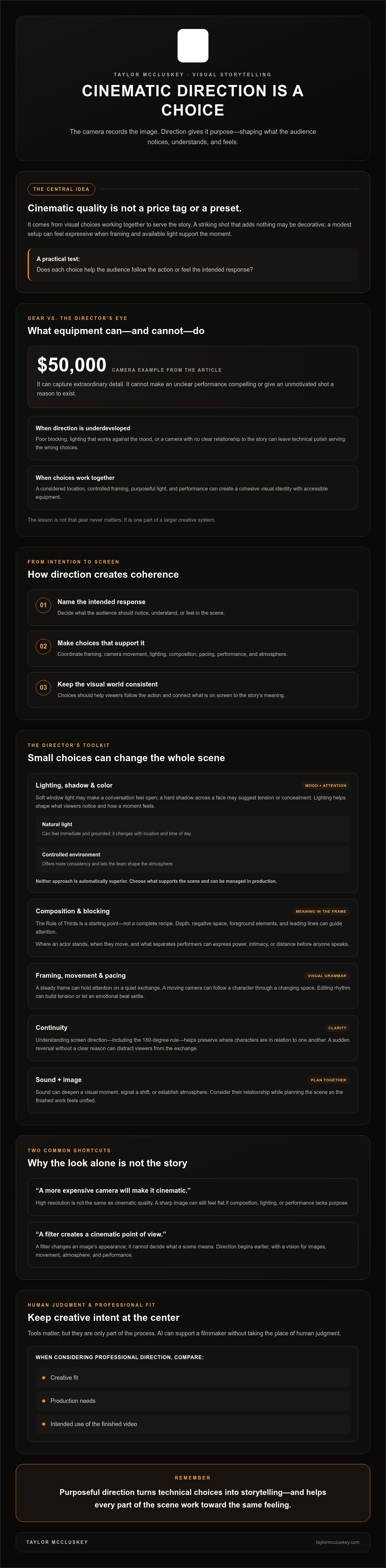
The Director’s Toolkit: Cinematic Video Direction in Practice
A coherent visual identity doesn’t begin in the grading suite. It begins before filming, when the director turns an idea into a practical plan for images, sound, performance, and pace. A mood board can establish references for color, texture, and framing, while a shot list connects those choices to specific story moments. These tools give the creative team a shared vision without forcing every image into a template.
Pre-production is also where a director can anticipate transitions and protect the edit. If a scene needs to move from stillness to urgency, the plan might shift from composed, longer shots to closer framing and faster cuts. That decision affects what the camera needs to capture on set. Intentional preparation makes cinematic video direction feel unified rather than assembled from disconnected effects.
The Synergy of Sound and Vision
Music can shape a scene’s movement, energy, and emotional focus. A director may build shots around changes in a song’s rhythm or use visual contrast to create tension against a calm passage. The relationship works both ways: a cut, gesture, or change in perspective can alter how the audience hears a musical moment.
Directing for the edit means imagining that final relationship while filming. Consider what coverage will make a transition possible, where a pause needs space, and whether a visual beat should land with or against the sound. For a music video, map the main changes in the track before the shoot, then decide which moments need a visual response and where a longer hold will have more impact.
Color and Mood
Color can guide attention and suggest atmosphere, but its meaning depends on context. A restrained palette might make a scene feel intimate; a sudden shift in color can signal a change in tone. A director’s mood board helps communicate these intentions early, so choices in locations, wardrobe, lighting, and props support a consistent look before post-production begins.
Color grading then refines the material. It can balance shots and strengthen an established visual approach, but it can’t reliably repair mismatched lighting or unclear creative decisions. Choose a few reference images and describe the intended mood in plain language. This gives the team a direction to follow and helps maintain visual continuity across scenes.
Think of pacing as the video’s heartbeat. Shot duration, movement, performance, and sound all influence whether a sequence feels measured, restless, or expansive. A useful review question is: does each moment give the audience enough time to notice what matters without weakening the scene’s momentum?
For a project that needs a unified plan from preparation through the final cut, explore professional film production services.
Elevating Your Narrative with Professional Direction
DIY production can be the right choice for a simple update or a spontaneous social post. Consider professional direction when the project carries a larger story, needs a consistent visual identity, or must bring performances, music, and images together with precision. The signal isn’t a particular budget or camera. It’s the gap between the experience you want audiences to have and what you can confidently execute on your own.
A director should understand your artistic aesthetic, not just your reference images. Share the films, performances, moods, or visual details that feel relevant, then discuss what you want the audience to take away. A good creative fit can explain how those references might translate into original choices rather than simply reproducing a look.
The Investment in Vision
High production value can strengthen how a project is perceived, but it doesn’t guarantee commercial returns. To assess potential value, define what success means before production: stronger audience engagement, a clearer brand impression, or a film that supports a specific release or campaign. Then consider whether the creative plan, production needs, and intended use align with that goal. This makes the investment easier to evaluate without treating polish as an outcome by itself.
Video can be part of how a brand establishes a consistent presence. Direction helps that presence feel considered and recognizable. Taylor McCluskey’s background across music, acting, and filmmaking informs the TaylorMade Films approach, bringing a multidisciplinary perspective to visual storytelling. That perspective can be valuable when a project needs more than attractive images. It needs a coherent point of view.
Next Steps for Your Project
Before approaching a film production company, clarify the basics. A concise brief helps turn an early idea into a productive conversation:
- Purpose: What should the film communicate, and who needs to see it?
- Creative direction: What mood, references, or artistic qualities should guide the work?
- Sound and image: Is music central to the narrative, or should the visuals lead?
- Practical needs: Where will the film appear, and what production requirements should be discussed?
Bring references, but leave room for interpretation. The strongest collaboration balances your intent with a director’s perspective, creating a plan that serves the story instead of copying a template. Ask how the director approaches preparation, communicates creative decisions, and connects the final film to your goals.
If your project calls for a polished, story-led approach, explore professional film direction at TaylorMade Films.
Shape Your Next Story with Intent
The strongest cinematic video direction starts with a clear point of view. Gear and AI can expand what’s possible, but neither defines the meaning of a scene. That comes from choices that connect performance, image, sound, and pacing into a story audiences can feel.
Carry that perspective into your next project. Identify what you want viewers to experience, choose a director whose aesthetic supports that intention, and treat production value as the result of thoughtful creative decisions, not equipment alone. A shared vision gives every stage of the process a stronger foundation.
TaylorMade Films provides film production services informed by Taylor McCluskey’s multidisciplinary creative work and an interest in the relationship between sound and vision. If you’re ready to develop a visual narrative with intention, explore film production with TaylorMade Films.
Start with the story you want to tell, then build the visual choices around it.
Frequently Asked Questions
What is the difference between a videographer and a cinematic video director?
A videographer typically captures and may edit footage, while a director shapes the creative interpretation of the project. Cinematic video direction brings story, performance, framing, pacing, and sound together under a clear vision. The roles can overlap, especially on smaller productions, but they answer different needs: capturing what happens and deciding how it should unfold for the audience. Clarify responsibilities before production so everyone understands who is guiding creative decisions.
Do I really need a 4K camera for my video to look cinematic?
No, 4K isn’t essential for a cinematic look. Resolution affects image detail, but storytelling choices have greater influence on how footage feels. Thoughtful lighting, controlled composition, expressive performances, and purposeful movement can make footage compelling at different resolutions. Choose a camera based on the project’s delivery requirements and workflow. If the story, lighting, and framing aren’t working, additional pixels won’t solve those creative problems.
How does music affect the cinematic direction of a video?
Music shapes a video’s rhythm, atmosphere, and emotional emphasis. A director might cut images to a song’s beat, hold a shot through a quiet passage, or place a visual turn against the music for contrast. Sound can also influence camera movement and performance choices during filming. Plan how music and image will interact before the edit, especially for a music video, so the visuals support the track rather than simply decorate it.
Can AI prompts produce professional cinematic results?
AI prompts can generate useful visual material, but they don’t replace the judgment behind professional direction. A prompt may describe a dramatic scene, yet it can’t reliably determine whether the scene fits a character’s emotional journey or the film’s point of view. Use AI to explore references or test ideas, then assess each result against the story. Human creative direction brings context, performance nuance, and continuity to the final work.
What are the most important elements of cinematic lighting?
The most important elements are direction, softness, contrast, color, and consistency. Light should guide attention and reinforce the scene’s mood. For example, soft light can create a gentle, open feeling, while stronger contrast can introduce tension or mystery. Consider the source and motivation of the light, such as a window or practical lamp, and make sure lighting supports the action instead of distracting from it.
How much does professional cinematic video direction cost?
Professional direction fees depend on the project’s creative and production scope, so there isn’t one reliable price that applies to every film. The script, preparation, shoot requirements, team, and post-production needs can all affect the work involved. Ask for a project-specific explanation of what direction covers and how responsibilities are allocated. Compare proposals by scope and creative fit, not just by equipment listed or total production scale.
Why is 24fps considered the standard for cinematic video?
24 frames per second is a widely used frame rate in narrative film because it produces a familiar motion cadence associated with cinema. It isn’t a requirement for every video or platform. Higher or lower frame rates can suit particular styles, such as smoother motion or slow-motion playback. Choose a frame rate based on the movement you want, your delivery format, and the visual rhythm of the story.
How do I choose the right director for my music video or brand film?
Choose a director whose work and creative approach align with the story you want to tell. Review relevant projects, discuss your audience and goals, and ask how the director connects visual choices with music, performance, or brand identity. A clear conversation about communication, responsibilities, and production scope can reveal whether the collaboration feels right. Taylor McCluskey brings multidisciplinary experience in music, acting, and filmmaking through TaylorMade Films.


