

A director’s vision is only one part of the job. The most useful questions to ask when hiring a music video director cover budget, creative approach, production and editing responsibilities, and who else will shape the final video. Clear answers show how the concept will move from treatment to screen.
You may already know the mood, story, or performance you want the video to capture. The key is finding out how the director will turn that vision into a workable plan, lead the production team, and keep expectations aligned throughout the collaboration.
This guide covers what to ask about costs and scope, creative and technical decisions, communication, timelines, and collaborators. You’ll get a clearer sense of the director’s role and the conversations that can put a music video project on solid ground.
Key Takeaways
- Set the project’s creative ambition against its practical limits so the concept and production plan work together.
- Clarify how the director will translate your vision into visual choices, from the treatment through filming and editing.
- Align on communication, feedback, decision-making, and expectations before production begins.
- Understand which responsibilities the director leads and how key collaborators contribute to the finished video.
1. Music video budgets and small-budget production
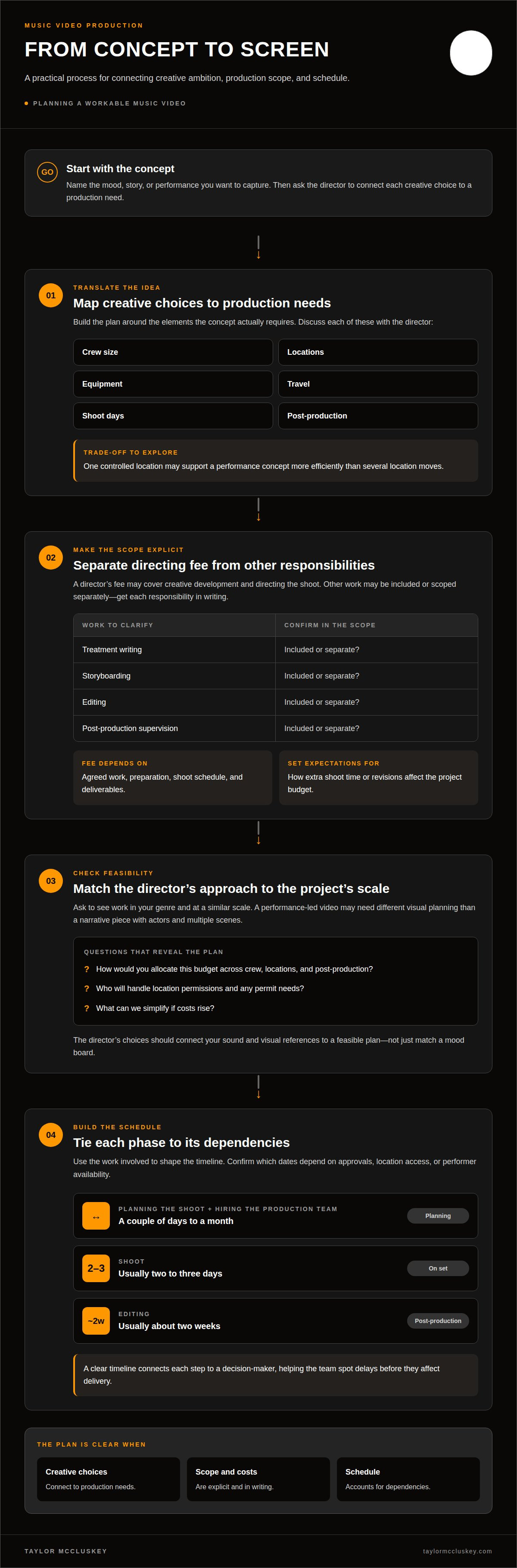
Start with the concept, then ask the director to connect each creative choice to a production need. A practical budget conversation covers crew size, locations, equipment, travel, shoot days, and post-production. Ask which elements are essential and which can change without weakening the idea. For example, one controlled location may support a performance concept more efficiently than several location moves. Request a clear scope that spells out what the director handles and which production costs are separate from the directing fee.
A director’s fee may cover creative development and directing the shoot. Treatment writing, storyboarding, editing, and post-production supervision may be included or scoped separately, so ask for each responsibility in writing. The fee depends on the agreed work, preparation, shoot schedule, and deliverables. Clarify how extra shoot time or revisions affect the project budget before production begins.
Ask to see work in your genre and at a scale similar to your project. A performance-led video may need different visual planning than a narrative piece with actors and multiple scenes. The director should explain how their experience informs the concept, crew, and production choices. Their thinking should connect your sound and visual references to a feasible plan, not just match a mood board.
Useful questions include: “How would you allocate this budget across crew, locations, and post-production?” “Who will handle location permissions and any permit needs?” “What can we simplify if costs rise?” The answers reveal how the director communicates trade-offs and finds opportunities without losing the central idea.
Build the schedule around the work involved. Planning a shoot and hiring its production team can take anywhere from a couple of days to a month; a shoot usually takes two to three days, and editing usually takes about two weeks. Ask which dates depend on approvals, location access, or performer availability. A clear timeline ties each step to a decision-maker, helping the team spot delays before they affect delivery.
2. Balancing creative and technical work
A director turns an idea into a visual plan the crew can execute. Ask how they develop a treatment, choose camera techniques, and preserve the song’s mood during production. For example, close performance framing can create intimacy, while wider compositions reveal a setting or group dynamic. The director should explain why those choices serve the track, not just how they look.
A useful set of questions to ask when hiring a music video director explores how they’ll turn your references into a distinct visual language. Ask how each reference might inform movement, lighting, framing, or color. Then discuss what could change if a location or setup doesn’t work. The answers show whether the director can adapt while keeping the concept’s core intact.
Technical fluency matters because camera choices affect what the crew captures and what editors can shape. Ask how the director plans coverage for key moments, including performance details, transitions, and narrative beats. A shot list or storyboard can make that approach clear. You don’t need to dictate every frame. You need to understand how the plan supports the finished cut.
Comfort on camera also shapes a performance. Ask how the director guides artists who are new to a video shoot. For example, they might establish a scene’s emotional intention before suggesting a small adjustment to movement or eyeline. That keeps direction focused without making the performance feel forced.
Another question to ask when hiring a music video director is how creative choices connect to execution:
- Which visual techniques will carry the song’s strongest moments?
- How do you decide what needs to be captured on set?
- What is your process for reviewing footage and shaping edits?
- How do you respond when a technical constraint changes the plan?
Clear answers reveal how the director connects vision with production. Exploring Taylor McCluskey’s creative work can also offer a reference for thinking across music and film.
3. Client relationships and expectations
A strong client relationship starts with clear decisions about who approves the treatment, schedule, and final cut. Ask how the director prefers to communicate, who gathers feedback, and how conflicting notes are resolved. For example, one designated contact can consolidate the artist’s and label’s comments before sending them to the director. This keeps feedback focused instead of sending competing instructions to the edit.
The contract should define the project scope, deliverables, schedule, revision process, responsibilities, and payment terms. It should also explain how changes to the agreed plan are handled. Ask whether the written agreement covers the treatment, shoot, edit, and any agreed versions or formats. A clear contract gives both sides a shared reference if a location, performance setup, or lighting plan changes.
Who owns the concept and footage depends on the agreement. Have the contract specify rights for the concept, raw footage, finished video, and promotional use, along with any credit terms. Ask which materials you can publish, edit, or share, and whether the director can use selected footage in a portfolio. Specific language prevents assumptions about what either party may do after delivery.
Set expectations for feedback before filming begins. Ask how many review stages the edit includes, who approves each stage, and how the director handles notes that conflict with the original treatment. For instance, agree whether feedback will focus on performance, pacing, color, or a specific scene. Define how a revised creative direction affects schedule and scope, so a new idea doesn’t become an unplanned demand.
Red flags include evasive answers about responsibilities, reluctance to put the scope in writing, or promises of guaranteed audience results. Ask the director to explain a past project where client feedback changed the plan and how they managed the change. A thoughtful answer should identify the decision, its effect on production, and how the team stayed aligned. Clear communication matters more than a claim that every shoot will run perfectly.
4. Music video director responsibilities and collaborators
A director’s role goes beyond calling “action.” Directors shape treatments and scripts, storyboard key sequences, manage the team, and supervise filming and editing. Ask which decisions they lead personally and which belong to collaborators. For example, clarify who develops the visual plan, directs performers, and reviews the cut. This shows how the director’s vision will carry through each production stage.
Music video crews bring specialized skills to the project. The director may collaborate with a cinematographer on framing and camera movement, while an editor shapes the footage into a finished sequence. Ask which collaborators are part of the proposed team and how they work together. You should feel comfortable discussing creative choices with the director and understand who handles each production responsibility.
Compare candidates against the same project needs, not just polished showreels. Ask each director to explain their approach to your song, identify relevant experience, and describe how they’d lead the crew. Their answers can show whether they understand your intended tone, communicate decisions clearly, and have a plan for moving from concept to shoot. A strong fit connects creative thinking with practical team leadership.
Evaluate a portfolio by looking beyond its overall style. Choose a complete video or representative scenes, then consider how performance, pacing, and visual choices work together. Ask what the director contributed to each example, especially if the portfolio reflects a larger production team. Range matters too: a distinctive signature can be valuable, but the approach should serve your song rather than impose the same treatment on every artist.
- Who leads the treatment, storyboard, and on-set direction?
- Which collaborators shape cinematography, production, and editing?
- How does the director respond when an artist is trying something unfamiliar?
- What examples show the director’s role from concept through final edit?
Use those answers to identify the director who can unite the creative idea and production team. Explore music and film work for a perspective on creative work across both forms.
Taylor McCluskey: Music Albums and Singles
Taylor McCluskey brings music and visual storytelling together through music releases and film production under the TaylorMade Films banner. Taylor McCluskey offers Film Production Services alongside Music Albums and Singles, creating a relevant path for artists exploring the relationship between sound, performance, and screen.
Turn to Taylor McCluskey for music releases or film production as part of your creative journey. Concert Tickets and Artist Merchandise are also available for audiences who want to follow the work beyond the screen.
Contact Taylor McCluskey to discuss your creative interests or film production project.
Shape the Next Conversation
Turn your strongest creative instinct into a clear starting point. Choose the feeling, image, or performance detail you want audiences to remember, then use it to guide your conversation with a director. The questions to ask when hiring a music video director can open up ideas, while your priorities keep those ideas connected to the song and the artist behind it.
You don’t need every visual decision settled before reaching out. A focused brief gives a director room to respond with fresh thinking while making your central intention clear. Notice whether the conversation helps you see new possibilities and whether you can speak openly about what matters to you. That creative exchange is part of finding a productive collaboration.
For a next step grounded in music and film, contact Taylor McCluskey to share what you’re working toward. Bring your idea, your questions, and the direction you hope to explore. A thoughtful first conversation can help move the project forward.
Frequently Asked Questions
What questions should artists ask a music video director before hiring?
Ask how the director would interpret the song’s structure, which moments they’d emphasize, and how they’d adapt your visual references. You can also discuss how they guide artists who feel uncertain performing on camera, and how they’ll keep the concept connected to the track’s emotional core. These questions reveal whether the director understands your artistic priorities, beyond simply liking the initial idea.
How does a music video director collaborate with artists, producers, and cinematographers?
The director connects each collaborator’s work to one shared creative direction. An artist can explain the song’s emotional intent, while a producer helps align practical decisions with the production plan. The cinematographer turns visual ideas into choices about framing, movement, and light. For example, before a performance setup, the director can align the artist and cinematographer on the feeling a close-up should convey.
What is the typical timeline for music video pre-production, filming, and editing?
A music video project can take weeks, months, or even years, depending on its creative and production needs. Pre-production, filming, and editing each have different scheduling demands. A contained performance video may involve fewer creative and logistical decisions than a complex narrative with several scenes. Ask for a phase-by-phase schedule that identifies approvals, location access, and artist availability as potential dependencies.


