

A large concert poster needs more than a larger frame. Knowing how to frame a concert poster correctly starts with measuring the print and matching the frame’s opening to its dimensions. Large posters range from 11×17 to 24×36 inches; for nonstandard or especially large prints, a custom frame can provide a better fit.
It’s easy to focus on the frame and overlook what protects the artwork inside. The glazing, backing, and mounting method all affect the finished display, especially when the print is vintage or valuable.
This guide covers common poster and frame sizes, matting options, and UV-filtering glazing to help slow fading. You’ll also learn how to handle unusual dimensions, assemble a frame without risking the poster, and hang the finished piece carefully. The aim is a thoughtful display that keeps the artwork in focus.
Key Takeaways
- Match the frame to the poster’s actual dimensions, and use a mat when you want extra breathing room around the artwork.
- Choose glazing with UV protection to help slow fading; glass and acrylic each suit different display needs.
- For unusual or oversized prints, a custom frame can provide a more secure, well-proportioned fit.
- Protect vintage posters with reversible mounting, then plan the hanging position so the finished display feels balanced.
1. What sizes do poster frames come in?
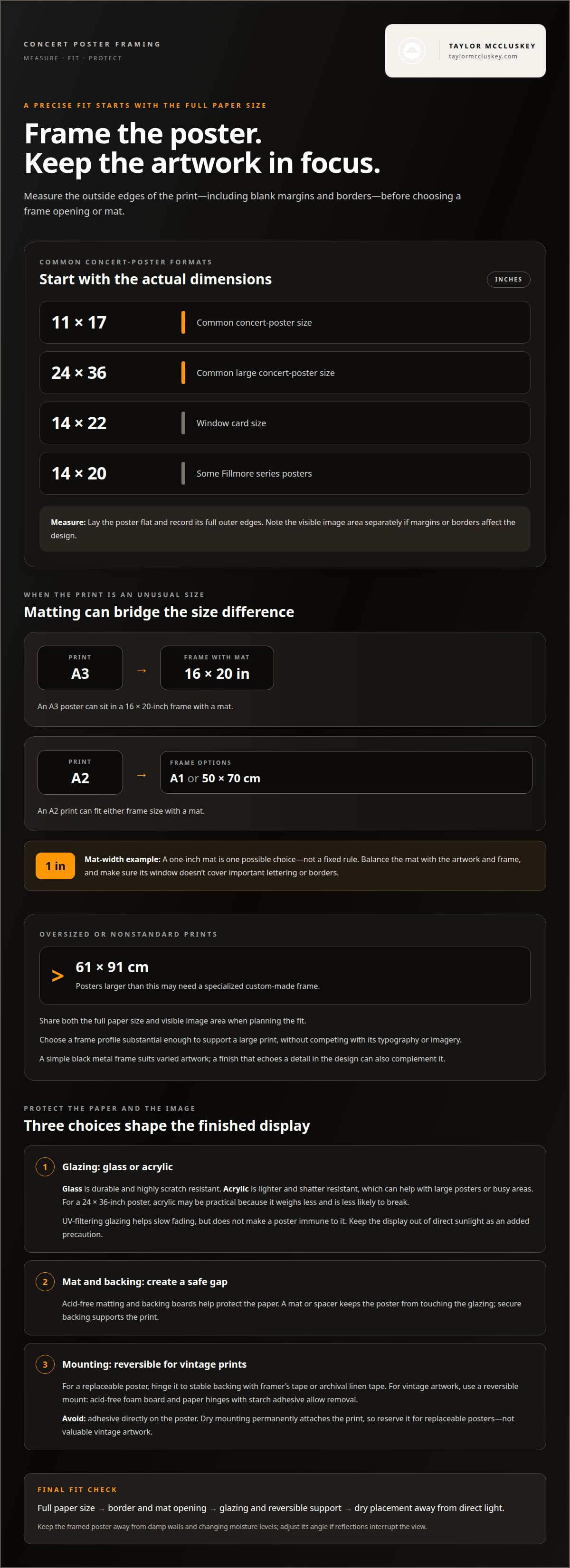
Measure the poster’s full paper width and height, not just the printed image. Include any blank margins or borders in those measurements, then match them to a frame’s opening. Common concert-poster sizes include 11×17 and 24×36 inches. Window cards may measure 14×22 inches, while some Fillmore series posters measure 14×20 inches.
For odd-sized prints, choose a larger frame and use a mat to create a clean border around the poster. An A3 poster can sit in a 16×20-inch frame with a mat; an A2 print can fit an A1 or 50×70-centimeter frame. A mat can also keep the poster from touching the glazing. Its window should reveal the intended artwork without covering important lettering or borders.
Use acid-free matting and backing boards to help protect the paper. For a replaceable poster, hinge it to a stable backing board with framer’s tape or archival linen tape. This supports the print while allowing later removal. Avoid putting adhesive directly on the poster. A mat board can cover a border, leave it visible, or include it as part of the display.
Vintage prints need a reversible mount. Acid-free foam board is a suitable backing, and paper hinges with starch adhesive allow removal without permanently bonding the poster. Dry mounting permanently attaches a print to its mount board, so reserve this method for replaceable posters rather than valuable vintage artwork.
In the United States, custom-framing cost depends on the poster’s dimensions, frame materials, glazing, and construction. The price is provided after a quote request. To measure, lay the poster flat and record its full outer edges. Note the image area separately if margins or borders affect the design. This distinction guides the mat opening and frame fit. Choose a mat width that balances the artwork and frame. A one-inch mat is one possible example, not a fixed rule.
2. UV-protective glazing to help prevent fading
Concert-poster colors can fade in sunlight and indoor lighting. UV-filtering glazing helps slow fading, making it a strong choice for preserving a print. It reduces exposure to damaging ultraviolet light, but doesn’t make the poster immune to fading. As an additional precaution, keep the display out of direct sunlight.
Glass and acrylic offer different advantages. Glass is durable and highly scratch resistant, which suits a display that won’t need frequent moving. Acrylic is lighter and shatter resistant, useful for large posters or busy areas where accidental impact is a concern. For a 24×36-inch poster, acrylic may be a practical option because it weighs less and is less likely to break.
The right frame and glazing depend on the poster’s size, value, and display setting. Choose UV-protective glazing for preservation, then weigh glass’s scratch resistance against acrylic’s lighter, shatter-resistant construction. A larger poster may put more strain on its frame, so pair the glazing with a profile substantial enough to support the complete assembly.
Glazing can reflect light, especially when the frame faces windows or bright lamps. Place the finished frame away from direct light and adjust its angle if reflections interrupt the view. UV filtering helps slow light-related fading, while careful placement reduces direct exposure. Neither measure replaces the other.
To limit moisture damage and warping, keep the framed poster in a dry indoor location, away from damp walls and areas with changing moisture levels. Use a mat or spacer to separate the paper from the glazing, and make sure the frame backing sits securely. Stable backing supports the print, while pressure against the glazing can cause unwanted contact.
For a lasting display, combine UV-protective glazing with sensible placement and solid frame support. Choose glass for scratch resistance or acrylic when lower weight and shatter resistance matter most. This balance helps protect the poster while keeping the artwork clear and visible.
3. Choosing a custom frame for nonstandard poster sizes
A standard frame may not suit a print with unusual proportions, a wide border, or dimensions beyond common formats. Posters larger than 61 by 91 centimeters may need a specialized custom-made frame. Knowing how to frame a concert poster correctly starts with fitting the frame to the poster, rather than forcing the artwork into a standard opening.
Measure the poster’s outside edges, then decide how much of its paper border to show. A print with a distinctive border may look best with the full edge visible. If the border is plain or uneven, a mat can create a defined window. Share both the full paper size and visible image area when planning the fit. This helps keep important lettering clear.
Scale matters as much as fit. Larger posters benefit from more substantial frame profiles, which help the frame hold its shape over time. A narrow profile can look slight around a large-format print, while a deeper, stronger-looking profile gives the composition more presence. The frame should support the artwork without competing with its typography or imagery.
For a classic look, consider a simple black metal frame. It suits varied artwork and keeps attention on the poster. A frame color that echoes a detail in the design can also create a deliberate connection. To decide how to frame a concert poster correctly, consider its strongest colors and lettering, then choose a finish that complements them without overwhelming the composition.
Review the poster’s dimensions, border treatment, mat opening, and frame scale together before finalizing a custom frame. For example, a print larger than 61 by 91 centimeters may need a frame built to its proportions, with a profile suited to its size. This coordinated approach preserves the intended composition and gives nonstandard artwork a balanced display.
4. Assembling and hanging a framed poster
Assemble the frame on a clean, level surface so the poster stays supported as you handle it. Set the glazing and mat in place, then position the poster and backing without forcing the paper against the frame edges. Before closing the frame, check that the image is straight and the mat opening doesn’t cover any lettering or artwork.
When framing a valuable vintage concert poster in a wood frame, make sure the poster never touches the wood. Separate the paper from the frame with suitable matting or another barrier. Direct contact can expose the print to materials in the frame. Handle the poster by its edges and avoid pressing or bending it during assembly.
Secure the backing so the assembled layers stay in place, but don’t press down to flatten a curled or uneven print. If the poster is hinged to its backing, the hinges support it while allowing later removal. Close the frame firmly and evenly, then inspect the front for shifting, trapped edges, or contact between the poster and glazing.
Choose a hanging position where the poster can be seen clearly from the room. Many designers place the image center around eye level for comfortable viewing. Before fixing the frame to the wall, hold it in position and check how its center aligns with nearby furniture and the surrounding display.
For a gallery wall, leave a few inches between frames. Keep the spacing consistent across the collection for a deliberate rhythm, or adjust it to suit the wall and frame sizes. Aligning frame centers or top edges can make separate posters feel like one composition. Check the spacing from across the room before settling on the arrangement.
Once the framed poster is in place, build the collection around the live music that inspired it. Explore concert tickets for another chance to connect with the music behind the artwork.
Taylor McCluskey: Concert Tickets
Taylor McCluskey offers concert tickets for readers who want to connect a framed poster with live music. A poster can preserve the look of a show, while attending a concert creates a new memory of the music and performance. If an artist or event inspired your collection, concert tickets are a natural next step.
Explore the available concert tickets when you’re ready to plan a live music experience. For questions about Taylor McCluskey’s offerings, contact Taylor McCluskey.
Give the Music a Place in Your Next Chapter
A concert poster can preserve a memory, while the music behind it keeps moving. Knowing how to frame a concert poster correctly helps give the artwork a considered place in your home. The next step might be revisiting the artist’s work, discovering a new release, or planning another live experience.
Taylor McCluskey creates across music and film, offering Music Albums and Singles, Film Production Services, and Concert Tickets. Explore these offerings when you’re ready to take your interest beyond the framed print and into new music or live performance.
For questions about Taylor McCluskey’s work or offerings, contact Taylor McCluskey. Keep the poster in view, and let it inspire what you listen to or experience next.
Frequently Asked Questions
What if my poster is a really large size?
For a poster larger than 61 by 91 centimeters, consider a specialized custom-made frame. A substantial frame profile helps support a large piece and hold its shape. Think about how the frame will be displayed, too: its overall weight and scale affect handling and placement. For a gallery wall, plan the large poster’s position first, then arrange smaller works around it.
What sizes do poster frames come in?
Concert posters vary widely. Common large poster dimensions range from 11×17 to 24×36 inches. Window cards can measure 14×22 inches or 14×20 inches, while jumbo window cards can reach 22×28 inches. Measure the entire paper, including its border, and match that measurement to the frame opening. If the dimensions fall between standard sizes, a mat can bridge the difference.
What type of frame will last the longest?
Durability depends on the frame’s construction, size, and display conditions, not on one material alone. Glass is highly scratch resistant, while acrylic is lighter and shatter resistant. Larger posters benefit from a more substantial profile that helps the frame hold its shape over time. Consider how often the frame may be moved and whether it will hang in a busy area.
Should you use acid-free backing and UV-protective glass for a concert poster?
Yes. Acid-free backing and matting help protect poster paper, while UV-filtering glazing helps slow fading from sunlight and indoor lighting. The glazing can be glass or acrylic; choose based on the frame’s size and setting. A mat or spacer also keeps the poster separate from the glazing. Keep the finished display away from direct sunlight to reduce light exposure further.
How do you hang a framed concert poster safely and choose its placement?
Choose a stable wall location where the frame won’t be bumped, and position the image center around eye level for comfortable viewing. In a gallery arrangement, leave a few inches between frames and keep the spacing consistent. Before hanging, consider the frame’s size and weight when selecting suitable wall support. Check the alignment from across the room so the poster sits naturally within the display.


