

Visual storytelling is narrative world-building that completes musical composition, not a marketing chore tacked onto a finished mix. Mastering visual storytelling for musicians isn't about renting expensive cinema rigs or chasing disposable social trends. It's about translating the raw emotional architecture of your sound into a distinct visual language. Yet too many artists hit a wall here. You pour months into writing and tracking, only to struggle with translating abstract lyrical themes into striking images, or burn precious budget on fragmented clips that fail to connect.
You don't need an overwhelming film crew to build an unforgettable creative identity. Discover how to translate sonic themes into cinematic visual narratives that captivate audiences and define your artistic identity. Below, we break down proven conceptual frameworks, modular storyboarding methods, and disciplined shoot-planning strategies to transform your music into an enduring visual universe.
Key Takeaways
- Understand why visual storytelling for musicians serves as the primary top-of-funnel discovery engine in the streaming landscape.
- Map cinematic tools like lighting, framing, and color grading directly to musical arrangements and emotional arcs.
- Build an ecosystem-first visual strategy that balances high-concept narrative music videos with looping micro-formats.
- Execute a streamlined three-phase production workflow from initial mood boards to call sheets and shot lists.
- Determine whether to self-direct or collaborate with a dedicated film production house to elevate your project's cinematic scale.
Why Visual Storytelling Matters for Musicians in 2026
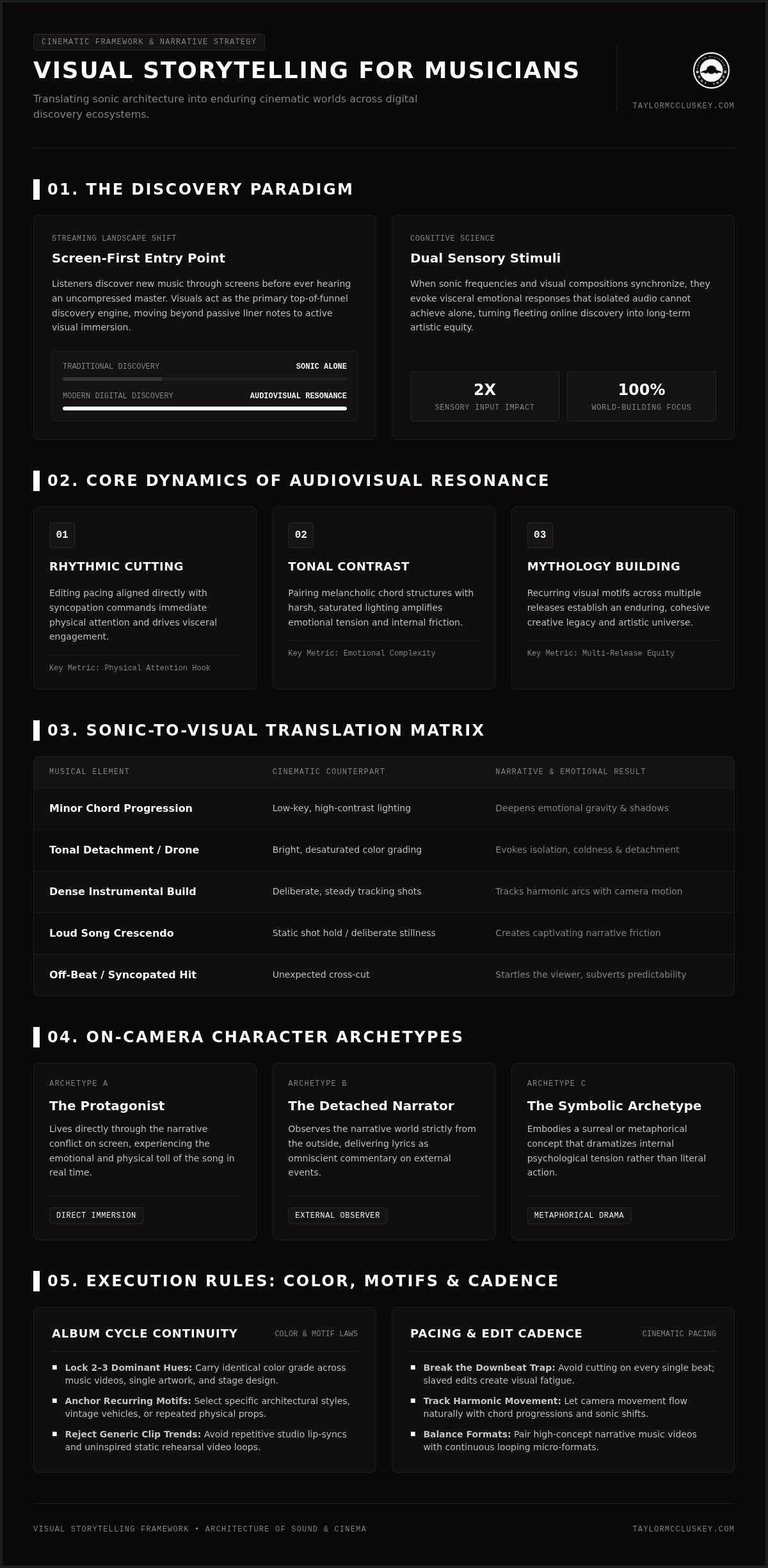
Sound no longer travels alone. In modern digital distribution, listeners discover new music through screens before they ever hear an uncompressed master. Treating visual assets as a secondary promotional task undermines your music. Effective visual storytelling for musicians functions as cohesive world-building that extends lyrical themes into physical reality. Visual narrative is the visual manifestation of musical texture. When an artist establishes a distinct visual signature, every single, music album, and live performance feels connected to an ongoing cinematic universe.
Audio streaming dominance has altered listener psychology. Audiences rarely read liner notes or sit in front of stereo setups to unpack an arrangement. Instead, short-form video hooks, looping canvases, and narrative films serve as the initial handshake. Applying established visual narrative principles ensures that this visual entry point preserves artistic integrity rather than diluting it for superficial engagement.
Moving Beyond Generic Promotional Content
Trend-driven social video fades quickly. Filming repetitive studio lip-sync clips or static rehearsal footage rarely captures the imagination. Lasting resonance demands dramatic tension. Audiences invest in characters, conflicts, and distinct visual atmospheres that reflect the sonic weight of your work. When visuals build a tangible world, passive listeners become active community members.
The Psychology of Audiovisual Resonance
Dual sensory stimuli create superior cognitive retention. When sonic frequencies and visual compositions synchronize, they evoke visceral emotional responses that isolated audio cannot achieve alone. Consider these core dynamics:
- Rhythmic cutting: Editing pacing aligned with syncopation commands immediate physical attention.
- Tonal contrast: Pairing melancholic chord structures with harsh, saturated lighting amplifies emotional conflict.
- Mythology building: Recurring visual motifs across multiple releases establish an enduring creative legacy.
Visual storytelling for musicians anchors abstract concepts into concrete experiences. It turns fleeting online discovery into long-term artistic equity.
The Core Elements of Visual Narrative in Music
A compelling screen narrative operates on structural foundations that mirror musical composition. Chords find their counterparts in color palettes; dynamic volume shifts translate directly into camera movement and edit pacing. Elevating visual storytelling for musicians requires viewing film grammar as a natural extension of your arrangement rather than an arbitrary marketing layer. When lighting, blocking, and post-production grade reflect the tonal key of a track, the imagery feels organic and inevitable.
Studying formal music video production techniques reveals how technical cinematography supports lyrical meaning. A minor key chord progression paired with low-key, high-contrast lighting deepens emotional gravity. Conversely, bright, desaturated tones evoke isolation or detachment. The objective is total alignment between what the ear absorbs and what the eye interprets.
Developing a Cohesive Visual Motif and Color Palette
Establish strict visual rules across an album cycle. Lock in two or three dominant hues for your color grade, and carry those specific tones across music videos, single artwork, and stage design. Select recurring physical motifs, such as a distinct architectural style, a specific vintage vehicle, or a repeated prop, to anchor abstract lyrics into a concrete environment.
Character Arcs and Archetypes Within Song Concepts
Define your camera relationship clearly before stepping on set. Choose whether you appear on screen as:
- The Protagonist: Living through the narrative conflict directly, experiencing the emotional toll in real time.
- The Detached Narrator: Observing the narrative world from the outside, delivering lyrics as commentary on external events.
- The Symbolic Archetype: Embodying a surreal or metaphorical concept that dramatizes internal psychological tension.
Cinematic Pacing: Aligning Rhythm, Cuts, and Cadence
Avoid the amateur trap of cutting precisely on every downbeat. Slaving your edits to the drum track makes the pacing predictable and visually exhausting. Instead, let camera movements track with harmonic arcs. Use steady, deliberate tracking shots during dense instrumental builds, and cut unexpectedly across off-beats to startle the viewer. Holding a static shot during a song's loudest crescendo creates captivating narrative friction.
Bridging these technical disciplines requires disciplined creative direction. If you want to transform your conceptual sound into a fully realized screen reality, explore the production perspectives developed at taylormccluskey.com to see how cinematic directing complements modern songwriting.
Essential Visual Mediums: From Narrative Videos to Micro-Formats
A comprehensive visual strategy spans multiple formats, from widescreen short films to vertical looping clips. Treating these assets as isolated promotional deliverables fragments your identity. To maximize visual storytelling for musicians, you must structure visual rolls across interconnected tiers. Industry insights on visual storytelling for music promotion demonstrate that synchronizing visual motifs across micro-content and full-length releases drives higher audience retention than sporadic one-off uploads.
The table below outlines how distinct visual mediums serve different narrative functions across an album campaign:
| Medium | Primary Narrative Purpose | Production Complexity | Lifespan |
|---|---|---|---|
| Narrative Music Video | Definitive world-building and character arcs | High (Crew, multi-location, deep post-production) | Permanent catalogue asset |
| Hybrid Performance Clip | Direct musician charisma anchored in narrative atmosphere | Moderate (Single set, stylized lighting, smaller crew) | Long-term promotional anchor |
| Looping Visualizer / Canvas | Ambient sensory reinforcement for streaming catalog | Low to Moderate (CGI loop or 3-8 second video motif) | Continuous streaming play |
| Episodic Micro-Narrative | Serialized world-building chapters for social feeds | Low to Moderate (Modular cuts from primary shoot) | High initial viral velocity |
| Album Packaging & Merch | Tactile universe artifacts bridging screens and physical spaces | Moderate (Graphic typography, print production) | Permanent collector value |
Narrative Music Videos vs. Performance-Driven Clips
Performance videos highlight raw musician energy. Pure narrative pieces prioritize cinematic drama. A hybrid format often delivers the highest return on investment. Intercutting high-tension dramatic scenes with stylized live tracking shots grounds your persona within the fictional world while keeping your musical performance front and center.
Looping Visualizers and Episodic Micro-Narratives
Never treat vertical micro-formats as an afterthought. Platforms demand dedicated visual assets that seamlessly loop. Extracting 3 to 8-second ambient motifs during principal photography yields native vertical visualizers that keep listeners immersed while streaming singles. Serializing longer concepts into episodic chapters builds narrative momentum between major project releases.
Album Packaging, Typography, and World-Building
Physical merchandise extends visual storytelling into everyday life. Album covers act as theatrical release posters, setting thematic expectations before a track plays. Bespoke typography, vinyl inserts, and limited artist merchandise should feel like physical artifacts salvaged straight from the fictional landscape of your music videos.
Step-by-Step Blueprint: Planning and Directing Your Visual Story
Turning abstract song lyrics into cohesive cinematic imagery requires an organized production pipeline. Winging it on shoot day wastes budget and produces unfocused footage. Robust pre-production protects your creative integrity while keeping crew hours efficient. By establishing a rigorous three-phase system, visual storytelling for musicians shifts from guesswork into an intentional directing process. For complex releases requiring high-end execution, leveraging professional cinematic storytelling services helps align multi-layered audio concepts with industry-grade directing workflows.
Phase 1: Scripting, Moodboards, and Director Treatments
Every shoot begins on paper. Distill your song's primary conflict into a one-sentence logline that defines character desires and obstacles. Next, assemble visual moodboards that define key technical parameters:
- Lighting style: Specify practical sources, neon accents, or harsh natural sunlight.
- Wardrobe textures: Select fabrics and silhouettes that reflect the protagonist's emotional state.
- Director's treatment: Write a structured scene-by-scene pitch describing narrative actions and camera philosophy.
Phase 2: Pre-Production Logistics and Shot Lists
Convert your treatment into an actionable blueprint. Draft a detailed shot list detailing lens focal lengths, camera movement (such as dolly, handheld, or gimbal), and character actions. Scout practical locations that offer built-in production value, such as brutalist architecture, open industrial spaces, or dense natural landscapes. Securing environments with rich natural textures minimizes the need for expensive set construction.
Phase 3: Directing On-Set and Post-Production Editorial
On shoot day, capture essential coverage before experimenting with abstract B-roll. Lock in your master wide shots and critical narrative interactions first. When directing musicians, focus on authentic physical presence rather than exaggerated lip-syncing. Direct the eyes; internal emotional intensity translates better through subtle facial expressions than overacting.
Post-production is where your visual storytelling for musicians truly crystallizes. Maintain discipline during the assembly cut. In editorial suites like DaVinci Resolve, balance your rhythm by varying shot lengths rather than relying solely on rapid cuts. Grade your colors to reinforce the track's sonic textures, deepening shadows during quiet verses and opening up highlights during full arrangements.
Ready to turn your musical narrative into an unforgettable visual production? Visit taylormccluskey.com to explore professional film direction services tailored to visionary artists.
Executing the Vision: Collaborating with Production Partners
Every ambitious recording artist eventually faces a crossroads: continue self-producing visual assets or collaborate with experienced directors and crews. While DIY approaches build grit and baseline technical literacy, scaling up requires dedicated creative partners. Professional visual storytelling for musicians transforms individual singles into enduring intellectual property. Choosing the right production partner ensures that your sonic world gains cinematic weight without losing personal authenticity.
Working with an established team brings immediate technical infrastructure to your project. Dedicated lighting packages, pro cinema lenses, and experienced grips do more than create crisp footage. They build a focused set environment that lets you concentrate fully on your performance and musical storytelling.
Evaluating Independent DIY Execution vs. Boutique Direction
DIY production hits clear ceilings when complex narrative blocking, multi-character choreography, or intricate lighting designs enter the frame. Managing camera settings and logistics while performing on camera fractures your creative focus. When a release cycle represents a career milestone, partnering with a boutique team offering specialized film production services protects your time and elevates your production value.
Communicating Musical Nuance to Visual Filmmakers
Filmmakers hear sound differently than recording engineers. To bridge the language gap and ensure your narrative vision translates accurately on set, follow this preparation checklist before your initial creative kickoff:
- Supply isolated stems: Provide instrumental, vocal, and percussion sub-mixes so the director can hear rhythmic dynamics and subtle production motifs.
- Share subtext over technical notes: Explain the real emotional conflict behind the lyrics rather than dictating specific lens focal lengths.
- Define clear boundaries: Outline non-negotiable narrative elements while leaving room for the director's cinematic staging and blocking solutions.
Building an Enduring Multi-Project Visual Universe
Great narrative campaigns rarely stop at a single video. Approaching an album cycle as a unified visual ecosystem allows you to serialize characters, environments, and symbolic motifs across consecutive releases. Under creative banners like TaylorMade Films, multi-disciplinary leadership bridges songwriting with cinematic directing, demonstrating how cohesive visual storytelling for musicians yields a distinct, recognizable catalog. Capturing intentional behind-the-scenes assets during production also provides authentic visual documentation that enriches your community between major drops.
Bring Your Sonic Universe to the Screen
Compelling music demands a visual world that matches its artistic ambition. Mastering visual storytelling for musicians means moving past disposable social trends and anchoring your sound in intentional color palettes, dynamic edit pacing, and recurring narrative motifs. When your visuals operate as an organic extension of your arrangements, listeners don't just stream a track; they immerse themselves in your universe.
Translating abstract sonic textures into festival-grade cinematography requires focused creative direction. Built from hands-on multi-disciplinary experience across independent music releases and film direction, TaylorMade Films bridges songwriting depth with professional production craft. When you're ready to elevate your next album cycle with narrative-driven visual projects, explore cinematic storytelling services with TaylorMade Films. Your music has set the emotional foundation. It's time to build the world around it.
Frequently Asked Questions
How do I start visual storytelling if I have never made a film before?
Start by treating your lyrical narrative as a scene breakdown. You don't need cinema equipment to begin visual storytelling for musicians. Write a one-page logline that defines your song's primary emotional conflict. Gather reference images that match its dynamic rhythm, and experiment with natural light using your smartphone. Focus entirely on framing, intentional wardrobe choices, and clear physical performance before worrying about complex camera gear.
What is the difference between a music video and visual storytelling?
A standard music video often limits itself to generic performance footage or isolated promotional imagery. Visual storytelling, by contrast, builds a cohesive narrative universe that contextualizes the music. It establishes continuing character stakes, distinct color psychology, and symbolic motifs that carry across your music albums, singles, and digital presence. The video becomes a doorway into a broader creative mythology rather than a disposable clip.
How much should an independent artist expect to plan before shooting a video?
Plan every setup before stepping on set. A disciplined pre-production timeline takes three to four weeks. Spend that time locking in your treatment, scouting locations, creating a shot list, and styling wardrobe. Detailed planning prevents costly overtime and artistic confusion during production. When every department understands the shot list and lighting requirements in advance, you can focus purely on your creative performance on shoot day.
Can an artist create strong visual storytelling on a modest budget?
Yes, compelling visual storytelling for musicians relies on strong creative concepts rather than expensive equipment. A single, visually textured location paired with intentional lighting creates deeper dramatic resonance than a disorganized multi-location shoot. Prioritize practical production value like industrial architecture or dense natural spaces. Direct your energy toward wardrobe consistency, precise color grading, and disciplined shot composition to achieve a high-end cinematic feel.
How do I choose between an abstract visualizer and a full narrative music video?
Base your choice on the song's structural role within your release cycle. Lead singles that establish major album themes benefit most from high-concept, narrative-driven music videos. Deep album cuts, instrumental tracks, or secondary promotional drops work well with looping, ambient visualizers. If your primary goal is streaming retention on platforms like Spotify, a seamless 3-8 second vertical visualizer delivers maximum efficiency.
What should a musician include in a creative treatment for a video director?
Provide a clear logline, the emotional backstory of the song, and curated moodboards showing desired lighting, wardrobe, and color palettes. Include audio stems or instrumental mixes to highlight specific dynamic shifts. Avoid dictating technical camera packages or focal lengths. Instead, communicate the character arcs, narrative tension, and core message, giving the director freedom to craft cinematic solutions that realize your sonic vision.
How do visual motifs help build an artist's brand across multiple releases?
Recurring visual motifs establish instant recognition across crowded streaming catalogs. Carrying a consistent color grade, specific physical prop, or distinct font style across singles, album packaging, and artist merchandise creates a cohesive world. Audiences begin associating those specific aesthetics with your sonic identity. Over time, these visual threads transform isolated songs into a unified body of work that commands lasting fan loyalty.


