

A pristine 6K sensor and a library of downloaded look-up tables will never rescue a hollow concept. Real cinematic power doesn't originate on a camera spec sheet; it lives in deliberate narrative architecture. If you've ever watched an immaculately graded sequence look breathtaking yet leave viewers completely cold, you already recognize the disconnect. High production value cannot substitute for emotional intention. Achieving true original cinematic storytelling requires a disciplined synthesis of framing, auditory momentum, and dramatic structure. When sound and image pull in conflicting directions, even the sharpest visuals fall flat.
Breaking away from derivative commercial formulas means reclaiming that harmony. You don't need a massive studio apparatus to build resonant, unforgettable work. In this reference guide, you will master the core pillars of visual composition, learn to integrate sound design and score as driving narrative vehicles, and develop an unmistakable artistic perspective across independent productions. Here is your blueprint for transforming technical execution into enduring dramatic impact.
Key Takeaways
- Distinguish technical resolution from narrative depth by treating original cinematic storytelling as an intentional synthesis of image, sound, and structure.
- Deploy spatial geometry, camera framing, and lighting contrast ratios to build psychological tension without relying on dialogue.
- Treat sound design and original score as primary editorial engines that dictate emotional rhythm alongside picture cuts.
- Establish a unified auteur workflow across pre-production, filming, and post to bypass generic commercial formulas and protect your creative vision.
What Is Original Cinematic Storytelling in Modern Media?
Cinematic storytelling is sensory architecture. It isn't defined by the gear package listed on an equipment manifest. At its core, original cinematic storytelling is the deliberate, disciplined orchestration of visual and auditory grammar to provoke a visceral human response. Many modern media creators conflate visual fidelity with dramatic depth. They capture high-bitrate digital footage, apply trendy color grades, and assume the outcome is cinematic. It isn't. High-resolution capture merely records reality; cinematic narrative reinterprets reality through emotional stakes, rhythmic pacing, and thematic unity.
The Definitional Boundaries of Cinematic Narrative
Standard video explains. Cinematic narrative immerses. When a production relies on expository dialogue to carry dramatic weight, the visual medium fails. Experiential storytelling demands that subtext leads the scene. Through intentional mise-en-scène, spatial arrangement, set composition, and subject movement communicate unspoken power dynamics before an actor speaks a single line. The camera ceases to be a passive recording device; it acts as an active narrator revealing internal psychological states through visual metaphor.
Beyond Technical Resolution: Visual Intent Over Pixels
An 8K sensor cannot rescue an unfocused script or an arbitrary shot list. Resolution records detail, but intentional visual grammar dictates perception. Every focal length choice, lighting setup, and camera move must serve a specific dramatic purpose.
- Optical Perspective: Lens compression isolates or grounds subjects relative to their environment.
- Dynamic Framing: Negative space emphasizes internal alienation or impending narrative conflict.
- Pacing Continuity: Auditory beats and visual cuts move in tandem to control tension.
Auteur-driven frameworks, such as the boutique production methodology executed under the TaylorMade Films banner, show that creative discipline produces far more compelling cinema than bloated technology budgets. True narrative depth emerges when hands-on creative direction harmonizes visual tone and acoustic architecture under one cohesive vision.
The Fundamental Pillars of Visual Language and Mise-en-Scène
Visual narrative does not happen by accident. Every square inch of the frame carries psychological weight. In original cinematic storytelling, the arrangement of elements within a scene informs the viewer's subconscious long before a conflict surfaces in dialogue. A masterfully composed frame establishes dominance, isolation, vulnerability, and impending narrative shifts through precise spatial geometry.
Spatial Framing, Aspect Ratios, and Compositional Weight
Composition controls the audience's emotional allegiance. Placing a subject deep in the lower third surrounded by oppressive negative space immediately telegraphs powerlessness. Conversely, placing an actor dead center with hard linear perspective signals absolute control or clinical detachment. While widescreen 2.39:1 anamorphic framing emphasizes environmental pressure and lateral distance, boxier formats like 1.33:1 or 1.66:1 trap the viewer inside personal claustrophobia. Camera proximity mirrors emotional intimacy; pulling back communicates abandonment.
Dynamic Lighting and Naturalistic Shadow Design
Flat, even illumination belongs in corporate training videos, not dramatic cinema. Compelling visual storytelling relies on intentional contrast and shadow falloff. Expressive chiaroscuro sculpts dimensional space and signals internal conflict. Naturalistic shadow design requires intentional discipline:
- Directional Contrast: High-ratio key-to-fill lighting isolates facial features to heighten moral ambiguity.
- Practical Sources: Lamps, neon tubes, and bare bulbs ground the frame in tangible physical reality.
- Negative Fill: Absorbing ambient spill deepens darkness, deliberately hiding narrative details until the optimal reveal.
Color Psychology as Narrative Subtext
Chromatic choices establish thematic continuity across shifting scenes. Instead of relying on generic digital presets, build a restricted color palette tailored specifically to the narrative arc. Cool cyan undertones can track emotional alienation, while gradual shifts toward saturated amber mark hard-won reconciliation. Color continuity anchors diverse physical environments under a single aesthetic umbrella.
Executing this level of visual control requires a unified creative vision. Rooted in the principles of auteur theory, an independent director ensures every camera tilt, costume fabric, and lighting cue serves the core thesis. If you are developing an independent narrative and require uncompromising visual discipline from development through post-production, explore the film production services that turn rigorous visual grammar into original cinematic storytelling.
Sonic Architecture: Integrating Soundscapes and Original Score
Sound is not post-production seasoning. It is foundational narrative architecture. In genuine original cinematic storytelling, auditory pacing operates as a co-equal partner to the picture edit. Cutting between shots without a clear acoustic strategy produces disjointed visual sequences that fail to resonate emotionally. Auditory design commands the subconscious; it prepares the viewer for tension, exposes interior psychological states, and dictates the precise dramatic rhythm of every cut.
Diegetic Versus Non-Diegetic Sound Construction
The boundary between on-screen reality and internal emotional experience should remain fluid. When a character experiences sudden trauma, collapsing the broad room tone into an unnatural, low-frequency hum instantly communicates dissociation without requiring explanatory dialogue. Layering hyper-focused Foley, such as the tactile scraping of metal or a lingering breath, transforms an ordinary space into an oppressive environment. Integrating these practical acoustic details directly into the visual rhythm turns ambient environmental noise into an active narrative driver.
Custom Score Composition as an Emotional Guide
Stock music tracks can never replicate the narrative precision of a bespoke score. A dedicated thematic motif must evolve alongside character development, shifting from an understated acoustic melody in the opening sequence to a dissonant arrangement as conflicts escalate. Restraint defines true musical mastery:
- Leitmotif Variation: Reintroducing core melodic themes with altered instrumentation tracks psychological transformation.
- Organic Textures: Bowed strings, analog synthesizers, and unpolished percussion ground abstract sequences in tangible humanity.
- Strategic Silence: Cutting the soundtrack entirely during peak dramatic climaxes strips away safety, forcing the audience to confront raw screen tension directly.
A multi-disciplinary approach, unifying music composition and visual directing under one creative banner, eliminates the traditional disconnect between the cutting room and the scoring stage. When sonic composition and cinematic visual direction are developed in tandem, auditory architecture becomes the true emotional engine of original cinematic storytelling.
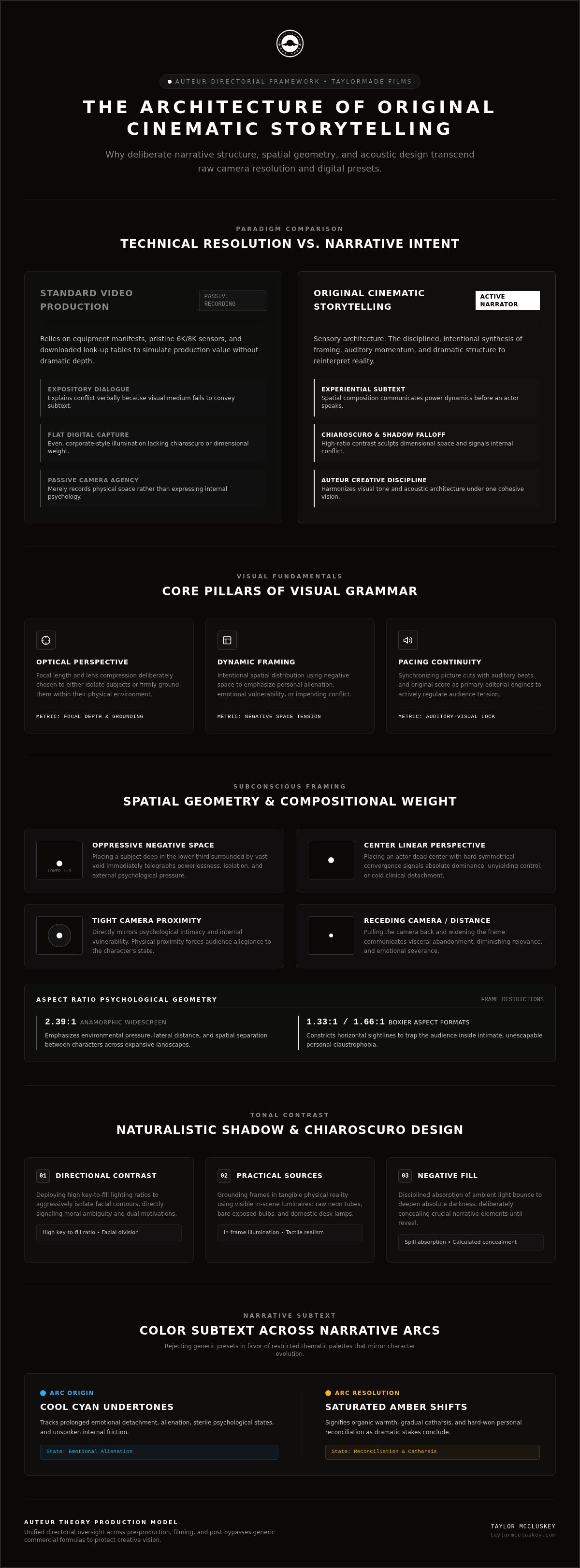
Generic Video Production vs. Original Cinematic Storytelling
Most commercial video content operates on a superficial level. It relies on hyper-saturated grades, quick whip-pans, and generic stock footage designed to appease platform algorithms. Original cinematic storytelling rejects this fast-food approach. While standard video production seeks immediate visual stimulation, authentic cinema demands deliberate narrative engagement. Confident cinematic works trust the audience to piece together visual clues, uncover subtext, and experience the emotional stakes without spoon-fed narration.
Deconstructing the Stock Video and Preset Trap
Algorithmic optimization produces uniform creative output. When hundreds of creators apply the same downloadable look-up table or rely on automated transitions, individual artistic voice evaporates. True visual narrative stems from custom problem-solving designed specifically for the script. Mimicking short-form visual trends strips a production of longevity. An original dramatic work built on structural framing and narrative intention remains timeless long after platform-driven visual fads fade away.
Pacing, Rhythm, and Narrative Breathing Room
Pacing separates formulaic corporate content from enduring dramatic cinema. Generic video editing operates at a relentless clip, afraid that a momentary pause will cause viewers to scroll away. In contrast, cinematic editing uses tempo as a dynamic narrative instrument:
- Dramatic Breathing Room: Holding on a character's reaction shot after a revelation forces the viewer to process internal psychological weight.
- Rhythmic Variation: Alternating rapid, high-tension sequences with deliberate, quiet compositions prevents emotional fatigue.
- Subtextual Cuts: Cutting on emotional realization rather than superficial physical action maintains true dramatic continuity.
This structural contrast reveals why generic video feels forgettable while auteur-driven storytelling commands lasting authority. When a production bypasses cookie-cutter templates to construct bespoke visual and sonic worlds, the emotional impact endures. Ready to elevate your narrative past derivative commercial formulas? Partner with TaylorMade Films for film production services that bring an uncompromising auteur perspective to the screen.
Executing the Auteur Vision: The Collaborative Production Workflow
Traditional studio structures frequently fragment the filmmaking process. Cinematographers, sound designers, and editors often work in rigid silos, producing technically competent films that lack emotional cohesion. True auteur filmmaking dismantles these departmental divides. Executing original cinematic storytelling requires an agile, integrated workflow where every phase of production answers to a singular artistic North Star.
Pre-Production Blueprints and Visual Scripting
Rigorous pre-production is the backbone of creative control. Auteur direction relies on comprehensive pre-visualization long before crew members arrive on set. Storyboards, detailed lookbooks, and precise shot lists define the spatial geometry, camera movement, and lighting ratios for every setup. Sonic architecture enters the conversation immediately:
- Visual Storyboarding: Translating emotional beats into framing choices and focal lengths prevents indecision on set.
- Acoustic Palettes: Mapping temp sound design and musical themes against the script informs scene pacing during rehearsals.
- Cross-Department Alignment: Running unified prep sessions ensures lighting, costume textures, and art direction support the same psychological subtext.
Unifying Sound and Vision in the Final Cut
Post-production is where the multidisciplinary framework crystallizes. Standard commercial pipelines assemble picture edits against temporary stock tracks, forcing composers to fit music into rigid, pre-cut timelines. An auteur workflow treats picture editing and sonic composition as simultaneous disciplines. Editorial cuts respond directly to musical rhythms, while final color grading harmonizes with acoustic textures to reinforce tone.
This hands-on convergence defines the boutique production methodology executed under the TaylorMade Films banner. By uniting multi-disciplinary musicianship, acting experience, and visual direction, independent productions bypass bloated administrative layers. Directing with this level of creative focus produces original cinematic storytelling that feels deliberate, cohesive, and artistically uncompromising from the opening frame to the final credit roll.
Building Your Independent Cinematic Legacy
Capturing digital footage is simple; commanding an audience's emotional allegiance requires architectural discipline. Moving beyond commercial presets means committing to intentional spatial geometry, controlled shadow ratios, and dynamic narrative breathing room. Auditory design and original score cannot wait for the final delivery. They serve as co-equal narrative engines that dictate dramatic rhythm from the script phase through the final master. True original cinematic storytelling demands singular focus, breaking down departmental barriers so that every cut, shadow, and chord serves a deeper thematic truth.
Bridging that gap requires an integrated creative vision. Through a multi-disciplinary portfolio spanning film direction, acting, and music composition, the boutique production methodology executed under the TaylorMade Films banner proves the power of auteur leadership. By unifying custom soundscapes with precise visual language, independent narrative projects achieve lasting emotional resonance. Ready to transform your artistic concept into an unforgettable screen experience? Explore original cinematic productions and creative collaborations with Taylor McCluskey and shape your cinematic voice today.
Frequently Asked Questions
What is the difference between cinematic video and standard high-definition video?
Standard high-definition video prioritizes literal visual documentation and high technical sharpness, while cinematic video uses deliberate visual grammar to construct narrative subtext. Standard capture records reality evenly for informational consumption. Cinematic production relies on intentional framing, controlled optical depth, directional lighting ratios, and rhythmic pacing. It guides the audience's subconscious interpretation of events rather than simply displaying crisp pixels across a digital display.
Can an independent production achieve a cinematic look without a massive budget?
Yes, because cinematic execution depends on creative discipline rather than massive equipment packages. Independent filmmakers achieve striking visual power by mastering natural light, controlling shadow falloff with negative fill, and blocking actors with spatial purpose. Rigorous pre-production planning, strong visual storyboards, and decisive creative choices consistently outperform expensive camera packages that lack clear artistic direction.
How does original sound design elevate cinematic storytelling above stock music?
Original sound design and bespoke composition reflect the exact emotional cadence of a scene, whereas stock audio tracks offer only generic emotional placeholders. Bespoke acoustic architecture introduces character leitmotifs that develop alongside the plot. In true original cinematic storytelling, customized Foley, low-frequency atmospheric textures, and sudden silences integrate into the picture edit, actively driving dramatic tension rather than trailing behind it.
Why is mise-en-scène critical to original cinematic narratives?
Mise-en-scène establishes character hierarchy, subtextual conflict, and emotional tone before an actor speaks a single line. By controlling costume textures, set geography, physical props, and light placement, the director communicates internal narrative states visually. This discipline eliminates the need for clumsy, exposition-heavy dialogue and deepens viewer immersion by transforming the entire physical frame into an active narrative canvas.
What role does an auteur director play in boutique visual production?
An auteur director establishes and protects a singular artistic North Star across visual framing, performance, and auditory design. In a boutique production workflow, such as the approach utilized under the TaylorMade Films banner, the director dismantles disconnected department silos. Unifying musical instincts, acting craft, and camera direction ensures the original script concept reaches the final delivery without creative dilution.
How do visual artists balance aesthetic beauty with authentic narrative depth?
Artists maintain balance by ensuring every stylized visual choice directly advances dramatic conflict or illuminates character psychology. Pretty imagery becomes hollow when deployed solely for decorative appeal. In original cinematic storytelling, expressive lighting, color palettes, and camera movement must emerge organically from the script. When visual style operates as a functional narrative metaphor, the finished piece delivers genuine dramatic resonance.


