

What if the hardest part of seeing a great indie rock show isn’t choosing the band, but finding the announcement in time? Upcoming indie rock concerts are often posted across artist, venue, and event pages, and details can change after the first announcement. A missed ticket update or unchecked date can turn a promising plan into a frustrating one.
A little verification goes a long way. Check an artist’s official updates alongside the venue’s event page, then revisit both before you travel. Taylor McCluskey’s website shares news and live-show information, including updates connected to The Mfics, giving fans a direct source to follow for announcements.
This guide explains how to find current concert news, compare shows with your schedule and musical tastes, and keep track of event details. It also covers what to review before heading out, from ticket information to venue guidance. With a clear plan, you can spend less time piecing together scattered listings and more time looking forward to the music.
Key Takeaways
- Find upcoming indie rock concerts by starting with artists you want to see, then checking their official updates.
- Compare standalone shows, multi-artist bills, and festivals by lineup, event details, and your schedule.
- Use a pre-show checklist to review ticket information, travel plans, personal essentials, and current entry guidance.
- Follow Taylor McCluskey’s official updates for live-show news, including announcements connected to The Mfics.
Upcoming Indie Rock Concerts: What Fans Need to Know First
Concert news rarely arrives in one place. An artist may share a tour announcement, a venue may post an event page, and ticket information may appear separately. Before comparing listings, establish what counts as an official announcement and which details need checking.
An official concert announcement is a future live performance listed or confirmed through the artist’s or event organizer’s official communication channel. It makes a show discoverable, but details can still change. Dates, running times, lineups, and other event information may be updated, so revisit official sources as the show approaches.
Upcoming indie rock concerts can take several forms. A standalone show centers on one artist or band, sometimes with an opening act. A multi-artist bill features several performers at one event. A festival appearance places an artist within a larger program that may span multiple stages or days. The format shapes the experience, so read beyond the headline act before making plans.
What counts as an indie rock concert?
Indie rock is a broad music category, not a fixed concert format or strict checklist. A bill might feature independent artists, bands with varied sounds, or genre-adjacent acts. Listeners may draw the boundaries differently, so treat a promotional label as a discovery cue rather than a definitive classification. For background on the genre’s origins and evolution, explore this overview of the history of indie rock.
For fans, the practical question is whether the performers and their sound appeal to them. Review the full lineup, not just the category attached to the listing. A mixed bill may introduce you to unfamiliar acts, while a single-artist performance may offer a more focused set. The better fit depends on what you want from the night.
Why concert information can appear in several places
Artists, venues, promoters, and ticketing pages share event information with their audiences. Their posts may appear at different times or emphasize different details. An artist’s announcement may introduce a date, while a venue page provides event logistics and a ticketing page displays purchase details. Each page serves a different purpose.
Use the artist and event organizer as primary references for whether a performance has been announced and for updates to its status. Then compare the event listing with venue and ticketing information before making plans. If details don’t match, look for the latest official update instead of relying on an older repost or undated listing.
- Standalone show: Focus on the featured artist, support acts, and event details.
- Multi-artist bill: Check which performers are included and whether the listing names the full lineup.
- Festival appearance: Review the festival program for the artist’s place in the wider event.
A listing is a starting point, not a permanent snapshot. Save the official event page and revisit it before the show to keep your plans aligned with current information.
How to Find Reliable Upcoming Indie Rock Concert Announcements
Start your search with artists you want to hear, rather than a flood of unfiltered event listings. Build a watchlist, follow official updates, and compare event details across relevant pages. This keeps discovery focused and gives you a clear way to verify an announcement before arranging your night around it.
Start with artists and bands you already follow
Make a short watchlist of favorite artists, bands, and related acts you’d be curious to see live. Check their official websites and communication channels for tour news and appearances. Artist pages are useful because they share updates directly from the performer’s side. Taylor McCluskey and The Mfics are two acts to follow through official artist updates for live-music news.
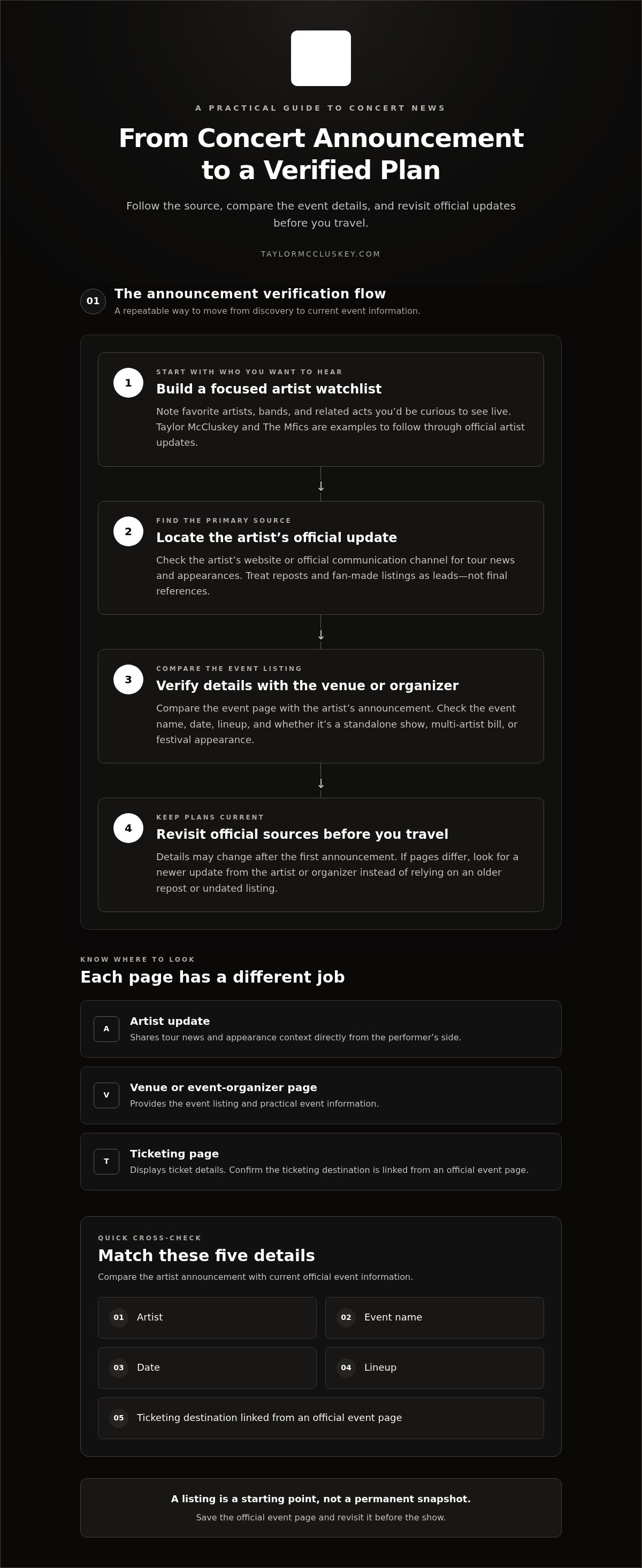
Turn your watchlist into a repeatable routine. When a new post appears, follow these steps:
- Identify the artist. Confirm the announcement names an act you want to see, or one whose music you’d like to discover.
- Find the official update. Look for the announcement on the artist’s website or an official communication channel. Treat reposts and fan-made listings as leads, not final references.
- Verify the event. Open the venue or event-organizer page and compare its details with the artist’s announcement before making plans.
This process helps distinguish a useful announcement from a vague mention, outdated post, or listing that lacks essential details. An event page may add practical information, while the artist’s update provides context about the appearance. Use both to build a fuller picture.
Cross-check event details before making plans
Compare the artist announcement with the venue or event-organizer listing. Check that the event name and date match, look for the lineup, and note whether it’s a standalone show, multi-artist bill, or festival appearance. Confirm that the ticketing destination is linked from an official event page before proceeding.
Details can change after an announcement. Revisit official sources before you travel, especially if you saved the listing well in advance. If two pages differ, look for a newer update from the artist or organizer and use the current event information to guide your plans.
Concert announcement check: “Match the artist, event name, date, lineup, and ticketing destination against current official updates.” Keep this checklist with the listing you save. It makes it easier to review the essentials without searching from scratch each time.
For a direct source on Taylor McCluskey’s live-show news, follow Taylor McCluskey’s official updates, including announcements connected to The Mfics. Start with official artist information, then use the event listing to check the details that shape your plans.
How to Choose Between Indie Rock Shows and Event Listings
A listing is more than an artist name and a date. The event format, lineup, and schedule shape what the night will feel like. Compare them with your priorities, then use current official event information to decide whether a show is a good fit. No format is universally best, and genre labels can overlap across bills and festivals.
Standalone shows, multi-artist bills, and festivals
A standalone show puts the focus on one featured artist, while a multi-artist bill brings several performers together. A broader lineup can be a chance to discover acts you don’t already know. Festival appearances sit within a larger program, so the featured artist is only one part of the event. Check the full schedule and event details before deciding whether the festival fits your plans.
| Event format | What to compare | A good fit if you want |
|---|---|---|
| Standalone show | Featured artist, support acts, date, and event details | A night centered on a particular performer |
| Multi-artist bill | Full lineup, event format, date, and listing details | Several performances and the chance to hear unfamiliar acts |
| Festival lineup | Full program, artist schedule, event dates, and official updates | A broader event with multiple performers |
These are useful distinctions, not rigid genre boundaries. A festival may include indie rock alongside genre-adjacent performers, and a multi-artist bill may bring together artists with different sounds. Treat labels as clues, then assess the lineup and format. That gives you a more grounded basis for choosing than the event category alone.
A practical show-selection framework
Start with artist fit: how strongly do you want to see the featured act, and does the rest of the lineup interest you? Next, consider the format. Decide whether you’d prefer a focused performance, several sets, or a larger festival program. Separate essential details from preferences. A matching date and a clear event listing are fundamentals; lineup breadth and the chance to discover new music are personal priorities.
Before settling on an event, confirm the date, lineup, and format on the current official listing. Then compare it with your calendar and how much time you want to spend at the event. If two shows appeal equally, use practical considerations such as schedule and how much of the lineup you’d like to see as tie-breakers.
Once you’ve chosen a show, review ticket details before buying. For a focused look at the purchase process, consult the 2026 rock concert ticket buyer’s guide. The right choice matches your musical interests, fits your plans, and has details you can verify.
A Fan’s Checklist for Planning an Indie Rock Concert Night
A strong concert plan leaves room for the music and keeps practical details within reach. After choosing a show, take a few minutes to check current event information, organize your ticket, and plan your journey. Policies and instructions vary by event, so follow the guidance for your concert rather than assuming every venue works the same way.
What to confirm before concert day
Review the event listing and ticket instructions before you leave. Save the official event information somewhere easy to access, such as a bookmarked page or the ticket format provided for the event. If you’re attending with someone, make sure they know the plan and can access the details they need. A quick check can prevent last-minute searching.
- Event: Recheck the date, venue information, event name, and lineup. Confirm that you have the listing for the show you chose.
- Ticket: Review the ticket instructions and keep the ticket accessible in the format provided. Check whether the event information includes details you’ll need at entry.
- Travel: Plan how you’ll get to the venue and leave afterward. Allow time for the journey, and keep the venue address or directions available.
- Entry: Read the venue’s current guidance for entry, accessibility, and permitted items. Requirements can differ, so follow the instructions for your event.
- Essentials: Prepare personal items that suit the event and your plans. Use the venue’s permitted-items guidance to decide what to bring.
Keep the event page and ticket details together where possible. If your ticket is delivered digitally, follow the provider’s instructions for accessing it. If the event supplies another format, follow those directions. The goal is to have the information ready without relying on memory or an old screenshot that may not reflect an update.
How to prepare for changes or updates
Concert information can be revised after an initial announcement. Check official artist, venue, or event-organizer updates close to the event, then compare new information with the details you saved. If the schedule or lineup has changed, use the current event source as your reference and adjust your plans.
Build some flexibility into your evening. Keep travel details handy, know where to find the latest event information, and don’t treat an old post as the final word. For upcoming indie rock concerts, this last review connects the announcement you first saved with the practical instructions that apply on the day.
Before heading out, review the event’s current entry guidance and confirm that your ticket and travel plan are ready. For live-show news that may inform future plans, follow Taylor McCluskey’s official updates, including announcements connected to The Mfics.
Follow Taylor McCluskey and The Mfics for Official Live Updates
General concert listings help you scan what’s happening across the indie rock scene. For news about a particular artist, a direct source matters. Taylor McCluskey’s official website brings together news, updates, and artist information, making it a useful destination for fans following live-show announcements.
The same approach applies if you’re interested in The Mfics, a live-music project associated with Taylor McCluskey. Follow official artist updates for relevant news, then use each event’s information to shape your plans. This keeps your search connected to the artist rather than relying only on third-party listings that may not reflect the latest update.
Where Taylor McCluskey’s live updates fit into your concert search
Add the official website to your regular concert-search routine. It’s a direct reference for Taylor McCluskey news and updates, including information connected to The Mfics. Follow along without assuming a particular schedule: rely on an announcement when it appears, then use its current event details to decide what to do next.
This artist-first perspective complements broader searches for upcoming indie rock concerts. If a listing catches your attention, compare it with official artist information and the relevant event page before making plans. Each source plays a role: artist updates connect you directly to the performer, while event information helps you understand the specific listing.
Stay connected between show announcements
Following an artist can offer more than a way to spot live-show news. Taylor McCluskey’s website is also a place to explore music and other creative work. Those updates add context between concert announcements and keep the focus on the artist’s work, not just an event calendar. Start with what interests you, then return to official updates as your plans develop.
There’s no need to make following an artist complicated. Keep the website among your trusted sources, check in when you’re looking for live news, and use event information alongside the relevant organizer or venue listing. If music, film, or artist merchandise also interests you, Taylor McCluskey’s creative work offers more to explore beyond concert planning.
For fans following The Mfics or Taylor McCluskey’s other live-show news, the official website is a natural place to stay connected. Visit Taylor McCluskey’s official website for artist news, updates, and live announcements.
Make Your Next Live-Music Plan
The search for upcoming indie rock concerts can become part of how you stay connected to the music you enjoy. Keep a short list of artists you’d like to hear live, and let official announcements guide your next plan. For live music fans who are also organizing private celebrations or corporate gatherings, versatile live bands like The R Factor provide another way to enjoy a full ensemble experience. When a show catches your attention, check the latest event information before committing your evening.
If Taylor McCluskey’s music or The Mfics interests you, make the artist’s official updates one of the places you follow. An announcement can give you a reason to turn listening into a live experience, while the wider creative work offers more to explore between shows. Follow Taylor McCluskey’s official updates for artist news and live announcements. Stay curious, keep listening, and leave room for the next show that feels right.
Frequently Asked Questions
How far in advance are indie rock concerts announced?
There’s no fixed announcement window; timing varies by artist and event. A tour may be revealed well ahead of a performance, while an individual appearance may surface closer to the date. If you’re tracking a particular act, follow its official channels and check periodically rather than relying on one early search. This helps you catch ticket-release news and later additions without assuming every artist follows the same schedule.
Are indie rock concerts usually part of a tour?
Some are tour dates, but plenty of indie rock performances are standalone shows, festival appearances, or one-off multi-artist events. A listing’s wording can help clarify the format: a tour announcement often groups dates together, while a venue event page may describe a single performance. Don’t assume a show belongs to a larger run. Check the artist’s announcement or event details for context before planning around other dates.
Can an indie rock festival lineup change after it is announced?
Yes. A festival may update its lineup or schedule after the initial announcement. Check the festival’s official program as the event gets closer, especially if you’re planning around a particular performer or stage. Save the program source rather than relying on an old image or repost, which may not reflect revisions. If your plans depend on a specific set, look for the latest schedule before setting your arrival time.
What should I do if a concert listing conflicts with an artist announcement?
Pause before relying on either version. Compare publication dates, then look for a newer update from the artist, venue, or event organizer. A listing may retain older details while another page has been revised. If the date, lineup, or event status still conflicts, use the event organizer’s current information as your practical reference and revisit it before making travel arrangements. Avoid sharing a disputed detail as confirmed.
Do indie rock concerts have age restrictions?
Age requirements depend on the specific event and venue, so there isn’t one rule for all indie rock concerts. Look for an age designation or entry policy on the event listing and venue information before buying tickets or travelling. Read the policy for your event carefully, and don’t assume a daytime event or all-ages lineup means unrestricted entry.
How can I find out whether a concert venue is accessible?
Start with the venue’s official accessibility information, then compare it with the event listing for show-specific details. Look for information relevant to your needs, such as accessible routes, seating arrangements, or arrival procedures. Venue layouts and event setups can differ, so a general venue page may not answer every question about a particular performance. Use the published venue and event information to assess whether it covers the details you need.
What should I check before travelling to an indie rock concert?
Before travelling, confirm the event is still scheduled and check the latest information for the upcoming indie rock concert you plan to attend. Verify the destination and entry instructions, then review your route, transport options, and return plan. If you’re travelling from farther away, consider whether your plans can accommodate a change to event details. Keep your ticket accessible and save the current event page so you can refer to the same information on the way.


