

What if the most useful tour update is the one that tells you there isn’t a date to book yet? Independent rock tour dates can appear on artist websites, venue calendars, and ticketing platforms, and those listings don’t always update at the same time. Taylor McCluskey and The Mfics’ official tour page currently says “Dates coming soon,” so the artist’s own updates are the clearest reference point.
It’s frustrating to find a show listing without enough detail to know whether it’s current or confirmed. This guide shows you how to follow artist updates, cross-check a date, venue, event status, and ticket link, and understand what each detail confirms before making plans.
You’ll also learn how to move from discovering a performance to planning your attendance, while distinguishing official ticket information from resale listings. A quick verification can make a live-music night easier to plan and help you stay connected to what’s coming next.
Key Takeaways
- Start with an artist’s official channels for the clearest source of independent rock tour dates, then compare announcements with venue and ticketing listings.
- Read each schedule entry for its date, venue, ticket link, and status note. Each detail helps establish what the listing confirms.
- Use artist announcements, venue pages, and ticketing platforms for different purposes, and cross-check event details before making plans.
- Follow a practical sequence: verify the date, review event information, and check venue entry requirements before setting out.
- Follow Taylor McCluskey and The Mfics through official artist updates to keep track of live-performance news.
Where to Find Independent Rock Tour Dates You Can Trust
Where are current independent rock shows announced? Start with the artist. Tour dates may appear in search results, social posts, venue calendars, and ticketing platforms, but artist-controlled updates are the clearest starting point for checking what’s been announced. An artist’s website or verified social channel can also point you to event-specific information.
An official tour-date listing is an artist-approved record of announced live appearances, with event details for fans to review. It’s different from a general music update. A release announcement shares news about a recording, while a show recap looks back at a performance. Neither, on its own, indicates an upcoming concert.
Start with the artist’s official updates
For Taylor McCluskey, visit the official website for artist news and show information. The tour page currently says “Dates coming soon,” so it doesn’t list upcoming 2026 dates to plan around. Revisit the page for changes, and use artist-controlled announcements as your reference before acting on a date listed elsewhere.
Reposts can circulate without their original context. A past event may still appear in a search result or social feed, and a music announcement can be mistaken for a tour update. Look for details that clearly identify a live appearance, such as an event name, performance date, venue, or link to event information. If those details aren’t there, don’t treat the post as a confirmed show listing.
Music context can help you recognize the scene an artist works within, but it isn’t a schedule. Indie rock offers background on the genre’s origins, subgenres, and evolution. For show planning, return to the artist’s own event updates.
Use venue and event listings as supporting sources
A venue’s event page can add practical details to an artist announcement, including the event name, timing, and entry information. A ticketing listing can help you find event-specific ticket information. Treat both as supporting references, then compare them with the artist’s updates.
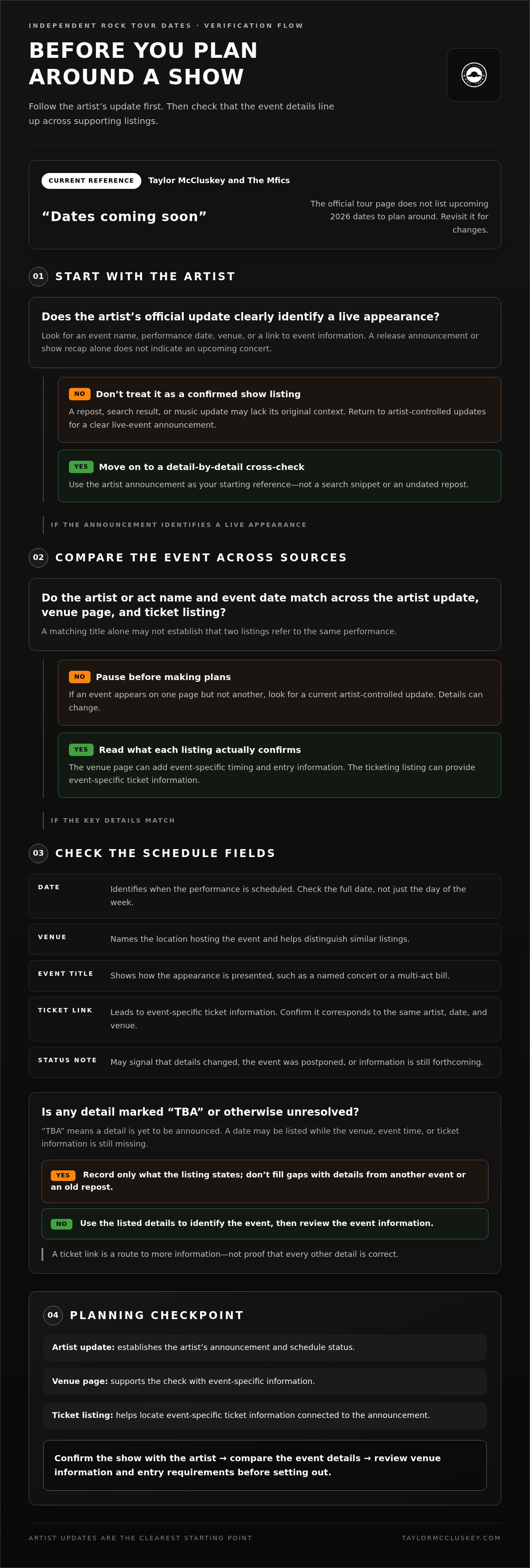
Check that the artist or act name and event date match across the artist announcement, venue page, and ticket listing. If an event appears on one page but not another, pause before making plans and look for a current artist-controlled update. Details can change, and a matching title alone may not establish that two listings refer to the same performance.
- Artist channel: Start here for the artist’s announcement and schedule status.
- Venue page: Use it to review event-specific information.
- Ticket listing: Cross-check the event and follow the ticket information connected to the announcement.
Keep the sequence simple: confirm the show with the artist, compare the event details, then use the venue and ticketing pages to prepare. This gives you a firmer basis for planning than a search snippet or an undated repost.
How to Read an Independent Rock Tour Schedule
A tour schedule is an artist’s organized list of announced live appearances. It helps fans see which events have been shared and what information is available for each one. When following independent rock tour dates, read each entry carefully. A date alone doesn’t tell you where the show is, what it’s called, or how to find ticket information.
An announced date confirms that a performance has been named, while a complete event listing gives you details to identify and plan for it. Use the schedule as a guide to the information currently provided, then review the event’s own details before making arrangements.
What details belong in a useful tour listing?
Start with the essentials: the performance date, venue name, and event title. Together, they help distinguish one appearance from another and give you details to match across event pages. A ticket link can take you to the next step, while a status note may clarify that details have changed or that some information is still forthcoming.
- Date: Identifies when the performance is scheduled. Check the full date, not just the day of the week.
- Venue: Names the location hosting the event and helps distinguish listings with similar titles.
- Event title: Shows how the appearance is presented, such as a named concert or a multi-act bill.
- Ticket link: Leads to event-specific ticket information. Confirm that it corresponds to the same artist, date, and venue.
- Status note: Signals whether the listing is current, changed, postponed, or still awaiting details.
These fields serve different purposes. The date anchors your calendar, the venue identifies where to go, and the event title provides context. A link is a route to more information, not proof that every other detail is correct. Compare it with the schedule entry and event page before relying on it.
How to interpret incomplete schedule information
“TBA” means a detail is yet to be announced. It might appear beside the venue, event time, or ticket information. A listing can include a performance date while leaving another part of the event unresolved. Read each field separately rather than assuming one known detail confirms everything.
If a date is shown but the venue or ticket link is marked TBA, record only what the listing states. Don’t fill gaps with details from an unrelated event or an old repost. Return to the artist’s official updates for changes, then compare event information as it appears. This keeps a partial schedule useful without mistaking it for a complete plan.
For an artist-specific reference, explore Taylor McCluskey’s official tour information and use the schedule’s status notes to understand what has been announced.
Official Announcements vs. Third-Party Independent Rock Listings
Independent rock tour dates can appear in several places, and each source plays a different role. An artist’s announcement is the starting point for tour-wide news. A venue page focuses on one event. A ticketing or discovery platform can make shows easier to find, but its listing should match an artist or venue announcement before you rely on it.
The artist’s own update is the primary reference because it communicates performance information directly from the source. Other listings can add useful detail, but they work best as corroboration rather than a replacement for that announcement.
What artist and venue announcements each confirm
Artist-controlled channels are useful for following announcements across multiple events and seeing whether the artist has shared a schedule update. A venue page serves a narrower purpose: it provides information for the event hosted there. Compare the event name, date, and status across both. If one source says a show is postponed while another still presents the original date, look for a newer official update before relying on either listing.
How third-party event listings fit into the search
Platforms such as Ticketmaster, Bandsintown, and Songkick can help fans discover events or locate event information. These sources serve different purposes: a ticketing page may focus on ticket information, while a discovery platform may organize concert listings. Use them as additional reference points, then compare the details with the relevant artist or venue announcement.
| Source type | Strongest use | Detail to cross-check |
|---|---|---|
| Artist announcement | Following tour-wide news and artist-shared updates | Event name, date, and current status |
| Venue event page | Reviewing information for a specific performance | Artist or event title, date, and practical event details |
| Ticketing listing | Finding ticket information connected to an event | Whether the event name and date match an official announcement |
| Discovery platform | Finding possible listings in one place | Whether the artist or venue also announces the same event |
Use the table as a quick source check, not a ranking of which page is always right. Updates may not appear everywhere at once, and similar event titles can refer to different performances. Compare the full date and artist or event name, then look for consistent status information. If details conflict, return to the latest artist or venue announcement rather than choosing the listing that looks most complete.
This separates discovery from confirmation. A third-party listing can point you toward a possible show; a matching artist or venue update gives you a stronger basis for treating it as current event information.
Plan Your Night After Finding a Rock Tour Date
Finding a show is the first step. Before building your evening around independent rock tour dates, turn the listing into a practical plan. Confirm the event details, understand the ticket information, and check for updates before you go.
A simple checklist before committing to a show
Follow this sequence to move from a schedule entry to an informed plan:
- Match the date and venue. Compare the event date and venue name on the artist’s official update with the venue’s event page. Make sure both sources refer to the same performance.
- Review the event timing. Check the event page for doors and show times. These can differ, so note the details that affect when you want to arrive.
- Read the entry information. Review the venue’s stated policies, including any requirements that apply to entry. Don’t assume policies are identical from one event or venue to another.
- Follow the official ticket link. Use the ticket information connected to the verified event listing. Confirm the artist, date, and venue on the ticket page before proceeding.
- Plan the practical details. Consider your route, transportation, and how much time you need to arrive. Keep your plan flexible enough to account for changes to event information.
Ticket pages can contain important details about the purchase and event. For more focused guidance on evaluating ticket information, see the rock concert ticket buyer’s guide. Use it alongside the event’s official details, not instead of checking them.
Keep track of announcements and changes
Plans are easier to adjust when you have a clear reference point. Bookmark the artist’s official update page and revisit it as the event approaches. Check the venue’s event page again before finalizing your arrangements, especially if the listing has changed since you first found it.
Separate confirmed details from assumptions. A fan-shared post may point you toward an update, but it shouldn’t replace the artist’s or venue’s event information. If the event time, venue, or status differs between pages, look for a newer official update before setting out. Keep the latest verified details together so you’re not relying on an old screenshot or saved search result.
Follow Taylor McCluskey’s official updates for artist news and show information, then use verified event details to shape your plans.
Follow Taylor McCluskey and The Mfics for Official Tour Updates
Taylor McCluskey is an independent multidisciplinary artist whose work spans music, acting, and filmmaking, including live music performances. The Mfics tour is part of that live-performance work, making Taylor’s official updates a useful place for fans to follow independent rock shows. Artist news and a tour schedule serve different purposes, so look specifically for information about live appearances.
Visit the official website for Taylor’s artist news and show information. As of October 2026, the tour page says “Dates coming soon,” and no upcoming 2026 dates are listed there. Follow the official page for changes rather than treating an outside listing or an older post as a current date.
Follow the artist’s live-music updates
Bookmark the official site and revisit its tour information as announcements develop. An update about a song, film, or other creative work isn’t automatically a performance announcement. Look for details that identify a live appearance, then use the artist’s information as your reference. This keeps your search focused on schedule news without confusing it with broader career updates.
Make the artist’s own page your starting point, then return to it when you’re ready to make plans. If a new announcement appears, note the details it actually provides and follow any event-specific information connected to it. Don’t infer a date, venue, or ticket status from a general mention of The Mfics or a post that doesn’t describe a performance.
Move from discovering a date to attending
Once an official update identifies a performance, use its event information to continue planning. A venue page can provide details for that specific appearance, while ticket information linked with the verified event can guide your next step. Follow the event listing for practical information rather than assuming details from another show will apply.
- Identify the event: Check that the announcement concerns a live performance.
- Follow its details: Use the event information connected to the artist’s update to find the venue and timing.
- Review before you go: Revisit official artist and event information for changes, ticket details, and entry requirements.
This approach connects discovery with attendance while keeping the source of each detail clear. If the artist’s schedule changes, start with the official update and follow the specific information it provides. For Taylor McCluskey and The Mfics, the official website is the place to follow live-music news and future tour updates.
Explore Taylor McCluskey’s official website for artist news and tour updates.
Keep the Next Live Moment in View
Following independent rock tour dates can become part of how you stay connected to the music you value. Keep a short list of artists you want to see and make checking their official updates a regular habit. That way, a new announcement has a better chance of becoming a plan rather than another post lost in a crowded feed. For those inspired by live performances who may be planning their own private celebrations or corporate functions, exploring established event acts like thehitmentrio.com offers a helpful example of how professional live bands arrange schedules and entertainment.
Taylor McCluskey brings music together with a broader multidisciplinary practice, while The Mfics tour gives fans a live-performance thread to follow. Let the artist’s official updates shape your next step, and use each event’s details to guide your plans. There’s no need to rush ahead of an announcement. Stay curious, stay connected, and be ready when a show comes into view.
Explore Taylor McCluskey’s official updates for artist news and information about live performances. Your next memorable night of independent rock could begin with a simple check-in.
Frequently Asked Questions
Are independent rock tour dates announced all at once?
No. Independent rock tour dates may be announced in stages rather than as one complete itinerary. An artist might share an initial set of shows and add more appearances later, or announce a single performance separately. Don’t assume an empty stretch on a schedule means no further shows will be added. If you’re following a particular artist, check their official updates periodically instead of relying on one early announcement.
What does TBA mean on an independent rock tour listing?
TBA means “to be announced.” It indicates that a particular detail, such as the venue, event time, or ticket information, hasn’t been shared in that listing yet. Read it in context: a date may be provided while another field remains TBA. Avoid filling in the missing detail from an unrelated event or an old post. Recheck the listing later for an update.
Can independent rock tour dates change after an announcement?
Yes. A performance may be rescheduled, postponed, or canceled after it’s announced. If you’ve saved a date, check for updates again before making final arrangements, especially if you’re traveling or coordinating with others. Look for a clear status update from the artist, venue, or event organizer. If sources show different information, don’t rely on an older calendar entry until the current status is clear.
Do independent rock tour schedules include festival appearances?
They can. An artist may include a festival set alongside club or other live appearances, but schedules vary in how they display those events. Festival information may be published separately from an artist’s regular tour listing. For a festival performance, use the event’s official program to check the artist’s set information and any festival-specific arrangements. A festival appearance doesn’t necessarily mean the artist is playing a separate headline show.
How early should I arrive for an independent rock show?
There isn’t one arrival time that fits every show. Check the event information for doors, the scheduled performance time, and any guidance about entry or queues. If the event has multiple performers, the listed show time may not indicate when a particular act takes the stage. Build in enough time for your journey and entry, and revisit the event details on the day in case they’ve changed.
Can age restrictions vary between independent rock tour venues?
Yes. Entry rules can differ by venue and event, so don’t assume the policy from one show applies to another. Check the specific event page for age restrictions, identification requirements, and whether any accompanying adult conditions are stated. If the listing doesn’t make the policy clear, use the venue’s official event information before making plans. This is especially useful when attending with younger fans.
What should I do if a concert is postponed?
First, check the artist’s or venue’s official update for the event’s current status and any new information. Then review the ticket seller’s instructions for your order. Keep your ticket and purchase confirmation until the event organizer or seller explains what applies. Don’t assume the original ticket is valid for a new date or that a refund has been processed. Follow the published instructions before changing your plans.
Visit Taylor McCluskey’s official website for artist news and live-performance updates.


