

What if collaborating with a film director for the first time didn’t mean giving up control of your idea? It’s natural to worry that creative differences could derail a project, especially if you’re unsure what to bring to the first conversation or who makes the final calls. A strong collaboration doesn’t ask you to surrender your vision. It turns that vision into a shared creative direction.
Start with a clear brief, open communication, and agreed expectations. These give you a foundation for making decisions while leaving room for the director’s expertise. Specific, useful feedback can protect what matters most to you and help the project move forward instead of stalling over competing ideas.
This guide explains what to prepare before your first meeting, how to describe the film you have in mind, and how to approach feedback and decision-making through production. You’ll also see how an organized process can carry a project from concept to final delivery. At TaylorMade Films, directing is a collaborative process that connects a project’s intent with its visual execution.
Key Takeaways
- For collaborating with a film director for the first time, bring visual references, project priorities, questions, and a realistic sense of your review availability.
- Follow a clear path from brief and concept discussion to planning, production, and review so each stage informs the next.
- Separate the project’s non-negotiable purpose from creative choices the director can interpret through visuals, pacing, and performance.
- Make feedback specific and outcome-focused: describe what isn’t working and what you want the audience to feel or understand.
- See how Taylor McCluskey’s film production and directing work under TaylorMade Films connects a project’s intent with its visual execution, from concept through final delivery.
Collaborating with a Film Director for the First Time: Start with Shared Intent
You don’t need to arrive at your first meeting fluent in film terminology. A clear explanation of what the project means to you is more useful than a list of technical terms. The director can help translate your intent into visual choices and clarify which decisions need your input and which fall within their creative role.
Collaboration means working toward a shared result with distinct responsibilities and agreed decision points. You bring the project’s purpose, knowledge of its audience, and priorities. The director interprets those foundations through performance, imagery, pacing, and other creative choices. Early conversations should establish how you’ll make decisions together, particularly when a choice could affect the message, tone, or intended audience response. Artistic control can take different forms in media production; Artistic Control in Film offers context for why creative authority and input are worth discussing clearly.
A successful first director collaboration aligns the project’s purpose with a visual approach, while giving each person a clear role in shaping the film.
What should you bring to the first conversation?
Prepare a short brief, not a finished blueprint. In one paragraph, explain what the project is, who it’s for, and what success would look or feel like. For example, a film introducing a new artist might aim to make viewers feel curious and connected, rather than simply list career milestones. That intended response gives the director a useful creative starting point.
- Essential: the project’s purpose, key message, audience, and any required content or format.
- Open to exploration: visual style, scene structure, transitions, and other choices that could benefit from the director’s interpretation.
Separating these categories prevents preferences from being mistaken for fixed requirements. It also makes clear where there’s room to experiment.
How do you protect your vision while inviting direction?
Start with the emotional effect or central message you want the finished film to convey. Then explain why each reference matters. Perhaps its intimacy feels right, its pace builds anticipation, or its imagery makes an abstract idea tangible. The reason behind a reference is more useful than treating it as an instruction to copy.
When collaborating with a film director for the first time, agree that interpretation is part of the process, not a threat to the brief. A director may suggest a different visual route that serves your core intent more effectively. Keep the purpose steady, discuss meaningful departures openly, and decide together which changes strengthen the film and which take it away from what the project needs.
From Creative Brief to Film Plan: How the Director Turns Ideas into Decisions
A brief turns intention into a working foundation. It guides production choices by connecting each creative decision to the project’s purpose, audience, and desired response. From there, the director develops a visual approach and identifies what the team needs to prepare. The workflow can scale to the project: a short, simple film may need fewer planning documents than a more complex production.
What belongs in a useful film brief?
Include the core idea, intended audience, final deliverables, and essential constraints, such as a required message, format, or deadline. Add references and explain what each one communicates. One might suggest intimate framing; another could capture the energy or color you want. List unresolved questions as well. They give the director a starting point for shaping the approach instead of leaving assumptions unspoken.
How does a director move from concept to shoot?
Concept development turns the brief into a shared creative direction. The director may explore how the story, tone, and imagery can work together, then use planning tools to make those ideas easier to discuss. A storyboard sketches key visual moments; a shot list records specific shots to capture. Neither is necessary for every project.
- Brief: Establish the project’s purpose, audience, deliverables, and constraints.
- Concept discussion: Shape the story and visual approach together.
- Plan: Decide which scenes, people, locations, and preparation steps support the concept.
- Production: Capture the material guided by the agreed creative direction and practical plan.
- Review: Assess the film against its intended message and discuss any needed refinements.
A script sets out spoken words and action. It isn’t the same as a storyboard or shot list. A schedule organizes timing, while a call sheet communicates practical details for a production day. Each tool answers a different question. Use the ones that help the project move clearly from idea to execution.
Which creative decisions should be aligned before production?
Discuss the central story, tone, visual language, and response you want from the audience. Mark which elements are fixed, such as a key message, and which can evolve, such as a scene’s visual treatment. This alignment gives the director room to interpret the brief while reducing avoidable confusion. It won’t eliminate every creative difference, but it gives you shared priorities to refer to when they arise.
What should you expect from production planning?
Planning translates creative priorities into practical choices: who or what needs to appear, which scenes need attention, where filming may take place, and how time is organized. The director should make clear when your input or approval is needed, so you can focus on consequential decisions rather than every logistical detail. The right plan depends on the project’s needs, not a fixed template.
For a broader perspective on how creative intent can shape the production process, explore artist-led film production. To see how a collaborative visual storytelling approach carries ideas toward delivery, Explore TaylorMade Films.
Creative Control and Director Input: How to Make Decisions Together
Working with a director doesn’t mean handing over the project’s purpose or point of view. Your role is to keep the project’s goals and essential requirements in view; the director brings craft and creative interpretation to how the film communicates them. Discuss the balance rather than assuming it. Responsibilities can vary by project, so agree on who contributes, who recommends, and who approves decisions that affect the finished film.
Creative alignment means pursuing the same purpose, not holding identical opinions about every choice. You might favor a direct, explanatory approach, while the director sees an atmospheric sequence as a stronger way to express the idea. The useful question is whether that interpretation serves the film’s intended audience and central message.
Who decides what during a film project?
Use a simple responsibility map to start the conversation. Adapt it to the project, and clarify approval points before work moves forward.
| Decision area | Collaborator input | Director contribution | Shared decisions |
|---|---|---|---|
| Project goals | Defines purpose, audience, and required outcomes | Explores how those aims can work on screen | Confirms that the creative direction serves the brief |
| Visual approach | Shares preferences, references, and essential boundaries | Shapes imagery, pacing, performance, and visual interpretation | Aligns on tone and major changes to the approach |
| Story and revisions | Identifies when a change affects the core message or requirements | Assesses how edits affect the film’s structure and expression | Resolves significant shifts in story emphasis or intended response |
This isn’t a universal chain of command. Some projects give the collaborator final approval on particular outcomes; others give the director greater latitude over creative execution. Name those boundaries in plain language. For example, agree that the core message must remain intact while the director can propose changes to scene order or visual treatment.
How can you handle creative differences constructively?
Pause before debating whether an idea simply feels right. Return to the project brief and the response you want from the audience. Then ask what each option communicates. Would a quiet close-up create intimacy, or would a wider frame better establish the subject’s world? Connect the choice to the film’s purpose, not personal taste alone.
For a first-time collaborator, a difference of opinion can be useful if it reveals competing interpretations of the brief. Let each person explain the reasoning behind their suggestion, then consider what the audience might understand or feel as a result. You don’t need to agree on every instinct, but you do need a clear way to reach a decision.
Before production proceeds, record the agreed direction, who owns any remaining decisions, and which questions are still open. A short written recap can prevent a tentative idea from being mistaken for a final instruction. If the discussion reveals a genuine change to the project’s purpose or required outcome, resolve that first. Then let the director develop the creative approach within the shared direction.
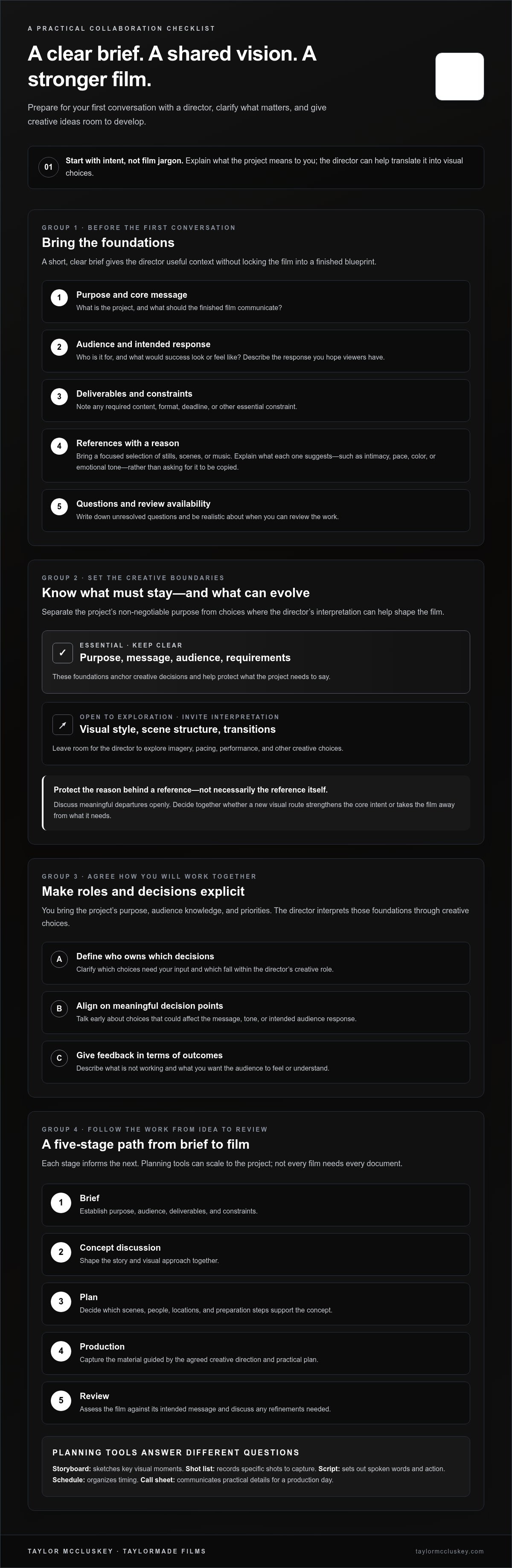
Briefing, Feedback, and Communication: A First-Time Collaborator’s Checklist
Clear communication keeps creative feedback connected to the film’s purpose. Before production begins, prepare the information the director needs and agree on how you’ll share notes, review work, and raise changes. This is especially useful when collaborating with a film director for the first time: specific input gives the director something actionable without dictating every creative choice.
- References: Gather a focused selection of images, scenes, music, or other examples. Add a note about the quality each one communicates, such as intimate framing, restrained pacing, or an energetic tone.
- Priorities: Identify the story points, messages, or deliverables that must remain clear. Separate these from preferences you’re willing to explore.
- Questions: Write down uncertainties about the creative approach, process, or decision points. Raise them rather than letting assumptions shape the work.
- Review availability: Share when you can review materials and who else needs to contribute. Agree on a channel for feedback so notes don’t become scattered across messages and documents.
How do you give notes a director can use?
Describe the moment, the effect you want, and what currently feels unclear. Instead of “make it stronger,” try: “The final scene should leave the audience feeling hopeful, but the current ending feels unresolved. Could we explore a clearer emotional shift?” That gives the director a goal while leaving room to find the right visual solution.
Group notes by story, performance, visuals, sound, and technical corrections. Mark essential changes separately from personal preferences and optional ideas. Then consolidate feedback through one agreed channel and, where possible, one decision-maker. This helps the director distinguish a required correction from a suggestion. For a closer look at the responsibilities behind the role, explore what a professional music video director does.
How do you keep communication focused during production?
Agree on check-ins, review milestones, and who needs to attend each discussion. A brief production update may need a different group than a review of the story or a cut of the film. Keep each conversation focused on the decisions needed at that stage, and record the outcome so the team has a shared reference.
Raise changes early. Explain what has shifted and how it affects the agreed creative direction, rather than introducing a new requirement without context. If a note changes the film’s central emphasis, flag it as a broader creative decision. If it corrects a detail, identify the specific fix. This keeps feedback proportionate and gives the director a clear path to respond.
For visual storytelling that connects narrative with sound and image, explore cinematic storytelling services. To develop a film through focused creative collaboration, explore film production with TaylorMade Films.
Your First Film Collaboration with TaylorMade Films: From Shared Vision to Final Delivery
A successful film collaboration starts with a clear purpose, agreed creative roles, and focused communication. Those foundations help carry an idea through development, production, and review without losing sight of what the film needs to express. You don’t need every creative detail settled at the outset. You do need a shared understanding of the project’s intent and a practical way to make important decisions as the work develops.
For anyone collaborating with a film director for the first time, the process is a partnership between vision and interpretation. You bring your knowledge of the project and the response you hope to create. The director shapes that intent into visual storytelling, guiding the work from concept through final video delivery.
What does a collaborative production relationship look like?
It looks like an ongoing conversation about goals, creative direction, and the choices that will shape the film. A strong process leaves room for the director to develop a visual approach while keeping the project’s central intent in view. You can offer context and feedback at agreed decision points, then give the director space to translate that input into a coherent story on screen.
Taylor McCluskey works across music, acting, and filmmaking as a multidisciplinary artist and filmmaker. Under the TaylorMade Films label, film production and directing bring project intent into visual form, from concept through final delivery. This artist-led perspective connects creative development with the practical work of completing a film.
The workflow should suit the project. A concise video may call for a different development process than a story with several scenes or contributors. What matters is knowing what needs discussion, which decisions are shared, and how feedback will guide the next stage. The production plan can then support the creative direction rather than becoming a process for its own sake.
What is a practical next step after reading this guide?
Write a short description of your project’s central idea and intended audience. Add a few references that capture qualities you value, such as atmosphere, pacing, or emotional tone. Then note the questions you haven’t resolved. This gives a first conversation a useful starting point without requiring a finished script or fixed visual plan.
Before sharing the idea, consider what you want the audience to understand, feel, or remember. That intended response can guide creative discussion if specific choices change during development. Keep your notes direct: identify what matters most, what can evolve, and where you’d value the director’s interpretation. A clear starting point makes the conversation more productive.
Explore TaylorMade Films’ film production work to see how Taylor McCluskey’s directing and production practice brings visual stories from concept to final video delivery.
Give Your Film Idea a Clear Next Step
Your first project doesn’t need a perfect plan before a creative conversation can begin. Start with the idea you want to bring to life and the response you hope it will create. That gives you a meaningful foundation for collaborating with a film director for the first time, while leaving room for the visual approach to develop through discussion.
Keep your next move simple: write down the project’s central thought, who it’s for, and one or two questions you’d like to explore. You can refine the rest together. Taylor McCluskey’s film production and directing work under TaylorMade Films brings visual storytelling from concept through final video delivery, connecting an idea with its on-screen expression.
Explore TaylorMade Films and start a conversation about your project. Your idea is a strong place to begin.
Frequently Asked Questions
What should I prepare before meeting a film director for the first time?
For collaborating with a film director for the first time, bring a concise project note and any existing script, footage, music, or other materials that may shape the work. Identify who needs to approve the film and any known audience, platform, or delivery requirements. Label undecided details as open questions rather than settled instructions. This helps distinguish creative decisions from information the project already has.
How do I explain my vision to a film director?
Explain your vision through the audience’s experience, not only with adjectives. Instead of saying “make it bold,” clarify whether you mean a striking opening, confident performances, vivid imagery, or a decisive ending. Describe what viewers should understand at the start and what you hope they’ll remember afterward. Then invite the director to suggest visual choices that could create that response. The same intention can be expressed in different ways.
Does collaborating with a film director mean giving up creative control?
No. Collaboration doesn’t require abandoning the project’s purpose, but it does make room for the director’s creative interpretation. Clarify which outcomes are essential, which choices the director can shape, and what requires your approval. This protects the film’s central intent without turning every frame into a fixed instruction. Agree on decision-making responsibilities for the specific project rather than assuming they’re determined by job titles.
How often should I communicate with a film director during production?
Agree on a communication rhythm based on the project’s stages and how quickly decisions need to be made. Set check-ins around meaningful review points instead of sending scattered messages whenever a thought occurs. Decide how urgent questions will be raised, who should receive updates, and where approvals will be recorded. A shared decision log can keep current choices visible and prevent an old note from resurfacing as new direction.
What is the best way to give feedback on a film?
Make each note easy to locate and assess. For an edit, identify the scene or timecode, describe the issue, and explain whether it affects story clarity, continuity, or polish. Keep factual corrections separate from subjective preferences, and avoid combining unrelated changes in one comment. This helps the director assess priorities and respond without mistaking a personal taste note for a required correction.
What happens if the director and I disagree about a creative choice?
Treat disagreement as a question about meaning, not a contest over authority. Ask each person to explain what the choice might signal to viewers, then consider whether another option could preserve the intended effect. If the decision can be tested, a rough edit or visual exploration may help compare possibilities. If it affects a core requirement, pause, clarify the priority, and record the agreed direction before work proceeds.


