

What if the score didn’t simply accompany the film, but helped shape the story from the start? The strongest music and film collaboration projects bring sound and image into one creative vision. To get there, decide when to involve a musician, how to align different perspectives, and which format best serves the idea.
Those choices matter because a song, a score, and a music-led film call for different creative decisions. Early choices about format, roles, and timing can influence the whole production. Taylor McCluskey works across music, acting, and filmmaking, and develops film projects under the TaylorMade Films label.
This guide explains how to start a collaboration, agree on roles and creative direction, and choose a format that fits the concept. It also maps a practical path from the first shared idea through production and into a finished work, with sound and story working together at every stage.
Key Takeaways
- Build a shared creative vision by agreeing on the story’s intent and how sound and visuals will support it.
- Move from concept to finished work through flexible stages, with clear roles and review points along the way.
- Choose a format that fits the audience experience, creative scope, and production needs of your idea.
- Use a short project brief to align musicians and filmmakers on story, sound, visual references, and audience.
- Explore how music and film collaboration projects connect to Taylor McCluskey’s work across music, acting, and filmmaking.
What Makes Music and Film Collaboration Projects Work?
Bringing music and film together can be creatively rich, but the two disciplines often begin with different priorities. A filmmaker may focus on character, scene structure, and visual continuity. A musician may start with melody, texture, and emotional movement. The aim isn’t to make one discipline fit neatly around the other. It’s to agree on the intent that lets both strengthen the work.
Definition: A music-film collaboration is shared creative work in which musicians and filmmakers shape sound and visuals to support a common artistic intent.
That shared intent distinguishes collaboration from simply placing an existing track over finished footage. A chosen song can add atmosphere or energy, and that may be exactly what a production needs. But when music and film develop in conversation, each can influence the other: the story may shape the composition, while a musical idea may suggest a scene’s mood or visual direction. Strong music and film collaboration projects make those choices feel connected rather than coincidental.
How do music and film strengthen one another?
Music can guide mood and pacing without telling the audience what to feel. A restrained arrangement can make a quiet scene feel intimate; a sudden rhythmic shift can create unease or propel an edit forward. Sound also shapes interpretation. The same image may feel tender, ominous, or triumphant depending on what accompanies it.
Images work in the other direction. A film can give a song characters, setting, and a sequence of events. It can turn an abstract lyric into a visual story or give an instrumental piece a sense of place. Long-running creative partnerships can show how this exchange develops over time. The List of film director-composer collaborations offers examples of directors and composers returning to work together.
Hypothetical example: A musician writes a song about leaving home. A filmmaker hears hesitation beneath its steady tempo and proposes a short film about someone preparing to depart, but repeatedly pausing at the door. The musician could leave more space in the arrangement during those moments. The film gives the song a concrete image; the music shapes how the pauses feel.
When should music enter a film project?
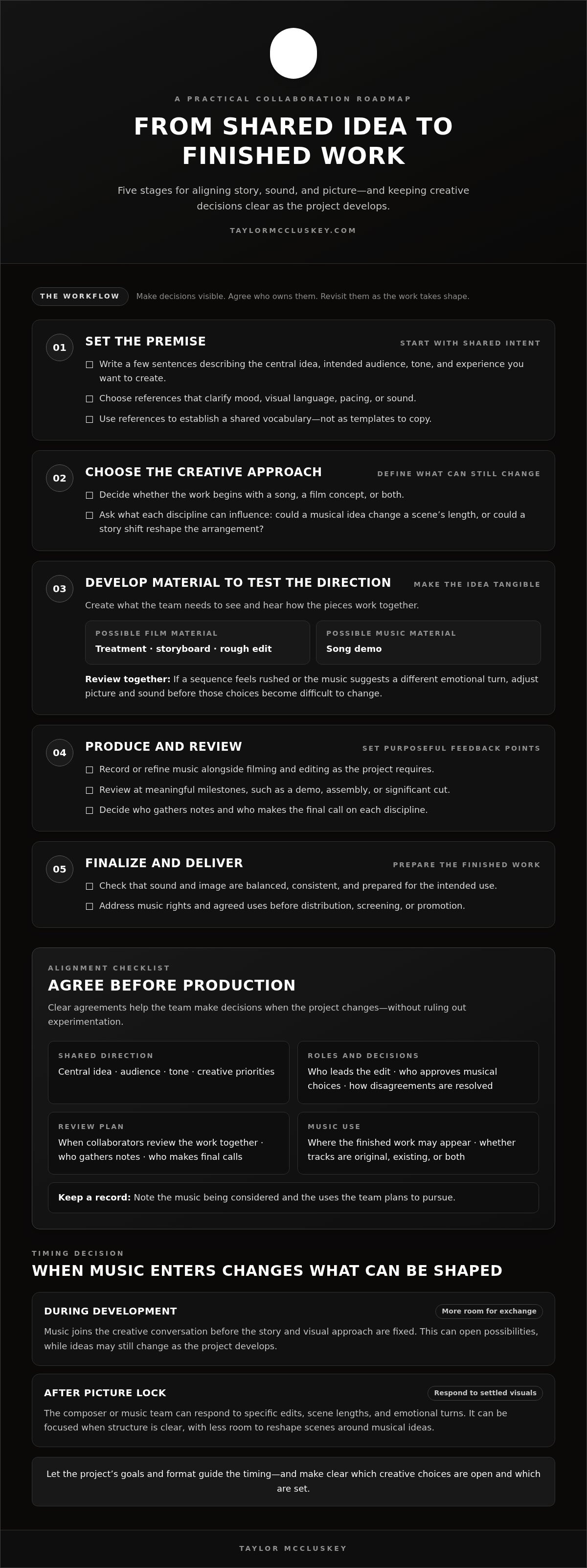
There’s no single correct entry point. Involving a musician during development makes music part of the creative conversation before the story and visual approach are fixed. A composer might respond to a premise, or a filmmaker might build an early sequence around an original piece. This can open up possibilities, though ideas may change as the project develops.
Music added after picture lock follows a different path. With the visuals settled, the composer or music team can respond to specific edits, scene lengths, and emotional turns. This can be a focused approach when the film’s structure is clear. The trade-off is less room to reshape scenes around musical ideas.
Let the project’s goals and format guide the decision. A music video may begin with a track and grow into a visual concept. A narrative film may develop music alongside the story, or wait until the edit reveals what it needs. Agreeing on when music enters helps everyone understand which creative choices are open and which are set.
How Music-Film Collaboration Moves from Shared Idea to Finished Work
A shared idea gives musicians and filmmakers a starting point, not a fixed production formula. A short film built around an existing song may move differently from a narrative project with an original score. The important thing is to make creative decisions visible, agree who owns them, and check that sound, picture, and story serve the same purpose as the work develops.
A practical sequence:
- Set the premise. Write a few sentences describing the central idea, intended audience, tone, and experience you want to create. Select references that clarify mood, visual language, pacing, or sound. Use them to establish a shared vocabulary, not as templates to copy.
- Choose the creative approach. Decide whether the work begins with a song, a film concept, or both. Identify what can still be influenced. For example, can a musical idea change a scene’s length? Can a shift in the story reshape the arrangement?
- Develop the material. Create what you need to test the direction, such as a treatment, storyboard, song demo, or rough edit. Review how the pieces work together. If a sequence feels rushed or the music suggests a different emotional turn, adjust the picture and sound before those choices become difficult to change.
- Produce and review. Record or refine music alongside filming and editing as the project requires. Set feedback points around meaningful milestones, such as a demo, assembly, or significant cut. Decide who gathers notes and who makes the final call on each discipline.
- Finalize and deliver. Check that the finished sound and image are balanced, consistent, and prepared for the intended use. Address music rights and agreed uses before distribution, screening, or promotion.
What should collaborators agree on before production?
Align on the central idea, audience, tone, and creative priorities first. Then define roles: who leads the edit, who approves musical choices, how disagreements are resolved, and when collaborators review work together. These agreements don’t have to restrict experimentation. They give the team a clear way to make decisions when the project changes.
Discuss intended music use early, including where the finished work may appear and whether the tracks are original, existing, or both. Keep a record of the music being considered and the uses the team plans to pursue. The National Endowment for the Arts’ Creative Forces initiative demonstrates music’s reach beyond entertainment through its therapeutic context. It’s a reminder that a project’s purpose should inform its creative choices.
How can feedback keep sound and visuals aligned?
Make abstract notes concrete with shared references: a scene, sound texture, visual mood, or example of pacing. Schedule reviews at useful checkpoints rather than reacting to every small change. When giving notes, describe the effect on the story and audience. “The transition weakens the tension” gives collaborators a direction to explore; “I don’t like it” doesn’t.
For music and film collaboration projects, a flexible sequence creates structure without forcing every idea through the same workflow. Explore Taylor McCluskey’s creative work for another perspective on projects shaped across music and film.
Which Music and Film Collaboration Format Fits the Idea?
The right format depends on what should lead the audience experience. Is the song the central event, or does it support a separate story? Does the idea need a focused visual interpretation, a character-driven arc, or music composed to respond to specific scenes? Answering these questions helps match creative ambition with the scope and production needs of the work. No format is automatically better; each creates a different relationship between sound and image.
| Format | Strongest creative use | Production focus |
|---|---|---|
| Music video | Giving a song a distinctive visual interpretation | Performance, imagery, and rhythm shaped around the track |
| Original film score | Supporting a film’s narrative and emotional movement | Composing and refining music in response to picture |
| Short film | Developing a self-contained story with music as one element | Character, scenes, edit, and sound working as a whole |
| Music-led visual project | Building an immersive or impressionistic experience around sound | Visual concepts, atmosphere, and musical structure |
Use the table as a starting point, then consider the intended audience and how they’ll encounter the work. A track released alongside a visual piece may call for a different structure from a narrative film that uses music to deepen a character’s journey. The strongest music and film collaboration projects choose a format that serves the idea rather than forcing it into a familiar template.
Music video or music-led short film?
A music video usually takes the song as its organizing force. The track’s duration, lyrics, and musical shifts can guide the visuals. Performance may be central, or the imagery may interpret the song through atmosphere and symbolism. Even when a video suggests a story, the viewer’s attention returns to the music.
A music-led short film gives narrative more room. It may use a song as a starting point, while scenes, characters, and story turns extend beyond the track’s structure. If the core idea is a striking visual response to a song, a music video may fit. If it needs a character’s choices to unfold, consider a short film. The distinction is emphasis, not a rigid rule.
Original score or existing song?
An original score is composed for the picture. It can respond to a scene’s length, emotional turn, or pacing, and may change as the edit evolves. That flexibility can make the music feel closely integrated. It also creates room for dialogue between composer and filmmaker about what each scene needs.
An existing song brings its own identity, structure, and associations. It can establish a strong tone quickly, but its fixed duration or musical transitions may influence editing choices. The picture might need to accommodate the track, or the team may select a section that fits the sequence. For either approach, address rights and permitted uses in light of the project’s intended release and distribution.
Make the choice by asking what the audience should remember most: the song, the story, or the experience created by combining them. That answer points toward a format and clarifies where creative effort should go.
A Practical Collaboration Roadmap for Musicians and Filmmakers
A first collaboration doesn’t need a complex production plan to get moving. It does need a shared brief, clear ownership of decisions, and well-timed reviews. These basics help a small team protect the creative spark while keeping practical details visible from concept through delivery.
What belongs in a music-film creative brief?
Keep the brief short enough to use. It should capture the idea and guide decisions, not lock every creative choice before the work begins. Include:
- Core premise and format: Summarize the story or concept, then identify whether you’re developing a music video, short film, score-driven piece, or another format.
- Audience and tone: Describe who the work is for and the experience you want it to create. Use specific words such as intimate, restrained, playful, or tense rather than relying on broad labels.
- Creative references: Gather examples of sound, imagery, performance, or pacing that communicate the direction. Note what each reference illustrates so collaborators don’t mistake inspiration for a request to imitate it.
- Roles and decisions: Record who coordinates each stage, who provides input, and who makes the final call on music, picture, and story. Mark which choices require shared agreement.
- Music use: Note whether the plan involves an original composition, an existing track, or both, and record the intended uses. Keep rights questions visible for appropriate professional review.
For a wider look at how artists can carry a project into filmmaking, the artist-led film production guide offers related context.
How can a small team manage creative handoffs?
Set checkpoints around work the team can meaningfully assess. A simple sequence could include concept approval, music development, a rough cut, and final delivery. Not every project needs the same number of reviews. Choose milestones that match its format and the way its sound and visuals are being created.
- At concept review, check that the premise, visual direction, and musical approach point toward the same audience experience.
- During music development, share a demo or musical sketch alongside relevant story or picture materials. Flag moments where the edit may need room for a musical transition or the music may need to follow a scene’s emotional turn.
- At rough cut, review how pacing, scene length, and sound work together. Consolidate notes and identify which changes affect other departments before revisions begin.
- Before delivery, review the agreed final version, address outstanding music-use questions, and prepare the materials for their intended release.
Keep versions clearly labeled and store decisions where everyone involved can find them. Gather feedback in one place, group notes by story, sound, pacing, or audience effect, and separate essential changes from preferences. This reduces conflicting instructions and gives collaborators a record of why choices were made. The cinematic storytelling services guide adds context on connecting narrative with sound and visuals.
Use this roadmap as a working structure, not a rigid formula. For music and film collaboration projects, the best process leaves room for discoveries while making the next decision clear. To explore Taylor McCluskey’s work across music and film, visit Taylor’s creative hub.
Taylor McCluskey’s Music and Film Perspective: From Creative Vision to Next Steps
A successful music-and-film collaboration depends on more than placing sound beside images. Creative decisions across both disciplines need to serve one story or experience. Taylor McCluskey works as a musician, actor, and filmmaker, with film projects developed under the TaylorMade Films label.
Working across these roles brings attention to the ways music and filmmaking shape an audience’s experience. A musical choice can influence how a scene feels; a visual approach can give a song new context. The goal isn’t to make every element do everything. It’s to understand how each choice contributes to the project’s central intent.
What does a multidisciplinary creative perspective bring?
Working across music and filmmaking can encourage a creator to consider sound and image as connected parts of the same creative whole. A musician may listen for emotional shifts, rhythm, and texture. A filmmaker may consider framing, performance, and how a sequence unfolds. Bringing both perspectives into the conversation can help reveal where these elements reinforce one another and where they need space to work independently.
This is a matter of craft, not a promise of a particular result. The story still needs a clear point of view, and each production choice should support it. For a closer look at how visual direction shapes a music-centered project, the professional music video director guide explores the director’s role in developing a creative vision and carrying it through a process.
For music and film collaboration projects, this cross-disciplinary lens is useful at the planning stage. It encourages collaborators to discuss the intended audience experience before settling on individual details. Ask what the work should leave viewers feeling, noticing, or remembering. Then consider how story, sound, and visual language can each contribute.
Where can a collaboration begin?
Start with a defined premise. Describe the central idea in a few sentences, choose a format that fits it, and draft a short brief covering the story, intended audience, tone, and sound and visual references. Note who will coordinate each stage and how collaborators will share feedback. This gives the first conversation a practical focus without closing off creative discovery.
From there, consider what the idea needs next. A song-led concept may call for a visual treatment; a narrative-led project may need a story outline and an early conversation about music. Keep the first step manageable. A clear premise and shared reference can make it easier to identify the right questions, collaborators, and production path.
Taylor’s website brings together music, film work, videos, and project updates. Explore Taylor McCluskey’s music and film work to see more of this creative perspective. If you have a music-film idea to develop, connect with Taylor about your project.
Bring Your Shared Creative Vision to Life
The first step doesn’t have to be a finished script or a complete score. It can be a clear creative question: what should the audience feel, and how can sound and image work together to create that experience? From there, a conversation, reference, or early sketch can give music and film collaboration projects a purposeful starting point.
Taylor McCluskey works across music, acting, and filmmaking, including film projects under TaylorMade Films. If you’re developing an idea and want to explore how it might take form, explore Taylor’s work and get in touch about a creative project.
Start with the idea that matters to you. With shared intent and room for each discipline to contribute, the next creative step can become clear.
Frequently Asked Questions
What is a music and film collaboration project?
It’s a creative project where music and filmmaking are developed in relation to one another, so each contributes to a shared idea. The format might be a song-driven visual piece or a film with original music. A practical test is to ask whether the sound changes how a scene feels, or whether the images add meaning to the music. If those choices inform one another, the collaboration is more than a soundtrack added at the end.
How do musicians and filmmakers collaborate on a project?
They work together by making the handoff between music and picture clear. A musician might share a demo with notes about its mood or structure, while the filmmaker can point to scenes where those qualities matter. For a smoother exchange, use one shared place for current materials and record decisions in writing. Notes tied to a scene or musical moment are easier to act on than broad reactions such as “make it bigger.”
Can a music collaboration start after a film has been shot?
Yes. A musician can respond to footage that’s already been filmed, using scene changes and performances as creative cues. Mark where a sequence turns emotionally, where dialogue needs space, and where music should begin or end. This gives the music a defined relationship to the footage, even if it didn’t influence filming. If the score needs longer visual pauses or a different scene length, those edits can still be discussed.
What is the difference between a music video and a music-led short film?
A music video puts the song at the center; a music-led short film gives more weight to a story that can unfold through characters and events. To choose, imagine the piece without its track. If the main appeal is the song’s performance or visual interpretation, a music video may be the stronger fit. If viewers should follow a narrative arc, consider a short film shaped around the music.
Do collaborators need to discuss music rights for a film project?
Yes. Before settling on a track, create a simple music inventory. Record the working title, who supplied it, whether it’s original or existing material, and how the team expects to use the finished film. This helps surface questions early, before a track is built into edits or promotional plans. Rights and permissions depend on the material and intended use, so document questions and seek appropriate professional guidance rather than assuming one permission covers every use.
How do you keep a music and film project creatively consistent?
Give the work a recognizable creative thread that carries across different scenes or sections. That might be a recurring visual motif, a particular sound texture, or a contrast that develops as the story progresses. Review the opening, a major transition, and the ending together to see whether the thread feels intentional. If one part seems disconnected, identify what changed in the audience experience and adjust that element rather than adding detail without a clear purpose.


