

What if the best indie rock record for your collection isn’t the rarest pressing, but the one you’ll want to hear from beginning to end? When you buy indie rock vinyl records, the range of artists, editions, and condition grades can make choosing feel harder than it needs to be. Format and pressing details matter, but so does finding music you want to live with.
This guide shows you how to compare records by sound and listening habits, understand common listing details, and weigh condition and pressing information before you buy. You’ll also find practical ways to support independent music through your purchases. Taylor McCluskey’s website brings together his music, releases, and artist updates, offering a place to discover his work. We’ll start with choosing a sound that fits, then look at record formats, listing language, and buying music directly from artists.
Key Takeaways
- Match LPs, multi-record sets, and 7-inch singles to the listening experience and track selection you want.
- Read edition and condition descriptions carefully. Coloured or limited releases aren’t automatically better-sounding.
- When you buy indie rock vinyl records, compare record shops, artist stores, online retailers, and second-hand listings based on your needs.
- Before ordering, confirm the release, format, playback compatibility, condition, and seller terms.
- Artist-led discovery can deepen your connection to independent music. Taylor McCluskey’s online shop offers music albums and singles.
Why buy indie rock vinyl records when streaming is already easy?
Streaming makes it easy to move between artists, playlists, and decades in seconds. A record offers a different kind of engagement: choosing an album, setting it on a turntable, and giving its sequence room to unfold. Neither habit is better for every listener. The useful question is what role you want music to play in your day.
Indie rock vinyl records are physical album or single releases by independent or alternative rock artists and labels. Indie rock spans a range of sounds and approaches, so the label alone won’t tell you whether a record suits your taste. Explore the history and characteristics of indie rock for context, then let the songs, performances, and production guide your choice.
Vinyl doesn’t automatically sound better than a stream. What you hear depends on factors such as the release’s mastering, the record’s condition, and your playback setup. Some listeners prefer the warmth or character of a particular pressing; others favour the clarity and convenience of digital audio. Treat sound quality as a personal preference, not a guaranteed benefit of the format.
A helpful distinction: collecting a format is about owning and experiencing a physical edition; choosing music is about finding songs and artists you want to hear again. Start with the music. A striking sleeve or unusual pressing can add appeal, but it can’t replace a genuine connection to the album.
What makes an indie rock record worth owning?
Begin with an artist, album, or set of songs you already return to, or one you’re curious to hear in sequence. A physical release can make the artwork and liner notes part of the listening experience, adding visual and written context to the music. Let personal enjoyment lead. Rarity and resale value are uncertain, so buy a record you want to keep rather than relying on an investment promise.
Is vinyl a good fit for your listening routine?
Streaming suits quick searches, background listening, and easy access across devices. Playing a record invites a more deliberate session, with a physical object to handle and an album sequence to follow. Consider whether you own, or plan to use, a compatible record player before buying. Collectors, devoted album listeners, and people who want to support independent artists may value that physical connection most.
If you’re ready to buy indie rock vinyl records, choose a release you’ll be glad to revisit, not simply one that looks collectible. That keeps the purchase grounded in listening pleasure, while leaving room for the artwork, album flow, and artist connection that make physical music meaningful.
How to compare indie rock vinyl formats, editions, and pressing details
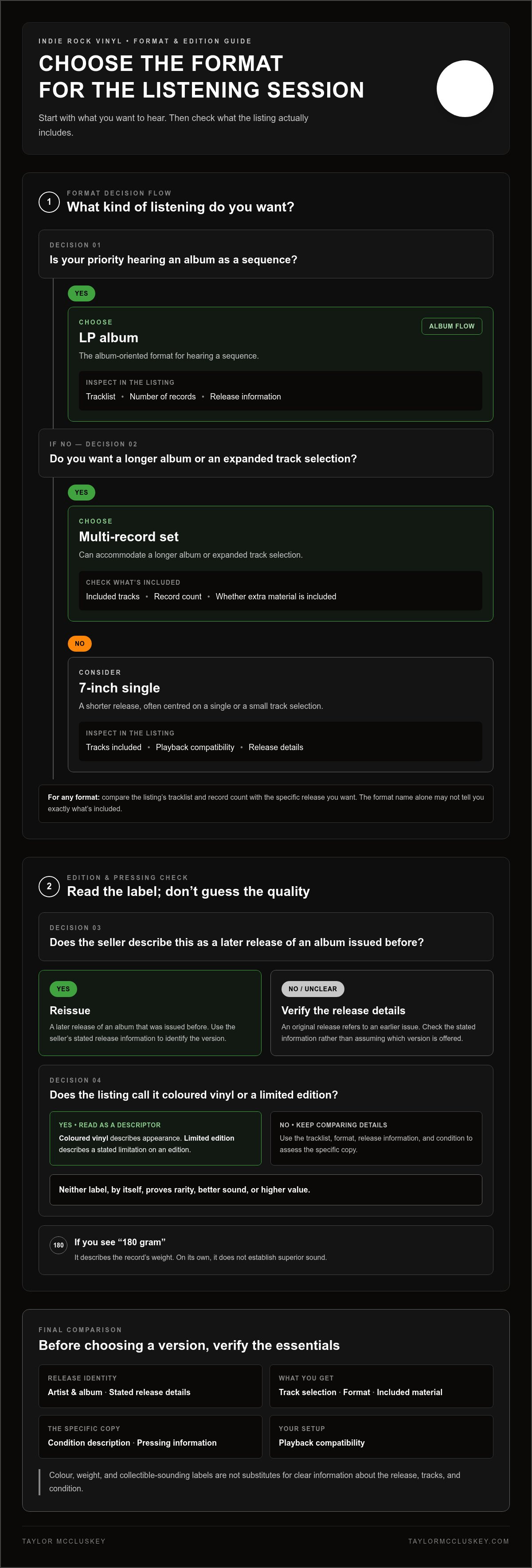
A listing can describe the same album by format, edition, and pressing, with each term answering a different question. Format tells you how the music is presented. Edition describes a version, such as coloured vinyl or a reissue. Pressing details may identify how a particular release was produced. Compare those facts with the tracklist and your listening habits rather than treating a collectible-sounding label as a quality guarantee.
| Format | Typical use | Listing details to inspect |
|---|---|---|
| LP album | Hearing an album as a sequence | Tracklist, number of records, release information |
| Multi-record set | Longer albums or expanded track selections | Included tracks, record count, whether extra material is included |
| 7-inch single | A shorter release, often centred on a single or a small track selection | Tracks included, playback compatibility, release details |
LP, multi-record set, or 7-inch single?
An LP is generally the album-oriented choice, while a 7-inch single presents a shorter release. A multi-record set can accommodate a longer album or expanded track selection, but the title alone won’t tell you exactly what’s included. Compare the listing’s tracklist and record count with the specific release you want. Then consider how you listen: a full album session, selected songs, or additional material.
What do pressing and edition labels tell you?
A reissue is a later release of an album that was issued before; an original release refers to an earlier issue. Use the seller’s stated release information to identify which version is being offered. Coloured vinyl describes appearance, while “limited edition” describes a stated limitation on an edition. Neither label, by itself, proves rarity, better sound, or higher value.
Technical-sounding terms deserve the same careful reading. A listing marked 180 gram describes the record’s weight. On its own, it doesn’t establish superior sound. Colour and weight are not substitutes for useful information about the specific pressing, release, or condition. If sound is your priority, look for concrete details in the listing rather than inferring quality from a visual feature or premium-sounding label.
Before choosing between versions, compare the artist and album, track selection, format, stated release details, and what the listing says is included. For a reissue, the original release date and reissue information help distinguish the version. For a limited or coloured edition, treat the description as identification, not a verdict on the music. If essential details are missing, don’t assume the edition contains bonus tracks or sounds different.
That approach keeps your decision tied to the music and the particular copy, not just the promise of a special variant. To explore artist-led releases alongside physical editions, visit Taylor McCluskey’s online music shop, which offers albums and singles.
Where to buy indie rock vinyl records: compare shops, artist stores, and listings
The right place to search depends on what matters most: browsing with guidance, finding a specific release, supporting an artist directly, or tracking down a used copy. Each channel has different strengths. Before you buy indie rock vinyl records, decide whether you’re exploring, searching for a particular title, or comparing copies of a release you already know.
Which buying channel fits your record search?
Independent record shops offer curated shelves and the chance to ask staff for recommendations. They can be a strong starting point when you want to discover unfamiliar artists or browse by sound. Larger online retailers make it easier to search broad catalogues by artist, album, or format, which helps when you have a specific release in mind.
Artist stores offer a direct route to an artist’s music and official releases. Buying through an official store connects your purchase with the artist’s own work, making it a meaningful way to support independent music. Second-hand marketplaces can help you search for older or out-of-print releases, but listings vary by seller and by how much detail they provide. Compare the actual copy and terms, not just the title or thumbnail.
Choose the channel that fits your goal. For discovery, try a curated shop. For a known title, search online catalogues. For artist-led discovery, explore an artist’s official store. For a used copy, pay close attention to the condition description and seller policies.
How to read a vinyl listing before checkout
Read the listing as a description of one specific release and copy. Check the artist and release title first, then confirm format and edition details. Make sure the track selection matches what you want. Look for stock status and whether the item is a pre-order, since that affects when it is expected to ship. Don’t rely on a product image alone to identify a pressing or its contents.
For a used record, assess the condition of the media separately from the sleeve or packaging. A listing might describe wear on the record while giving the cover a different grade. Those details matter for different reasons: the media affects playback, while the sleeve affects presentation and protection. Read the seller’s description carefully, especially notes about marks, wear, or other flaws.
Before completing the purchase, review the seller’s shipping, returns, and condition-description policies. Note any stated limits or exceptions, and compare them with your expectations for a used or new copy. As a final check, match the listing against your search: correct artist, release, format, edition, condition, and stock status.
To discover music through the artist, visit Taylor McCluskey’s official online music shop, where his albums and singles sit alongside his wider creative work.
A practical checklist for buying indie rock vinyl with confidence
A clear buying routine turns a crowded search into a considered choice. Before you buy indie rock vinyl records, make sure the copy matches both the music you want and the way you plan to play it. Use these five checks in order, especially when a listing includes unfamiliar terms or describes a used record.
Five checks to make before ordering
- Identify the release. Match the artist, album or single, and release version to the record you’re looking for. Titles can appear in several editions, so don’t rely on the cover image alone.
- Confirm the format and playback fit. Check whether the listing is for an LP, a multi-record set, or a 7-inch single, then confirm your turntable can play that format. If the listing gives other playback details, compare them with your player’s capabilities.
- Read condition descriptions closely. For a used copy, assess the media and sleeve separately. Look for the seller’s explanation of its grading scale and any notes about wear. A grade is most useful when you understand what the seller means by it.
- Check stock or pre-order status. Confirm whether the record is available to ship or listed as a pre-order, and review any stated timing before you place the order.
- Review seller terms. Read shipping and return policies, including any conditions that apply to used items. Make sure the terms work for you before checkout.
The three essential listing checks are the exact release, the condition of the record and sleeve, and the seller’s shipping and return terms. If one of those details is unclear, pause and compare the listing with another copy rather than filling in the gaps yourself.
How to build a collection around your taste
A collection with a point of view starts with music, not a target number of records. Begin with favourite artists or albums, then branch out through independent labels and recommendations from trusted music sources. This keeps each purchase connected to a sound, scene, or creative perspective you want to explore.
Release credits and liner notes offer another route to new music. Notice who wrote the songs, performed on the album, or contributed to its production. Those names can lead you to collaborators and related artists, while the credits reveal how a record came together. For a closer look at the craft behind the music, explore this guide to the songwriting process for rock musicians.
Artist-led discovery can also bring listeners closer to the work behind a release. Taylor McCluskey is an independent musician whose online shop offers music albums and singles. Explore Taylor McCluskey’s music as you shape a collection around artists whose work you want to follow.
Discover indie rock through artist-led music and Taylor McCluskey
A record can lead to more than another album in your collection. Following an independent artist can open a path to their wider body of work: new music, official releases, performances, and creative updates. Rather than browsing a large catalogue without direction, start with an artist whose sound or perspective holds your attention, then follow the work as it develops.
From record discovery to direct artist support
An artist’s official store gives listeners a direct place to explore that artist’s music and releases. It can also make it easier to follow their creative activity in one place, rather than treating each album as a standalone discovery. Buying music is one way to engage with independent artists, though it doesn’t guarantee a particular outcome for their career. Choose music because it resonates, and let support grow from genuine interest.
Artist merchandise can be another part of that connection. The independent artist merchandise shop guide offers a useful perspective on exploring an artist’s official store beyond music. Whether you’re looking for songs, releases, or other artist-led work, follow what you’re genuinely curious about instead of buying every version or item available.
Explore Taylor McCluskey’s music and creative work
Taylor McCluskey is an independent musician, actor, and filmmaker. His website brings together music, releases, film work, and artist updates, offering a broader view of his creative practice. Listeners can explore the songs alongside the wider work and updates that shape an artist’s public presence.
Taylor’s online shop offers music albums and singles. Explore the music and follow the releases that speak to your taste. Use the format and listing details when choosing any physical record, so you know what the specific release includes. Artist-led discovery can still be meaningful when your next purchase is a digital release, a single, or another format that suits how you listen.
As you buy indie rock vinyl records, keep the artist in view as well as the edition. Following an artist’s official updates can introduce you to new work and performances as they’re shared. An official store also offers a direct route to explore the music and releases available there. Start with the songs, then follow the creative journey.
Explore Taylor McCluskey’s music and official shop to discover more.
Let your next record lead somewhere new
A collection doesn’t need a grand plan. Let one song you keep returning to guide your next choice, then follow its sound toward a new artist, label, or scene. That approach keeps collecting personal and makes room for unexpected discoveries, rather than turning every purchase into a search for the rarest or most talked-about edition.
As you decide where to buy indie rock vinyl records, make the music your compass. Choose a release you’re excited to spend time with, and let curiosity shape what comes next. Supporting independent artists can be part of that journey, whether you’re discovering a new voice or deepening your connection with music you already love.
Taylor McCluskey brings music together with other artistic pursuits. Explore what he’s making, find a release that speaks to you, and follow the work at your own pace.
Explore Taylor McCluskey’s music and official shop to find your next musical discovery.
Frequently Asked Questions
Is vinyl sound quality always better than streaming?
No. Sound quality depends on the recording, mastering, playback equipment, and the listener’s preferences. A well-mastered digital stream can sound excellent, while a record may have surface noise or wear that affects playback. For a fair comparison, listen to the same album on both formats using equipment you know well. Differences you notice may reflect the specific release or setup, not vinyl as a format.
Can I play a 7-inch record on any turntable?
Not necessarily. Check that your turntable supports the speed listed for the record, commonly 45 or 33⅓ RPM, and that the record’s centre hole fits the spindle. Some 7-inch singles have a larger centre hole and need an adapter; others have a smaller hole. Check the label or listing before playing it, and follow your turntable’s instructions for selecting speed and using an adapter.
What does 180-gram vinyl mean?
“180-gram” refers to the approximate weight of the vinyl record, not its diameter, playback speed, or number of tracks. It’s a heavier pressing than a standard-weight record. The number alone doesn’t tell you how the album will sound, since mastering, pressing quality, condition, and playback setup also matter. Treat the weight as a physical specification, not a reliable shortcut for judging audio quality.
Does a record need cleaning before its first play?
Not always, but a quick inspection is sensible. Hold the record by its edges and look for visible dust or debris before placing it on the turntable. A clean record brush designed for vinyl can remove loose surface particles. For a used record with visible grime, use a cleaning method made for records and let it dry fully before playback. Avoid touching the grooves or using household cleaners.
What is a gatefold sleeve on a vinyl record?
A gatefold sleeve opens like a book, with a front and back cover that unfold to reveal an interior panel. That space may feature additional artwork, photographs, or printed notes, depending on the release. It describes the packaging, not the number of records inside. If the interior content matters to you, look for listing images or a description that identifies what the sleeve includes.
How can I store vinyl records to help prevent warping?
Store records upright, supported by neighbouring records, rather than stacking them flat. Keep them away from direct sunlight, heaters, and other sources of heat, since exposure can deform the vinyl. Avoid packing a shelf so tightly that sleeves press hard against one another, but don’t leave records leaning at a sharp angle either. Keep each record in its sleeve when it’s not being played.
Can I buy indie rock vinyl directly from an artist?
Yes. Some independent artists sell music through their official online shops, giving listeners a direct way to explore their work. Taylor McCluskey is an independent multidisciplinary artist whose online shop sells music albums and singles. Explore Taylor McCluskey’s official music shop to discover his work.


