

The sleeve around the album artwork deserves as much attention as the sleeve around the record. To learn how to protect and store a vinyl collection, keep records upright and supported, place each disc in a protective inner sleeve, and use an outer sleeve to shield its jacket. Store records of the same size together in a cool, dry, dark place, away from direct sunlight and heat.
It’s easy to focus on the grooves and overlook the printed cover. Careful handling and storage protect both parts of the listening experience: the sound-bearing disc and the artwork that gives an album its visual identity. Make sure records are clean and dry before returning them to their sleeves, and don’t put pressure on a tightly packed row.
This guide explains how to arrange records securely, choose inner and outer sleeves, handle and clean discs, and limit the effects of temperature and humidity. Follow a practical routine to keep your collection ready to play and its artwork in display-worthy condition.
Key Takeaways
- Store records upright with even support, and keep different sizes grouped to prevent uneven pressure.
- Choose protective inner sleeves to help limit dust, scratches, and static; make sure discs are clean and fully dry before sleeving.
- Use outer sleeves to shield album jackets from handling wear and light exposure, preserving the artwork as well as the record.
- Keep your collection in a stable, cool, dry place away from direct sunlight and heat sources.
1. How to Store Vinyl Records?
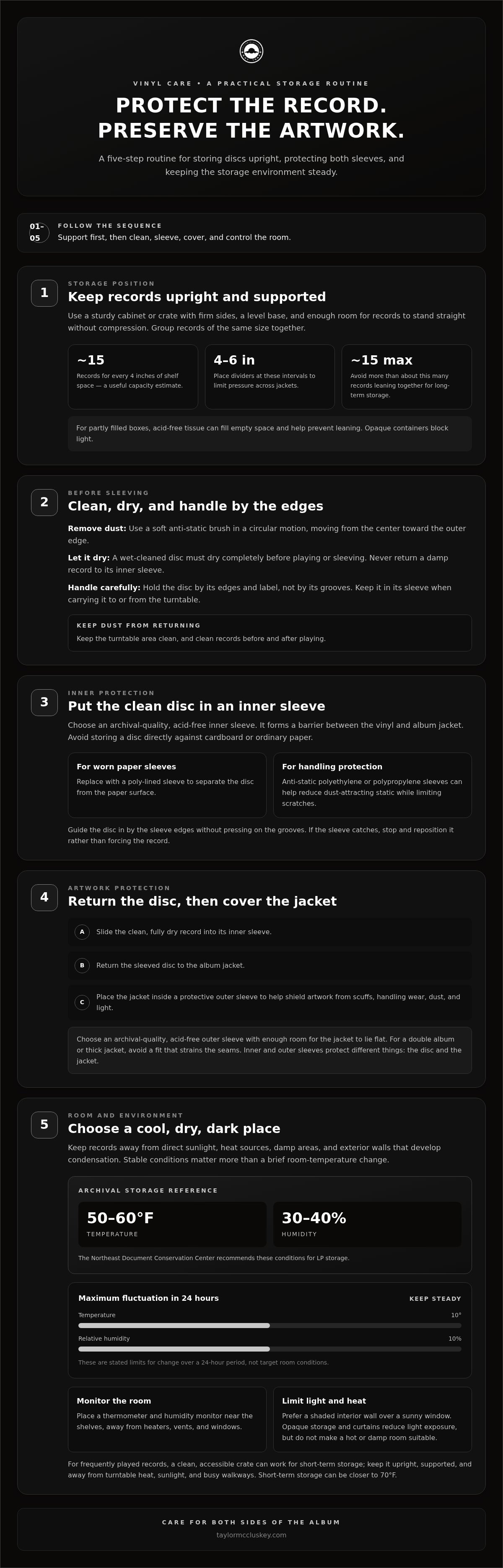
Store vinyl records upright in a sturdy cabinet or crate that supports their full height. Use snug dividers to keep discs straight rather than leaning. For long-term storage, avoid more than about 15 records leaning together. Place dividers every 4-6 inches to limit pressure across the jackets. A useful capacity estimate is about 15 records for every 4 inches of shelf space. Learning how to protect and store a vinyl collection starts with even support.
Before storage, remove surface dust with a soft anti-static brush, moving in a circular motion from the center toward the outer edge. Clean records before and after playing, and let a wet-cleaned disc dry completely before playing or sleeving it. Never return a damp record to its inner sleeve. Keep the turntable area clean so dust doesn’t transfer back onto a freshly cleaned disc.
Handle each disc by its edges and label, not by its grooves. Keep it in its sleeve when carrying it between storage and the turntable. For frequently played records, a clean, accessible crate can work for short-term storage. Keep it upright, supported, and away from the turntable’s heat, direct sunlight, and busy walkways. Short-term storage can be closer to 70 degrees.
Choose a cabinet or crate with firm sides, a level base, and enough room for records to stand upright without compression. Acid- and lignin-free storage boxes help protect a collection, while acid-free tissue can fill empty space in a partly filled box and prevent records from leaning. Opaque containers also block light. When deciding how to protect and store a vinyl collection, choose a dark location away from bright light and heat.
In the United States, the cost of sleeves and storage solutions depends on material, pack size, crate capacity, and construction. Compare options based on the protection they offer and how many records they safely hold, not appearance alone.
2. Using protective inner sleeves
Choose an archival-quality, acid-free inner sleeve for the record. It creates a protective barrier between the vinyl and the album jacket. Don’t store a disc directly against cardboard or ordinary paper. Paper sleeves can leave fibers and small pieces of paper in the grooves, potentially causing noise and pops during playback. An outer sleeve has a different job: it covers the jacket and helps shield the printed artwork from handling wear and light.
For used records, replace a worn paper inner sleeve with a poly-lined one. The lining separates the disc from the paper surface. Anti-static polyethylene or polypropylene sleeves can help reduce dust-attracting static while limiting scratches during handling. Hold the sleeve by its edges and guide the disc in without pressing on the grooves. If the sleeve catches, stop and reposition it instead of forcing the record inside.
Use both layers in sequence. Slide the clean, fully dry record into its inner sleeve, then return it to the album jacket. Next, place the jacket inside a protective outer sleeve. This shields the cover without replacing the inner barrier around the disc. For a double album or thick jacket, choose an outer sleeve with enough room to lie flat without straining the seams. Keep sleeve edges smooth and free of folds that press against the record or jacket.
Inspect each sleeve as part of your storage routine. Replace inner sleeves that are torn, dirty, or shedding fibers, and keep spare sleeves away from dust and humidity. A sturdy outer sleeve can reduce scuffs on glossy covers, but it can’t make up for poor storage or protect an exposed record. Keep each disc in its inner sleeve and album jacket. This layered approach protects both the grooves and the artwork.
3. Avoiding extreme temperatures and humidity
Stable conditions matter more than a brief change in room temperature. The Northeast Document Conservation Center recommends storing LPs at about 50-60 degrees Fahrenheit and 30-40 percent humidity. These archival targets offer a useful reference when selecting a room for record storage. Avoid damp basements, hot attics, radiators, fireplaces, and exterior walls that develop condensation. A temperature or humidity change can affect the storage environment even when albums remain inside jackets.
Keep the climate steady across each 24-hour period. Vinyl storage temperature should not fluctuate by more than 10° in 24 hours, and relative humidity should not fluctuate by more than 10% in 24 hours. A room thermometer and humidity monitor can help reveal sudden shifts. Place them near the shelves, but away from a heater, vent, or window, where readings may reflect a local draft rather than the wider room.
Light control goes hand in hand with climate control. Choose a shaded interior wall instead of a shelf beside a sunny window. Direct sunlight and bright ultraviolet exposure can damage records over time, and a sunlit spot can heat jackets and discs unevenly. Opaque storage and curtains reduce exposure, but they don’t make a hot or damp room suitable for albums. Check the shelf at different times of day before storing records there.
During seasonal changes, watch for condensation and shifts in room conditions. Don’t move records from a cool storage area straight beside a heater or into direct sunlight. Keep boxes off damp floors, and leave space around the shelf for air to circulate. Records leaning against a cold exterior wall may experience a different microclimate from those elsewhere in the room. After heating or cooling changes, review the thermometer and humidity monitor, then adjust the room rather than moving records near a new heat source.
4. Using outer sleeves to protect artwork
An outer sleeve protects the album jacket, not the record’s grooves. It adds a barrier against scuffs from handling, shelf friction, dust, and light. Choose an archival-quality, acid-free sleeve to help protect the printed cover. This is especially useful for glossy artwork, delicate edges, and jackets you remove often. The sleeve should cover the jacket without forcing it into a tight fit.
Fit matters. A sleeve that’s too small can catch on corners or strain jacket seams when you remove it. One that’s excessively loose may slide around and provide less consistent coverage. Place the jacket inside smoothly, keeping the opening accessible. If you store the record inside its jacket, keep it in its inner sleeve first. That way, the outer sleeve protects the artwork while the inner layer protects the disc.
Plastic outer sleeves can help limit wear from repeated handling and contact with neighboring albums. They also add a layer between artwork and bright light, but they don’t make direct sunlight safe. Shelving still matters: keep jackets upright, supported, and free from pressure that bends corners or rubs sleeves together. Don’t overfill a shelf. Tight rows make albums harder to remove without dragging their covers against neighboring jackets.
Use a simple routine. Slide the jacket into its outer sleeve before shelving, then pull the sleeve rather than pinching the artwork. Check the edges periodically for splits, trapped dust, or folds pressing against the cover. Replace a damaged sleeve so it doesn’t snag neighboring jackets. For albums displayed near a window, move them out of direct sunlight and choose a darker storage position. A good solution pairs protective sleeves with careful handling and stable shelving. Carry that care into your listening, and explore music and its visual world.
Taylor McCluskey: Music Albums and Singles
Taylor McCluskey offers music albums and singles for listeners ready to discover more music after caring for their collection. Once your records are clean, sleeved, and safely stored, choose what to play next. Explore Taylor McCluskey’s music when you’re ready to add something new to your listening rotation.
The same creative hub also offers film production services, concert tickets, and artist merchandise. Each connects with a different part of the work, from screen projects to live performances and artist-related goods. Choose the offering that fits what you’re looking for, keeping in mind that storage accessories aren’t part of the music catalogue.
For information or to explore Taylor McCluskey’s work, visit taylormccluskey.com.
Make Room for the Next Listening Chapter
A well-kept collection can become more than a shelf of albums. It can shape a listening ritual: choose a record with intention, give it your attention, and return it to its place ready for another session. A thoughtful approach to how to protect and store a vinyl collection helps preserve that experience as your musical tastes evolve.
Let your storage routine support the way you listen. Keep the records you reach for often easy to access, and make room for albums you want to discover next. The result is a collection that feels cared for, personal, and ready to play.
If you’d like to connect with Taylor McCluskey, get in touch through the website. Keep building a collection that brings you back to the music.
Frequently Asked Questions
How to Store Vinyl Records?
Store records upright in a clean, supported space, and remove shrink wrap before long-term storage. Shrink wrap can continue tightening and damage a jacket or record. Group records of the same size so their edges receive even support. If a box has unused space, prevent the row from tipping instead of letting albums rest at an angle. Choose a dark location away from heat and damp.
How should vinyl records be cleaned and handled to prevent damage?
Hold a record by its edges and label, then use a soft anti-static brush before and after playing. Sweep from the center toward the outer edge, following the circular grooves. For stubborn dirt, consider a record-cleaning machine or a kit with fluid and brushes. After wet cleaning, let the disc dry completely before playing it or returning it to its sleeve.
What is the best way to store vinyl records vertically?
Set records upright in a crate or cabinet with a level base and sides that support the jackets. Keep the row snug enough to stand straight, but not so tight that removing an album drags it against its neighbors. Group records of similar sizes together. If a shelf holds only a few records, adjust the support as your collection changes so discs don’t lean unsupported.
What inner and outer sleeves best protect vinyl records?
Use an archival-quality, acid-free inner sleeve for the disc and a separate outer sleeve for its jacket. Anti-static polyethylene or polypropylene inner sleeves help limit dust, static, and scratches. Replace worn paper inners, especially if fibers or paper residue are visible. The outer sleeve reduces wear on the artwork; it doesn’t replace the inner sleeve that separates vinyl from paper packaging.
What temperature and humidity are ideal for storing vinyl records?
The Northeast Document Conservation Center recommends storing LPs at about 50-60 degrees Fahrenheit and 30-40 percent humidity. Keep conditions stable rather than placing albums where daily heating or cooling shifts quickly. A thermometer and humidity monitor near the storage area can reveal changes. Avoid locations prone to dampness, such as a basement corner, or heat, such as a shelf beside a radiator.
How can vinyl records be protected from sunlight, heat, dust, and moisture?
Choose an opaque storage area away from windows, radiators, vents, and damp walls. Opaque boxes help block light, while keeping records in sleeves reduces dust exposure during storage. Dust the storage area weekly to limit buildup around jackets and crate openings. Keep boxes off damp floors, and look for signs of moisture or dust when accessing the collection. Move albums if the location becomes hot or damp.


