

The biggest tee isn’t always the best oversized tee. To decide how to style an oversized band t-shirt, start with the fit: sizing up creates a relaxed, vintage-inspired look, while a tee that sits well at the shoulders gives you more control over its shape. Then balance the volume with your layers and bottoms.
A roomy band tee can feel expressive and effortless, but balanced proportions make the outfit look intentional. You don’t have to choose between comfort and structure. A jacket, a tuck, or a different pant silhouette can change the whole look.
This guide covers choosing a fit and building outfits with flannel or denim jackets, skirts, cargo pants, wide-leg pants, and jeans. Each combination offers a distinct direction, from relaxed and layered to sharper and more defined.
Key Takeaways
- Choose a tee that feels relaxed without overwhelming your frame; shoulder fit and overall shape help guide the look.
- Use a flannel or denim layer to add structure, and consider how the tee’s length sits beneath it.
- Shift the outfit’s mood by pairing the tee with a skirt, cargo pants, wide-leg pants, or a clean-lined pair of jeans.
- Use a full or partial tuck to define the waist and bring balance to a roomier silhouette.
1. Layering oversized tees under flannel or denim jackets
Pair a roomy band tee with a flannel or denim jacket to add structure without hiding the graphic. Choose an outer layer with enough room through the shoulders and chest. Its hem should reach the tee’s hem or fall lower, so the shirt doesn’t extend below the jacket. An open dark plaid button-up gives the outfit a grunge feel, while a classic jean jacket keeps it crisp and familiar.
Use the jacket’s shape to set the silhouette. A straight denim jacket frames a loose tee cleanly, while a softer flannel makes the layers feel more relaxed. If both the shirt and button-up are oversized, leave the buttons open to show the full print. Keep the colors deliberate: a dark plaid over a faded black tee, for example, lets the band graphic remain the focal point.
For a sharper combination, tuck the tee into jeans or trousers and add a structured blazer. The tuck defines the waist, while the blazer adds polish without losing the tee’s music-driven character. An open cardigan or sweater offers a softer alternative to a crisp jacket. Leave it open to preserve the graphic and avoid adding bulk over the shirt.
To tuck, knot, or crop an oversized band tee, tuck the front into jeans or trousers for a neat line, or tie a small side knot to gather loose fabric. For a cropped finish, remove a few inches from the hem, then pair the tee with a high-waisted bottom. With any adjustment, check how the graphic sits and whether the shirt still works under your chosen jacket.
Hari Nef was photographed in Paris in 2017 wearing a Diana Ross T-shirt under a structured jacket, showing how a band tee can work beneath a tailored layer. An oversized band tee can also be paired with a blazer. For a more polished look, tuck the tee into jeans or trousers and wear it under a jacket. With flannel or denim, size the outer layer so the baggy tee does not extend below its hem.
2. Pairing oversized tees with skirts, cargo pants, and wide-leg pants
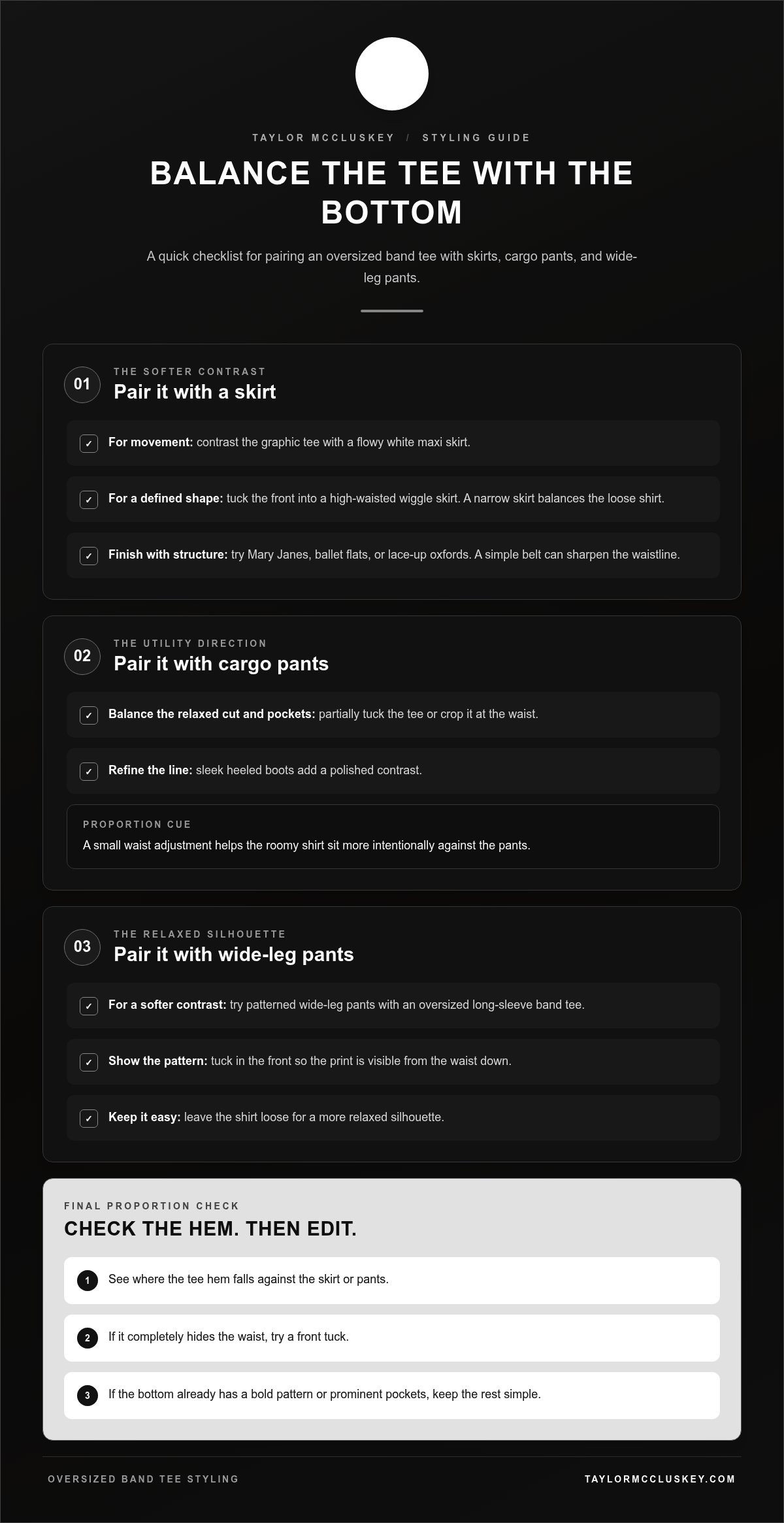
A skirt shifts the tee from casual to expressive. Try an oversized band tee with a flowy white maxi skirt, contrasting the graphic with the skirt’s softer movement. For a more defined shape, tuck the front into a high-waisted wiggle skirt. A narrow skirt balances the loose shirt, while a small belt can sharpen the waistline.
For a distinctive finish, pair a band tee and skirt with Mary Janes, ballet flats, or lace-up oxfords. These shoes add structure without competing with the print. Keep accessories focused: a simple belt can define a tuck, while a compact bag keeps the outfit from feeling crowded. Choose one standout detail, such as the shoe shape or a bold graphic, and let the rest support it.
Cargo pants add a utility edge. Balance their pockets and relaxed cut with a tee that’s partially tucked or cropped at the waist. Sleek heeled boots add a refined line. For a softer contrast, try patterned wide-leg pants with an oversized long-sleeve band tee. Tuck in the front to show the pattern from the waist down, or leave the shirt loose for a more relaxed silhouette.
Denim bridges the graphic tee and more tailored bottoms with ease. Wear the shirt with a denim skirt for coordinated texture, or pair cargo pants with denim accessories for a deliberate mix. With wide-leg jeans, a front tuck can reveal the waistband and clarify the proportions. Use the wash as a styling cue: a dark tee stands out against lighter denim, while a faded graphic complements worn-in blue jeans.
For a final proportion check, see where the tee’s hem falls against the skirt or pants. If it completely hides the waist, try a front tuck. If the bottom already has a bold pattern or prominent pockets, keep the rest of the styling simple.
3. Styling oversized band tees with straight or baggy jeans
A practical guide to how to style an oversized band t-shirt with denim starts with the jeans’ silhouette. Straight-leg jeans create a clean outline beside a loose shirt, especially when its graphic is prominent. For an XL tee, baggy jeans can match its roomy shape. Choose a high-rise pair to show the waistband, or let the shirt fall naturally for a more relaxed line.
A tuck changes the proportions. Tuck the front of the shirt into high-waisted jeans, then smooth the fabric so the graphic stays visible. This defines the waist while leaving the back loose. For a subtler adjustment, tuck a small section near one hip. The same approach gives straight-leg denim a clearer shape, while a visible waistband helps separate a loose tee from baggy jeans.
Shorts make a lighter pairing for warm-weather outfits. Wear the tee loose over denim shorts for a casual silhouette, or tuck its front into high-waisted shorts to define the waist. If the hem hides most of the shorts, try a side knot or a smaller tuck. An open cardigan adds a soft layer without covering the band graphic.
If you're deciding how to style an oversized band t-shirt with different denim looks, start with one proportion choice. With straight jeans, let the tee’s width stand out or tuck it to reveal the rise. With baggy jeans, keep the graphic visible and use a front tuck to distinguish shirt from pants. With shorts, check where the tee’s hem lands before adding layers. Small adjustments give the same shirt a distinct feel with each outfit.
Keep the fit decision simple: XL band tees work with either straight or baggy jeans because both can balance the roomy silhouette. Let the denim set the overall proportions instead of changing the shirt in another way at the same time. A front tuck defines how the tee sits against the waistband while preserving its oversized shape.
For a more shaped finish, tuck the front of the tee into high-waisted jeans or shorts to create a defined silhouette. Keep the rest of the shirt loose, adjusting only the front section until the graphic remains easy to see. The same tuck works with either denim option, so you can focus on the silhouette you want.
4. Choosing a band tee fit
Choose the fit before building the outfit. Sizing up gives a band tee a relaxed, vintage-inspired look, but an oversized cut should still feel intentional. Check the shoulder seams, sleeve length, and hem together. A shoulder seam that sits near the shoulder keeps the graphic framed; longer sleeves and a lower hem add volume. Decide which proportions you want before choosing jeans, a skirt, or a jacket.
Try the tee with the bottoms you plan to wear. With high-waisted jeans, check whether the hem reaches the waistband or falls past it. If you want a visible waist, make sure there’s enough fabric for a comfortable front tuck. With wide-leg pants, compare the shirt’s width to the shape of the legs. A loose tee can work with roomy pants, while a partial tuck creates a clearer outline.
Fit also affects how the band graphic looks. A shirt that’s too tight can pull across the print; a very roomy tee can make the design hang low or fold. Stand naturally and check the graphic from the front and side. If the print sits well but the hem feels long, try a tuck or knot before altering the shirt. A cropped hem can work with high-waisted bottoms, but cutting off a few inches permanently changes the tee.
Band tees began as concert merchandise in the ’60s. Historically, oversized versions were available only in sizes XL or XLL. Today, focus less on a size label and more on the silhouette you want. Compare shoulder placement, sleeve fall, graphic position, and hem length. The best choice is the tee that gives you the intended volume while still working with your planned layers and bottoms.
Taylor McCluskey: Music Albums and Singles
Taylor McCluskey offers music albums and singles for listeners drawn to the music behind the band-tee aesthetic. Explore the music to connect a graphic tee with the sound, songwriting, and performance that inspire the look. Concert tickets offer a next step for fans who want to experience the music live, while artist merchandise extends that connection beyond the show.
For readers whose interest also reaches the screen, Taylor McCluskey offers film production services. Explore recorded music, live performance, or film, depending on the creative work you want to discover next.
Visit Taylor McCluskey online to explore the music and creative work.
Make the Look Your Own
The strongest band-tee outfit reflects more than a trend. It carries a point of view. Let the artist, album artwork, or memory behind the shirt guide the mood, then choose one detail to make the look personal. That might be a contrasting texture, a favorite pair of shoes, or an accessory you often reach for.
Use what you’ve learned about how to style an oversized band t-shirt as a starting point, not a strict formula. Notice which silhouettes feel natural and adjust them for your day. A considered outfit doesn’t need to look carefully constructed; it needs to feel like yours.
If music and visual storytelling shape your style, explore Taylor McCluskey’s creative work and find inspiration for what comes next. Explore Taylor McCluskey’s work, then bring your own perspective to the next outfit.


