

A festival rejection is a programming decision, not a final verdict on your film. Knowing what to do when your film is rejected by festivals starts with staying calm: don’t send an angry reply. Give yourself room to feel disappointed, then reassess your festival strategy. One festival’s decision doesn’t define your work or your worth as a filmmaker.
It’s natural to feel frustrated when a film you care about isn’t selected. Separate that disappointment from the practical questions: was the festival a strong fit, and what can you learn for your next submission or project? This guide explains how to respond professionally, assess a festival’s value to your career, manage the emotional impact, and keep developing your work. You’ll have a practical way to move forward, whether that means refining your strategy or returning to the work itself.
Key Takeaways
- Keep any response professional, then review whether the festival’s audience and programming aligned with your film before planning the next submission.
- Weigh a festival’s potential career value against its fit for your project, and make deliberate choices about where to submit.
- Make room to process disappointment and lean on trusted creative peers rather than measuring your worth by selection decisions.
- Use the experience to strengthen your next cut or festival strategy, while keeping your focus on making work you believe in.
1. Avoiding angry responses to rejection
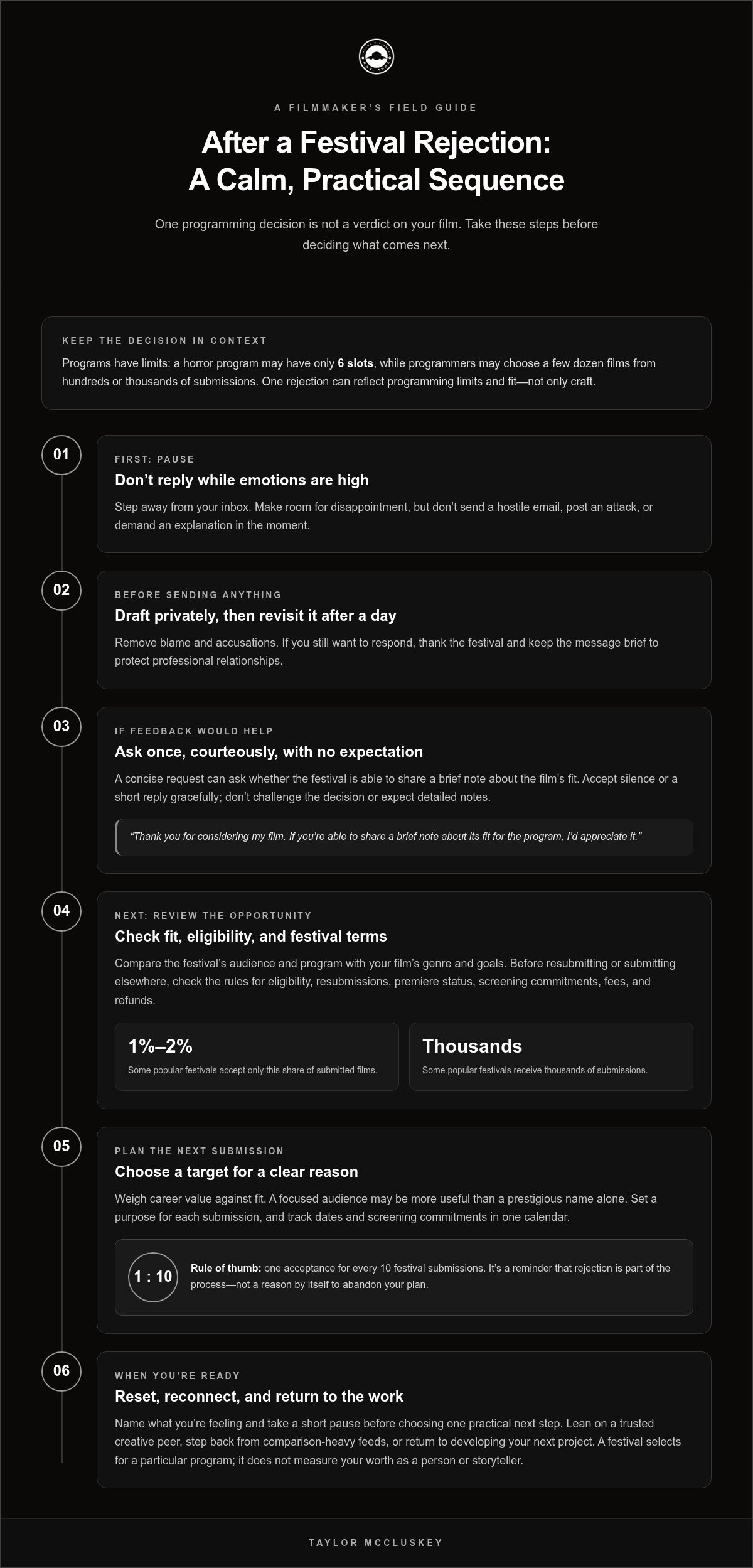
A festival rejection can sting, whether it follows your first film or your twentieth. Before replying, step away from your inbox and draft a response privately. Don’t send a hostile email, post an attack, or demand an explanation while emotions are high. A useful first step in deciding what to do when your film is rejected by festivals is to protect professional relationships with a calm, brief response.
Remember the programming context before treating one decision as a verdict. A horror program with only 6 slots has limited room, while programmers may choose a few dozen films from hundreds or thousands of submissions. An author’s screenshot showed over 200 rejected submissions. These examples show how a selection decision reflects programming limits as well as fit, not only craft.
Can a rejected film be submitted to the same festival again? Yes, if the festival’s rules allow resubmissions and the film remains eligible. When considering what to do when your film is rejected by festivals, review the next submission cycle and decide whether a revised cut gives the project a meaningful new context.
Should you ask a film festival for feedback after rejection? You can send one concise, courteous request, but don’t challenge the decision or expect detailed notes. For example: “Thank you for considering my film. If you’re able to share a brief note about its fit for the program, I’d appreciate it.” Accept silence or a short reply gracefully.
Use a simple pause before any response: save a draft, revisit it after a day, then remove blame and accusations. If you still want to write, thank the festival and keep the message short. The common rule of thumb is one acceptance for every 10 festival submissions, so a single rejection is not a reason to abandon your plan. Review your next target’s audience and programming before submitting again.
2. Festival tiers and career value
Festival tiers can help shape a submission plan, but a prestigious name alone doesn’t make a festival the right fit. Some popular festivals receive thousands of submissions, and some accept only 1%-2% of submitted films. That selectivity makes rejection unsurprising, even for polished work. Compare each festival’s program, audience, and visibility with your film’s genre and goals before paying to submit.
Assess a festival’s career value by the opportunity a selection could create for this particular film. Consider whether its audience includes viewers, programmers, or industry professionals relevant to your next step. A smaller event with a focused audience may be more useful than a high-profile festival whose program rarely features your kind of work. Set a purpose for each submission, such as reaching a specific audience or building a public screening history.
How do festival premiere requirements affect resubmitting or submitting elsewhere? Premiere rules can shape eligibility or placement, so read each festival’s terms before accepting a screening or submitting elsewhere. A festival may distinguish between world, regional, or local premieres, and exact requirements vary. Track submission dates and screening commitments in one calendar so you don’t overlook a restriction.
How do film festival rejections affect a film’s eligibility for awards or distribution? Rejection by one festival doesn’t automatically make a film ineligible elsewhere. Awards and distributors set their own criteria, so assess each opportunity against its rules, including premiere status and prior screenings. Keep a clear record of where the film has appeared and which rights remain available.
What are typical film festival submission fees and refund policies in the United States? Fees and refund terms vary by festival, with no single standard amount or policy. The submission category, deadline, and festival’s stated terms determine what applies. Before submitting, review the total fee and refund language, then record the deadline and confirmation for your budget. If festival acceptance doesn’t come, promote the film through its own channels: create a concise trailer, share screening news, and build an audience with social posts or a filmmaker newsletter. A focused release plan gives the work another route to viewers.
3. Handling the emotional impact of rejection
A rejection email can make a finished film feel suddenly diminished. Separate the festival’s programming decision from your judgment of the work. The festival couldn’t find a place for this film in its program, but that doesn’t prove the film is disliked or unimportant. Name the feeling plainly, whether it’s disappointment, anger, or embarrassment, instead of pretending it isn’t there.
How can filmmakers cope with disappointment and plan their next steps after festival rejection? Give yourself time to feel sad, then choose one practical next step. You might review your submission calendar, reconsider the festival’s programming fit, or return to a new scene in your next project. A short pause can help you make that decision deliberately rather than react to the initial sting.
Protect your attention after the news. If Instagram fills your feed with acceptance announcements, spend less time there for a while or mute festival-related posts. Comparing your rejection with another filmmaker’s selection can intensify stress without explaining either decision. Use the time instead to watch a film you admire, take a walk, or write down what you want your next project to express.
Reach out to a trusted filmmaker support group or a reliable creative peer. Share the rejection without asking them to fix it. You might say, “I’m disappointed, and I need encouragement before I decide what’s next.” Later, when you’re ready for thoughtful feedback, ask a specific friend to discuss the film’s strengths.
Keep the outcome in perspective by separating it from your identity. A festival selects films for a particular program; it doesn’t measure your worth as a person or storyteller. For a concrete reset, write two columns: what the decision tells you and what it cannot tell you. Put “this festival passed” in the first. Put “I’m not a filmmaker” in the second. Replace that unsupported conclusion with an action you control, such as reviewing your cut or beginning a new script. Your next creative step belongs to you.
4. Making strong work instead of chasing awards
A first film rejection can tempt you to treat festival selection as the only measure of progress. Keep making films. Each new project gives you another chance to sharpen your visual choices, storytelling, and production discipline. Awards may bring recognition, but craft grows through decisions made on set and in the edit.
How can filmmakers interpret festival rejection feedback and improve a film? Separate specific, actionable notes from a festival’s programming decision. If a reader flags unclear stakes, ask several trusted viewers where the story becomes confusing, then compare their responses before changing the cut. A rejection without feedback offers no diagnosis, so don’t invent reasons or overhaul the film to please an imagined selection panel.
Use post-production screenings to test the viewing experience, not to collect approval. Show the cut to people who can describe what they understood, when their attention shifted, and which moment stayed with them. Ask focused questions about pacing, character motivation, and the ending. If viewers stumble at the same scene, review that sequence; if reactions differ, protect the film’s intended point of view.
Runtime can also affect programming options. A short film longer than 15-20 minutes can be difficult to place, while films under ten minutes are easier to fit into a shorts group. The suggested optimal range is 6-12 minutes. A thirty-five-minute experimental film, for example, may need a more targeted festival strategy than a compact short. Treat these ranges as planning considerations, not reasons to cut essential scenes.
Choose one craft goal for your next project before writing: stronger visual storytelling, clearer character motivation, or a more controlled edit. Then build that goal into the script and revisit it during post-production. If you’re ready to carry a new idea from the page toward production, take your next film idea forward.
Keep making films after a first rejection. Continuing to work is a more useful response than treating one festival decision as a final measure.
Taylor McCluskey: Music Albums and Singles
Taylor McCluskey offers film production services for filmmakers ready to take a new idea into production. After a festival rejection, a meaningful next step may be developing a fresh story, refining your craft, or beginning another project. Keep your attention on the work you want to make, not only on the recognition you hoped to receive.
Music albums and singles, concert tickets, and artist merchandise also connect audiences with Taylor McCluskey’s creative work across disciplines. Explore these offerings to follow his projects or find inspiration for your own next direction.
If you’re planning a new film or want to learn more about Taylor McCluskey’s work, reach out to him.
Carry the next story forward
Knowing what to do when your film is rejected by festivals starts with deciding what comes next, not judging what came before. Let the experience sharpen your sense of the stories you want to tell and the audience you hope to reach. A filmmaker’s direction develops project by project, through the ideas they choose to pursue.
Choose an image, character, or question that still holds your attention. Give it space to grow without measuring its value by a future selection or award. That next idea may become a short film, a feature, or simply the first page of a script. The important thing is to keep creating with intention and curiosity.
If you’re ready to explore a new creative direction, connect with Taylor McCluskey. Your next story can begin with a single deliberate step.
Frequently Asked Questions
What should filmmakers do after their film is rejected by a festival?
Save the decision email with your submission records, then note the festival and the version of the film it considered. This creates a clear history if you revise the cut or submit elsewhere. Before making changes, identify what prompted them, such as a technical issue or a story choice. Change the film only when you can name a specific improvement, not simply to chase approval.
How should filmmakers choose other film festivals after a rejection?
Build a shortlist by comparing your film with programs that have screened work with similar themes, formats, or runtimes. For example, if your film is experimental, look for festivals whose past lineups include experimental storytelling. Then rank each option by audience relevance and the opportunity it offers your project. A focused shortlist keeps submissions intentional rather than reactive.


