

A digital music purchase gives you a downloadable copy to keep in your personal library, rather than access only through a streaming service. Digital music sales online are a practical choice when you want a particular album or single as a file and want to buy an authorized release.
Streaming is convenient, and sharing a track can be easy. But neither is the same as purchasing a licensed download: the download is distributed with permission, while file sharing can circulate copies without the rights holder’s authorization. The right option depends on how you listen, which format suits your setup, and whether you want a lasting place for a release in your collection.
This guide explains the benefits of buying digital music, how licensed downloads differ from file sharing, and what to consider when choosing audio formats or pre-ordering a release. You’ll also see how a purchase compares with streaming access, so you can decide what suits your listening habits and how you want to support music.
Key Takeaways
- Digital purchases give you a downloadable copy to keep in your library, while streaming provides access through a service. Choose based on how you listen and what you want to own.
- Licensed downloads come from authorized distribution. File sharing may circulate copies without the rights holder’s permission, so the source matters.
- Direct-to-fan releases let artists connect a purchase with a specific release or campaign. The format and terms shape what you receive.
- Pre-orders can help you secure an upcoming release, but purchase timing and chart eligibility depend on the applicable rules.
- Compare audio formats with your devices and listening priorities, then explore Taylor McCluskey’s Music Albums and Singles when you’re ready to support an artist through a direct purchase.
Why should I buy digital music?
Digital purchases give listeners downloadable files, while streaming offers access through a service. The Internet Underground Music Archive began in 1993, marking an early chapter in online music distribution. A purchased track can move between devices when its format and rights allow it; a personal backup can preserve a copy, subject to the store’s terms and any digital rights management.
Comparing Store Prices and Bit Rates
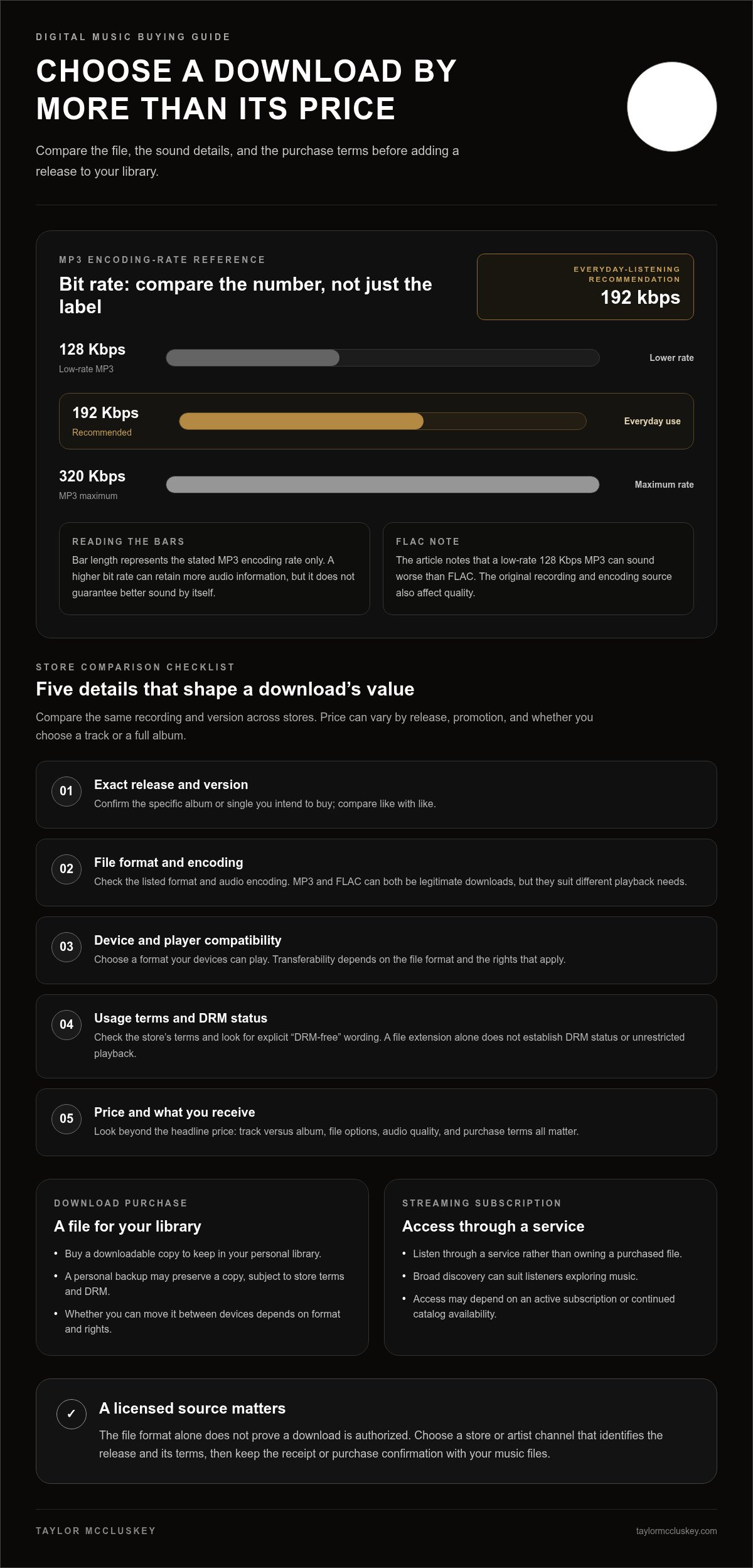
Comparing digital music stores means weighing the listed price alongside file format, audio quality, and purchase terms. That distinction matters because two stores can offer the same recording with different file options or restrictions. MP3 files can reach a maximum encoding rate of 320 Kbps, while a low-rate 128 Kbps MP3 can sound worse than FLAC. For everyday listening, the author recommends 192 kbps MP3 files.
Online stores changed how listeners find and buy music. Early archives offered downloadable tracks, while later digital storefronts made browsing and purchasing albums more familiar. When comparing retailers, focus on the exact release, available format, and what the purchase permits. A track that streams inside an app may not be a transferable file, so the label “digital music” alone doesn’t tell you what you’ll receive.
Digital stores such as the iTunes Store and Amazon’s online music store helped make downloads a mainstream way to find albums and singles. Their storefronts let listeners search by artist or release, then buy individual tracks or full albums. Look beyond the headline price: file type, audio encoding, playback compatibility, and account or usage terms all affect a download’s value.
Music prices can vary by release, promotion, and whether you choose one track or a complete album. Compare the same recording and version, then check the file format and encoding details. A higher bit rate can retain more audio information, but quality also depends on the original recording and encoding source. Choose a balance of sound quality, storage needs, and compatibility with your devices.
Downloads and Streaming Subscriptions
A download is a file purchased for your library; streaming provides listening access through a service. The difference matters if you want a release available offline without relying on an active subscription or continued catalog access. Downloads suit focused purchases and personal collections, while streaming supports broad discovery. How often you listen and whether you want particular albums help determine which offers better value.
Licensed downloads versus file sharing
A licensed download is a music file distributed with permission from the rights holders. File sharing describes passing files between people or devices, and the source determines whether that copy was authorized. For example, a track purchased from an official store has a different distribution path from the same recording uploaded by an unknown account. The format alone, such as MP3, doesn’t prove a file is licensed.
With a licensed purchase, the store or artist makes a recording available under stated terms. Those terms explain what you receive and how you can use the file. Personal listening is different from reposting a track publicly or distributing copies. A file shared without authorization can bypass the rights holders’ permission, even when it sounds identical to a purchased version.
File sharing can also make a recording’s source unclear. A filename might show an artist and album, but it doesn’t identify who supplied the track or whether distribution was authorized. A song sent through a message by an unknown sender, for instance, isn’t proven legitimate by its title or artwork. An official purchase record gives you clearer evidence of the source and transaction.
Are digital music downloads DRM-free, and how can you check? DRM status varies by store and release. Look for explicit wording such as “DRM-free” in the product details or purchase terms, then review the file format and playback restrictions before buying. A file extension alone doesn’t establish DRM status, and a track that plays on one device isn’t necessarily unrestricted.
Keep useful purchase information with the downloaded file. Save the receipt, store confirmation, and any license details in a folder with the album. For example, a folder named for the artist and release can hold both the audio files and transaction record. This makes it easier to identify the authorized source if you move your personal library to another device.
Rights also shape what “sharing” means in practice. Copying a purchased track to your own compatible devices differs from sending it to a group or uploading it to a public site. The purchase terms define permitted uses, while the file’s format affects which players can open it. A FLAC file and an MP3 can both be legitimate downloads, but they serve different playback needs.
Choose a store that clearly identifies the release, format, and usage terms. Keep the original download and its purchase record together. This simple habit helps distinguish authorized music from unverified copies and builds a collection around legitimate releases.
Direct-to-fan music sales
Direct-to-fan sales let artists offer music through a sales channel connected to their work. Fans can choose an album or single, complete a purchase, and receive the release under its stated terms. This connects the transaction to the artist rather than placing it within a broad streaming catalog. The experience depends on how the artist presents the release.
Radiohead’s In Rainbows became a landmark example when the band released it as a download on October 10, 2007. Listeners could choose what to pay, including downloading the album for free. The model put the purchase decision directly in the listener’s hands. It also showed how an artist could make a release itself the focus of a fan relationship.
Direct purchasing offers more than an audio file. An artist’s release page can identify an album or single, explain the available format, and connect the purchase to the artist’s wider creative work. Someone discovering a new single, for example, can use the same artist-owned channel to find related releases. Clear presentation helps fans understand what their purchase includes.
A direct purchase is most useful when a particular artist or release matters more to you than access to a large, rotating catalog. If you’re focused on one album, you can choose that title instead of paying for ongoing access to a whole library. Consider whether you want a specific release, how you plan to listen, and which file format works with your devices.
Direct-to-fan purchasing can make a transaction’s purpose more visible. Instead of a play contributing to a broad streaming experience, you select and buy a named album or single. Radiohead’s In Rainbows illustrates a distinct approach: the band let listeners set their own payment amount. That example is notable, but it doesn’t mean every direct sale follows the same model.
Before purchasing, read the release details and identify what the transaction includes. Confirm whether you’re choosing an individual track or a complete album, note the format, and save the receipt with the downloaded files. These details matter when building a personal library. A considered purchase supports the artist’s release and gives you music chosen for your collection.
Pre-order tracks and chart eligibility
A music pre-order lets you reserve an upcoming release before its scheduled arrival. The purchase page identifies the album or track, release date, and delivery terms. For example, you might pre-order an album before its files are available, then receive access through the store’s stated process. The order secures the transaction, but its chart treatment is a separate matter.
Chart eligibility depends on the rules of the chart and how a sale is recorded. Don’t assume a pre-order counts toward a chart on the day it’s placed. Timing may depend on the chart’s reporting period and the transaction’s status. When choosing a release, distinguish the order date from the date the purchase is counted.
That distinction matters to artists and fans around release week. An album page might accept orders early, while a chart measures eligible sales within a defined period. The store’s transaction record, release date, and reporting process can affect when a purchase appears in sales data. A pre-order can build anticipation, but it doesn’t establish chart placement or guarantee a particular result.
Before ordering, read the release details and keep the confirmation. Check the exact title, artist name, release date, selected edition, and delivery method. If a single is available for immediate download alongside an album pre-order, confirm which item your transaction covers. This helps prevent confusion between buying one track now and reserving a complete album for later.
Consider how you’ll access the release on your devices. A pre-order may deliver a download through a store account or make the release available in its app. If you plan to listen on a music player, for example, find out whether delivery provides a downloadable file or app-based access. The format and playback terms determine how the release fits into your library.
For chart-conscious fans, the process is straightforward: identify the exact release, understand when it becomes available, and distinguish the order from a completed, reportable sale. Chart rules can treat purchases differently, so timing and transaction eligibility matter more than the word “pre-order” alone. An early order builds anticipation, while the chart outcome depends on its own counting criteria.
How do digital music downloads compare with music streaming subscriptions?
A digital download is a purchased music file, while a streaming subscription provides access through a service. The key difference is what remains available after payment: a download becomes part of your personal library, while subscription listening depends on continued service access. If you want one particular album, for example, you may prefer buying that release to subscribing for a wider catalog.
A download makes sense when you return to the same recording or want a specific album as a file. You pay for that release rather than an ongoing subscription period. Streaming offers a different kind of value: one subscription can provide a broad selection for discovery. If you regularly explore new artists, you may value that range more than owning individual files.
Compare the payment structures before choosing. A download is generally a one-time purchase of selected music; a streaming plan involves recurring payments for access. This is a starting point, not a universal break-even rule. How often you listen and which service you choose determine how the options compare over time.
Access works differently, too. A downloaded file can be stored in a compatible personal library, subject to its format and purchase terms. A stream is played through a service, and access generally depends on the service’s terms. If you’re preparing a playlist for a commute, consider whether you need a file you can manage independently or an app-based library.
Catalog choice is another factor. Streaming helps you sample unfamiliar music without buying every album you want to explore. A download suits a deliberate choice, such as keeping a favorite album in your personal collection. Some listeners combine both: they discover new releases through streaming, then buy selected albums they want to keep as files.
Start with the listening habit that matters most. If you replay a few particular albums, compare the cost of buying those releases with the subscription you already use. If you often explore music across artists and genres, broad streaming access may suit you better. Then consider format, device compatibility, offline needs, and the service’s terms. These details shape the value beyond the payment alone.
Neither option suits every listener in every situation. A download centers on a specific release and personal collection; a subscription centers on continued access and discovery. Decide whether selected files or a wider catalog matters more to your routine. That choice clarifies what you’re paying for and whether a one-time purchase or recurring subscription better fits your listening.
Taylor McCluskey: Music Albums and Singles
Taylor McCluskey offers music albums and singles for listeners who want to explore an artist’s work through individual releases. If you’ve decided that a specific album or single belongs in your personal collection, explore the available music as a next step after comparing downloads with streaming. Choose a release that fits your listening habits and how you want to support an artist.
For a broader view of Taylor McCluskey’s creative work, the site also features concert tickets, artist merchandise, and film production services. Visit taylormccluskey.com to explore the music and other work.
Choose the Release That Stays With You
Your next music purchase can be a deliberate part of building a personal collection. Let the release guide your decision: choose a track you’ll return to, an album that deserves a place in your library, or a live performance you want to experience. For listeners exploring digital music sales online, the meaningful choice connects the music with how you want to listen and support an artist.
Taylor McCluskey offers music albums and singles, along with concert tickets and film production services. Explore the work that matches your interests, whether you’re looking for music to keep or a creative project to experience in another form. Each offers a different way to engage with an artist’s work.
Ready to take the next step? Contact Taylor McCluskey for help exploring the music and creative work. Let your next selection bring a new release, performance, or story into focus.
Frequently Asked Questions
How can I buy MP3 songs?
Buy MP3 songs from a digital music store or an artist’s official sales page. Search for the track title and artist, then check that the listing identifies an MP3 download rather than streaming access. After purchase, download the file to a computer or phone and save the receipt. For example, if the store offers several versions, compare track names and album details before completing checkout.
Which is better, MP3 or FLAC?
MP3 suits listeners who want smaller files and broad device compatibility; FLAC suits listeners who prioritize lossless audio and have enough storage. The best fit depends on your playback equipment and how closely you listen. For example, a compact portable player may make MP3 more convenient, while a home audio system may let you appreciate FLAC’s detail. Check that your player supports the chosen format.
What are the best websites to buy digital music downloads in the US?
Choose a store that clearly identifies the artist, release, downloadable format, and purchase terms. For digital music sales online, start with the artist’s official storefront or a recognized digital retailer that sells files, not streaming access alone. Compare the exact album or track listing, format choices, and usage terms. A familiar brand name isn’t enough if the product page doesn’t explain what the transaction provides.
How much do digital music downloads cost per song or album?
Prices vary by release, store, promotions, and whether you select a track or full album. Per-song prices can differ by title and retailer, so compare the exact release before checkout. Check whether the displayed amount covers a single track, a complete album, or an additional format or edition.
Which online stores sell MP3, FLAC, or other lossless music downloads?
Digital retailers and artist storefronts may offer MP3, FLAC, or other lossless formats, depending on the release. Look for a format selector or technical details on the album page before purchasing. A lossless option preserves audio data, while MP3 uses compressed encoding. Also confirm your phone, computer, or music player can open the file. The available formats can vary between versions of the same album.
How do I buy and download music online to a phone or computer?
Choose the release in a digital store, complete checkout, and use its download option or purchase library. On a computer, save the file in a music folder and organize it by artist and album. On a phone, download through the store’s app or transfer a compatible file from your computer. Keep the order confirmation and check available storage before downloading a large album.
What are the licensing and ownership rules for digital music purchases?
Buying a digital track gives you access under the store’s purchase terms; it doesn’t transfer copyright in the recording or composition. Those rights remain with their respective rights holders. Keeping a track for personal listening, for example, differs from reposting it publicly or distributing copies. Read the store’s license terms for permitted uses, device limits, and transfer conditions, and keep the purchase record with your files.
Which digital music stores pay artists the most per sale?
There’s no reliable basis for ranking stores by artist payout per sale. The amount an artist receives can depend on the sales channel, distribution agreement, rights ownership, and any intermediaries involved. A direct-to-fan purchase may follow different terms from a retailer sale, but the artist’s share isn’t automatically the same in every case. Look for payout details from the artist or rights holder before comparing.


