

The story shapes a production budget. Professional filmmaking services are planned around what each project requires: pre-production, scheduling, casting and location scouting, crew and filming, then editing and other post-production. The story’s scope and the production plan determine how these elements fit together.
A clear budget matters because a film takes shape through connected decisions, not just a day on set. You may know the format you want, but the right crew, schedule, studio setup, and finishing work depend on what the story needs to communicate.
This guide explains how production budgets take shape and what affects their scope. You’ll see how commercial shoots differ from documentary and narrative projects, what editing, color correction, and motion graphics contribute, and how to choose a production team that fits your goals. The focus is on informed creative decisions, from the first outline to the final cut.
Key Takeaways
- Build a production budget around the story, schedule, crew, locations, filming needs, and post-production scope.
- Match the shoot format to the deliverable, whether you need a focused interview, a commercial, or footage for a larger campaign.
- Plan editing, color correction, sound, and motion graphics as distinct parts of the finishing process.
- Use storyboards and thoughtful cinematography to shape documentary and narrative films before and during production.
- Choose a production team whose relevant experience, communication, and creative approach align with your project.
How is a production services budget built?
A production budget follows the work from the first script decisions to the finished cut. Producers map each stage, assign resources, and adjust the scope to fit the project’s deliverables.
Pre-Production Support
Production management turns a creative brief into a schedule, crew plan, and working budget. Scriptwriting defines scenes and dialogue, while location scouting identifies settings that support them. For example, an interview in a working office may need different access planning from a scripted scene on a public street.
Permits, location access, and schedule changes can affect the plan and introduce hiring risks. Before filming, look for clearly assigned roles, realistic timelines, and documented responsibilities. These steps help teams identify conflicts early and coordinate production needs instead of improvising on set.
Production Crew Roles
Each crew role supports a different part of the shoot. The director guides performances and creative decisions, while the cinematographer shapes the visual approach. Camera operators capture planned shots; grips and lighting crew position equipment and shape light for each setup.
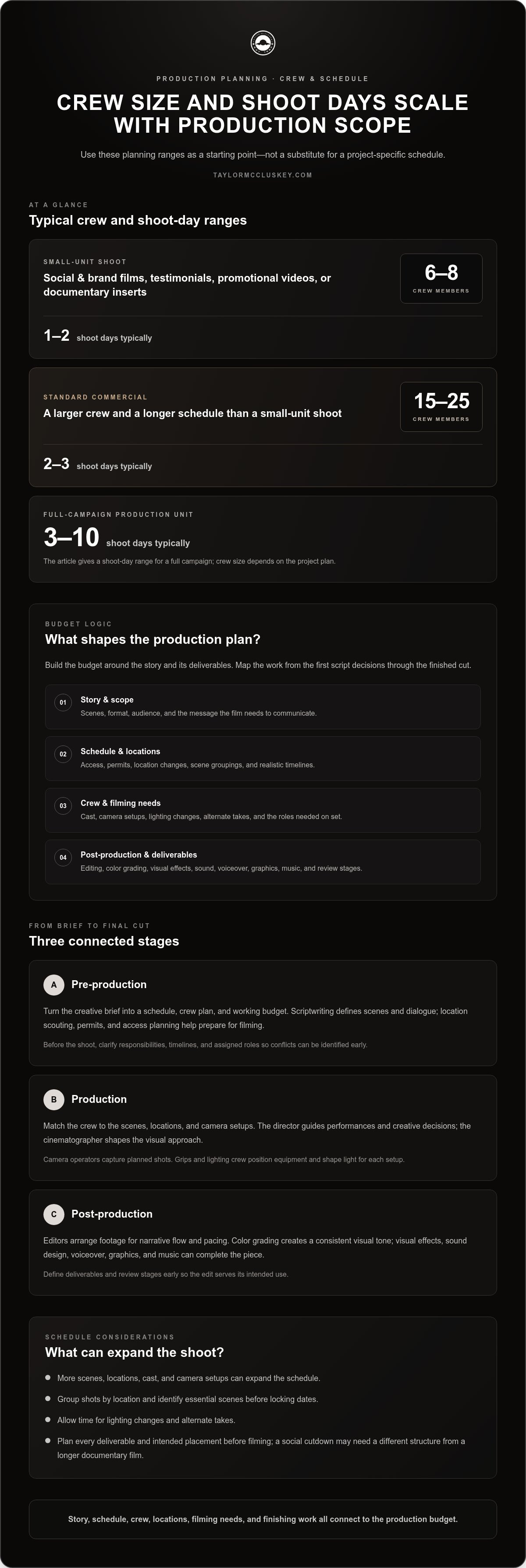
A small-unit shoot for social and brand films, testimonials, promotional videos, or documentary inserts typically uses 6 to 8 people. Crew planning should match the scenes, locations, and camera setups. Clarify who leads each department, who coordinates the schedule, and how sound and picture needs fit together.
Post-Production Services
Post-production turns recorded footage into a coherent final piece. Editors trim and arrange clips to support narrative flow and pacing, then incorporate feedback and make detailed adjustments. Color grading creates a consistent visual tone across shots, while visual effects can shape images or meet specific storytelling needs.
Finishing work may also include sound design, voiceover, graphics, and music. A product spot, for example, may need animated titles, while a documentary interview may depend on clear dialogue and carefully balanced sound. Define deliverables and review stages early so the edit serves its intended use.
Project Types and Full-Service Production
Full-service film and video production can bring planning, filming, and post-production into one coordinated workflow. Projects may include commercials, corporate videos, documentaries, educational content, films, television, and music videos. The deliverable matters: a social cutdown may need a different structure from a longer documentary film.
Filmmaking services generally emphasize story, direction, and cinematic choices; video production services can also focus on practical communication, such as training or corporate updates. To find a nearby crew, search by project type and location, then compare relevant work and client feedback. The U.S. Bureau of Labor Statistics identifies referrals and positive client feedback as reputation indicators for gig workers.
Commercials, interviews, narrative content, and B-roll
Commercial shoots combine a clear message with images that hold attention. The format, audience, and final placements shape the script, crew plan, and footage required.
Plan every deliverable before production begins. A campaign may need a hero commercial, shorter social videos, interview footage, and visual effects, all with a consistent look.
Interviews, Narrative Content, and B-Roll
Interviews give a campaign or documentary a direct human voice. Prepare questions around key messages, then frame the speaker with enough space to accommodate editing and different screen formats. Narrative content uses scripted scenes, actors, and directed action to communicate through story rather than explanation.
B-roll adds visual context: a chef preparing a dish, a team at work, or close-ups of a product. List supporting shots before filming. The shot list helps the director capture cutaways, transitions, and details that connect interview answers or add visual texture to a commercial.
Crew Sizes and Shoot Durations
A small-unit shoot for social and brand films, testimonials, promotional videos, or documentary inserts typically uses 6 to 8 crew members and takes 1-2 days. A standard commercial typically uses 15 to 25 crew members and takes 2-3 days. These ranges help frame planning, not replace a project-specific schedule.
A full-campaign production unit typically shoots for 3-10 days. More scenes, locations, cast, and camera setups can expand the schedule. Before locking dates, group shots by location, identify essential scenes, and allow time for lighting changes and alternate takes.
Commercials and branded content work best when each scene serves the brief. A product launch might pair a concise script with demonstrations, customer interviews, and close-up B-roll. A corporate video may instead center on a spokesperson, workplace footage, and clear supporting graphics. The creative treatment should connect the brand message with its audience without crowding every frame with information.
Marketing placements also affect production choices. List intended uses, such as a website, social channels, or a presentation, before filming. Then plan versions and framing to suit them. A wide master shot, for example, can support a campaign film, while dedicated close-ups and short interview excerpts provide options for shorter edits.
Studios suit controlled interviews, product demonstrations, and scenes that need consistent lighting or sound. Location filming can ground a story in a real workplace or community. Compare each setting with the script, access needs, background noise, and required shots. The choice can shape both the daily schedule and the visual character of the finished video.
Align the edit with the campaign’s purpose. A commercial may rely on a clear opening image and concise product message; a narrative piece may need room for character and pacing. Confirm which scenes are essential, what footage supports alternate edits, and where visual effects add meaning. These decisions keep production focused, from camera setup to final delivery.
Editing, color correction, and motion graphics
Post-production gives recorded material its final structure and visual identity. The editor shapes footage into a clear sequence, while color work and graphics support the project’s vision. A product film, for example, might move from a wide establishing shot to a close-up, then add a concise title that clarifies the product’s purpose.
Editing begins with reviewing and organizing footage, then selecting clips that advance the story. Editors trim pauses, arrange scenes, and adjust pacing so each moment leads naturally into the next. In an interview-led film, a strong answer might open a section, while supporting images cover transitions and keep the narrative moving.
A rough cut gives the client a working view of the story before detailed finishing. Feedback can identify missing context, unclear sequencing, or sections that need a different emphasis. Post-production commonly includes multiple rounds of feedback and detailed adjustments. Specific notes, such as tightening a product demonstration or holding longer on a reaction, make revisions more focused.
Color correction addresses inconsistencies between shots, such as changes in exposure or white balance. Color grading then shapes the overall look. A warm, intimate interview may call for softer contrast, while a crisp commercial may use a brighter, more defined palette. Review scenes together so the final treatment feels deliberate and consistent.
Motion graphics add designed movement to the edit. Animated titles can introduce a speaker, diagrams can clarify a process, and simple labels can identify products or locations. Each graphic should serve a clear purpose. If a title competes with a person’s face or key action, adjust its timing, size, or placement.
Visual effects can support the story when practical footage alone cannot communicate an idea clearly. Screen replacement might make an on-camera display readable, while subtle cleanup can remove a distracting object. Effects should match the footage’s lighting, perspective, and motion. Otherwise, they draw attention away from the story and weaken the image.
Sound also shapes the finished piece. Dialogue, voiceover, sound effects, and music can deepen immersion and guide attention. In a short mission statement film, clear speech should remain easy to follow beneath the score. Before final delivery, review picture and sound together, check graphics against the chosen framing, and confirm that each edit serves its intended audience.
Documentary and narrative filmmaking
Documentary and narrative projects need more than attractive photography. They need a clear point of view, deliberate scene choices, and a structure that carries viewers from opening to finish. A documentary might follow a community restoring a historic theater; a narrative film might use a fictional family to explore the same theme. In both, the production plan must serve the story.
Start with the central idea. For a documentary, identify the subject, key voices, access needs, and events the camera must capture. For a scripted story, refine the screenplay’s dialogue, scene pacing, and suspense to hold audience attention. A corporate film can use documentary techniques, such as interviews and workplace footage, while keeping its message focused on a specific mission.
A storyboard turns an idea into a visual plan. It maps scenes and helps the team plan camera angles, movement, and shot composition before filming. For a sequence showing a musician preparing backstage, the board might move from a wide view of the room to close details of hands tuning an instrument. This gives the director and crew a shared visual reference.
The director of photography works with the production team to prepare the set. During filming, lighting and camera angles establish tone and direct attention to meaningful details. A close frame can emphasize a witness’s expression; a wider composition can show how that person relates to a location. These choices matter in interviews, staged scenes, and documentary observation alike.
Documentary work also depends on purposeful coverage. Plan the interview, then capture related actions, locations, and objects that help viewers understand each answer. If a subject describes opening a neighborhood studio, film the entrance, workspace, and daily activity. Those images can connect interview passages and ground the story rather than leaving it purely explanatory.
For narrative filmmaking, translate each scene into playable action. A script may describe a character’s hesitation, but the director can communicate it through a pause, a glance, or a change in camera distance. The production team should identify essential story beats before filming. That preparation helps preserve continuity when scenes are shot out of sequence.
Audience and release plans shape the final approach. A film intended for a national audience may need context that local viewers already understand. A corporate documentary may prioritize clarity and real voices; a fictional drama may build suspense by withholding information. The practical takeaway is simple: choose the format, visual language, and coverage that make the story’s central idea clear.
How do you choose a professional filmmaking company or crew?
Start with the finished film you need, then match the production team to its creative and practical demands. A documentary, commercial, and scripted short each require different experience, planning, and crew coordination.
Review work that resembles your project, not just a showreel’s strongest images. For a character-led narrative, look for scene continuity, performance direction, and visual consistency. For a corporate profile, assess how interviews, workplace footage, and brand messages come together. A relevant sample helps you judge whether a team can handle the format and tone you need.
Reputation offers another useful signal. The U.S. Bureau of Labor Statistics identifies referrals and positive client feedback as key indicators of a gig worker’s reputation. Look for feedback that describes concrete experiences, such as clear communication, reliable coordination, or effective problem-solving during a shoot.
Before production, define the project in a written brief. Include the intended audience, central message, locations, filming needs, and final deliverables. A team preparing a music video, for example, needs a shared understanding of the concept, performance scenes, visual references, and planned edit. Clear boundaries between creative decisions and production responsibilities can help prevent delays and costly setbacks.
Then match the crew to the work. Ask how the director, cinematographer, camera operators, and lighting team will support the planned scenes. An interview-based film may need a different setup from a sequence involving moving camera work or multiple locations. A clear role plan helps everyone understand who makes decisions and who coordinates each department.
Schedule and post-production matter, too. Review the proposed filming sequence, location changes, and editing milestones together. A project with interviews at separate sites, for instance, needs time for travel and consistent visual coverage. Agree on how feedback will be gathered, who will consolidate notes, and how edits will move toward approval. These details clarify responsibilities before production begins.
Consider risks in practical terms. An unclear script can lead to scenes that miss the message; an incomplete schedule can leave important shots uncovered. A mismatch between the intended audience and visual approach may also weaken the final film. Identify essential scenes, decision-makers, and deliverables early, then keep those priorities accessible to the crew throughout the project.
Use these criteria to shape your next production brief and creative conversation. Start planning your film project with the story, audience, and deliverables in focus.
Taylor McCluskey: Music Albums and Singles
Taylor McCluskey offers film production services for projects that need a creative approach, alongside music for visitors exploring work across both fields. For a commercial, documentary, or narrative project, Taylor’s filmmaking practice brings the planning principles in this guide into a creative production. Taylor McCluskey also offers music albums and singles for music-focused visitors.
If you’re considering a film project, explore Taylor McCluskey’s work and decide whether it aligns with your creative direction. You can also find Concert Tickets and Artist Merchandise. Visit taylormccluskey.com to explore the work or get in touch.
Turn the Creative Brief Into a Film
The next step is to turn your idea into a focused brief. Name the audience, the response you want to inspire, and the feeling viewers should carry away. Then shape those choices into a creative direction your production team can use. A clear starting point gives professional filmmaking services a purpose beyond polished images: every scene can support the story and its intended impact.
Taylor McCluskey brings together film production services, music albums and singles, and concert tickets. This creative range offers a way to explore work across film and music. Use your brief to start a conversation about the project, its central idea, and the experience you want to create.
Contact Taylor McCluskey to discuss your project. Bring the idea you’re ready to develop, and take the next creative step with confidence.
Frequently Asked Questions
How many crew do I need for a TV advert?
A standard commercial shoot typically uses around 15 to 25 crew members and takes 2-3 days. The production’s scenes and locations shape the final crew plan. A single studio setup needs different coordination from a shoot with several settings, cast members, and lighting changes. List the essential shots first, then match crew roles to those requirements so the schedule supports the advert’s creative direction.
What services do professional filmmaking companies offer?
Production companies may handle planning, filming, and post-production for commercials, corporate films, documentaries, educational projects, television, music videos, and narrative films. A production plan can include script development, location scouting, crew coordination, and filming. Post-production may cover editing, color grading, sound design, motion graphics, or visual effects. An interview-led corporate film, for example, may need a different mix of services from a scripted music video.
How much do professional filmmaking services cost in the United States?
There is no single price for professional filmmaking services. Project pricing depends on its scope and is provided after a quote request. The main cost drivers include the production schedule, crew requirements, locations, cast, and post-production scope. A project with multiple filming locations and complex effects calls for a different plan from a contained interview shoot. Define the intended deliverables first to clarify the scope.
What factors affect the price of a filmmaking project?
Project pricing reflects the work required, especially filming days, crew roles, locations, cast, and editing needs. A script with several scenes may require more setups than a single-location interview. Travel between locations can also affect scheduling and coordination. Post-production requirements matter: a straightforward edit differs from one requiring detailed sound design, visual effects, or multiple versions for different audiences.
What is the process for planning and producing a professional film?
Begin by defining the audience, purpose, and final deliverables. Develop the script or documentary approach, then map scenes, locations, crew roles, and a workable schedule. During filming, the director guides the creative execution while the crew captures planned footage and sound. Post-production shapes that material into a finished film through editing and review. Decide early, for example, whether the project needs a full-length version and shorter edits.
What equipment and crew are needed for professional filmmaking?
The equipment and crew depend on the planned scenes. A basic interview setup may call for a camera operator, camera, lighting support, and sound capture. A scripted scene with movement may need a director, cinematographer, camera operators, grips, and lighting crew. Production management coordinates the work. Build the equipment plan from the shot list, since a product close-up and a moving scene demand different camera and lighting setups.
How long does a typical professional film production take?
Shoot duration varies by format: a small-unit shoot for social or brand content typically takes 1-2 days, a standard commercial takes 2-3 days, and a full-campaign production shoots for 3-10 days. These figures describe filming, not every planning and finishing task. A project with interviews at separate locations may need additional coordination around access, travel, and consistent coverage across each setup.
What permits and legal releases are required for filming in the United States?
Permits and releases depend on the filming location, property, people appearing on camera, and planned use of the footage. Start by listing each location, identifiable participant, and third-party material, such as music or artwork. Then determine which permissions or releases apply and organize the documents before filming. Requirements can differ across jurisdictions and situations, so legal review helps address project-specific obligations rather than relying on a generic checklist.


