

Alternative music albums for sale include landmark vinyl releases and collector editions. Nirvana’s Nevermind is listed as a 180g LP, while The Cure’s Disintegration appears as a remastered 2LP 180g release. These formats offer a tangible way to explore alternative rock across eras.
Choosing a record is about more than recognizing the cover. You may be weighing album and EP listings, comparing prices, or looking for a vinyl pressing or a collector edition that fits your shelf and listening habits. This guide brings those options into focus, with listings that include Daydream Nation, Funeral, OK Computer and My Chemical Romance’s 20th-anniversary edition of The Black Parade. You’ll find vinyl formats, price details and practical context to help narrow your choices. We’ll also trace the genre’s evolution, from the post-punk and college-rock foundations of the 1980s to the wider-ranging sounds that followed.
Key Takeaways
- Compare album and EP listings by format and edition to narrow your search before weighing price.
- Understand how pressing format, condition, and collector appeal can shape an album’s value.
- Explore vinyl options across alternative rock eras, including releases presented as multi-disc and 180g pressings.
- Use a focused checklist to compare online listings in the United States and choose records that fit your listening or collecting goals.
- See how an artist’s own music releases can offer a direct path to discovering work beyond established alternative acts.
Album and EP listings
Shipping charges depend on destination, package weight, and delivery speed. Return terms and buyer protections vary by retailer, marketplace, and payment method, so review the stated terms before ordering.
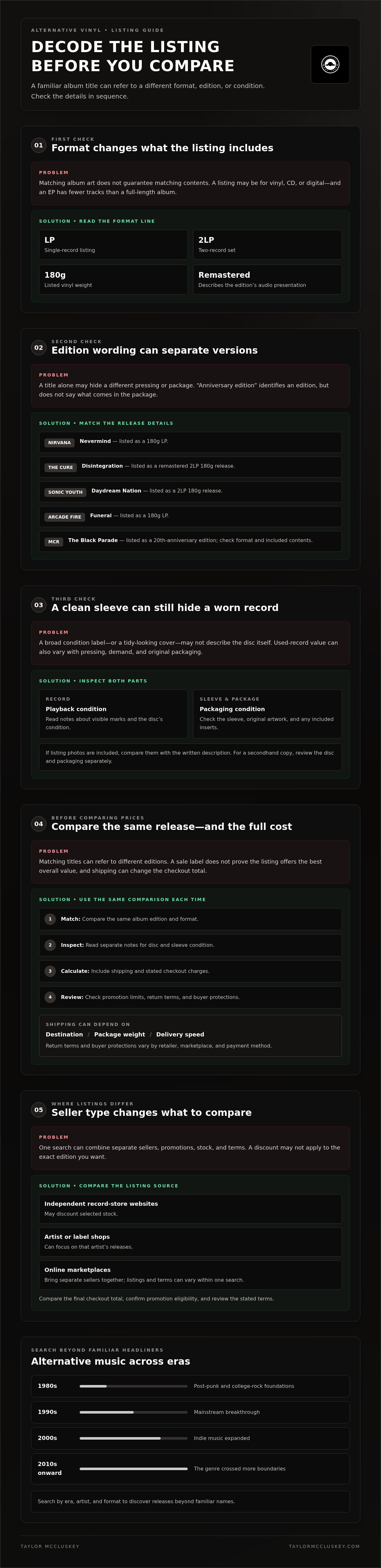
Start with the release format, then compare edition details. A standard album listing may identify the artist, title, format, and track selection. An EP has fewer tracks than a full-length album. Check the description for the actual format and included material to distinguish vinyl from CD or digital editions.
Classic alternative albums show how formats can differ. Nirvana’s Nevermind is listed as a 180g LP. The Cure’s Disintegration appears as a remastered 2LP 180g release. Sonic Youth’s Daydream Nation is listed as a 2LP 180g release. These are distinct configurations, even though all three titles are landmark albums.
Compare the listing title with its format details. “2LP” signals a two-record set, while “LP” identifies a single-record listing. “Remastered” describes the edition’s audio presentation. “180g” specifies the listed vinyl weight. These details distinguish versions when a title has multiple pressings. Arcade Fire’s Funeral, for example, is listed as a 180g LP.
For a focused search for alternative music albums for sale, start with the exact artist and title. Then narrow results by format, edition, and condition. This helps prevent a familiar album cover from hiding a different release. For secondhand records, read the condition notes for both the disc and packaging. A clean sleeve can still contain a worn record.
- Artist and title: Match both against the release you want.
- Format: Identify LP, 2LP, CD, or another stated format.
- Edition: Note terms such as remastered or anniversary edition.
- Condition: Review descriptions of the record and packaging.
Collector-focused listings may identify a specific edition. My Chemical Romance is listed with a 20th-anniversary edition of The Black Parade. That wording distinguishes it from a standard album listing. Look for edition language, then compare format and included contents. Anniversary wording alone doesn’t explain what comes in the package.
Genre history can broaden searches for alternative music albums for sale. Post-punk and college-rock bands helped pave the way during the 1980s. Alternative music reached a mainstream breakthrough in the 1990s, while indie music expanded in the 2000s. From the 2010s onward, the genre crossed more boundaries. Search by era, artist, and format to discover beyond familiar headliners.
Shipping charges depend on destination, package weight, and delivery speed. Return terms and buyer protections vary by retailer, marketplace, and payment method, so review the stated conditions before ordering.
Album prices
Compare used-record listings and current promotions by format, condition, and total checkout cost. The same album title can refer to different editions, so confirm the release before comparing prices.
Used Album Prices
Used alternative albums are sold through independent record-store websites, online marketplaces, and local record shops across the United States. Listed prices vary with condition, pressing, demand, and whether the original packaging remains. Compare copies of the same edition, not just listings with matching titles. A worn sleeve or scratched disc can make a lower-priced listing less appealing.
Use a consistent comparison: match the format, edition, and stated condition first, then include shipping in the total. A local shop’s price may exclude delivery, while an online listing can add shipping at checkout. Read the grading notes for the record and sleeve separately. For a used LP, these details reveal more than a broad “good condition” label.
Deals and Discounts
For deals, compare independent record-store websites, artist or label shops, and online marketplaces. Each serves a different purpose. A store may discount selected stock, while an artist shop can focus on that artist’s releases. Marketplaces bring together separate sellers, so listings and terms can vary within a single search.
Search by artist, album title, and format, then compare the final checkout total. Check whether a discount applies to the exact edition and whether shipping changes the savings. Promotions may limit eligible items or stock. Treat a sale label as a starting point, not proof that a listing offers the best overall value.
Edition details often explain price differences. A standard LP, a multi-disc set, and an anniversary edition are different purchases. Check the listing for included discs, packaging, and edition details. A premium-looking title alone doesn’t establish what the package contains. Compare the details line by line before deciding.
Condition also affects the value of a used copy. A record described as clean may still have a worn sleeve. Look for separate notes about playback condition, visible marks, and packaging. If photographs are included, compare them with the written description. For collectible copies, intact inserts or original artwork can matter as much as the vinyl itself.
- Match: Compare the same album edition and format.
- Inspect: Read separate notes for disc and sleeve condition.
- Calculate: Include shipping and any stated checkout charges.
- Review: Read promotion limits and return terms before purchase.
Online listings can change as sellers update stock and promotions. Save the edition details you want, then compare matching listings during the same shopping session. A release date or anniversary label can help distinguish versions, but the format and included contents remain decisive. This keeps your comparison focused on the record you intend to buy.
Alternative rock vinyl albums for sale
In the United States, independent record stores, online music retailers, artist and label shops, and resale marketplaces sell alternative albums. Available formats vary: vinyl, CD, and cassette listings may differ by title, edition, and current stock. Search by artist and album, then filter for your preferred format.
Vinyl listings reward close attention to the release details. Radiohead’s OK Computer is listed as a 2LP 180g vinyl release. That description identifies both its two-record configuration and stated record weight. Compare those details with the listing title and product description before choosing a copy.
Format affects how you’ll use a release. Vinyl suits a turntable setup, while a CD works with compatible disc players. A cassette requires a cassette player. If you’re buying a gift, consider the recipient’s playback equipment first. The preferred format matters more than an edition’s visual appeal if they can’t play it.
Use a focused search process to narrow results:
- Search precisely: Enter the artist, album title, and format.
- Compare editions: Review disc count, weight, and remaster descriptions.
- Inspect condition: For used copies, read notes about the record and sleeve.
- Review contents: Check whether the listing describes inserts or packaging.
For vinyl, pay attention to pressing details rather than relying on cover art. Two listings can show the same album image but describe different configurations. “2LP” indicates a two-record set, while “180g” identifies the listed weight. A remaster description adds another edition detail. Read the full description to understand which version the seller is offering.
Take particular care with the condition of secondhand vinyl. Look for separate descriptions of the disc and sleeve. Notes about visible marks, playback, or packaging clarify what the condition label means. A record can have a presentable cover and a worn playing surface. Product photographs may help illustrate condition, but written details remain essential.
CD and cassette listings need their own format checks. Confirm the medium in the title and description, especially when search results combine several versions. For a cassette, confirm that the listing identifies a cassette release. For a CD, check whether it describes a single-disc or multi-disc edition. These checks prevent an accidental format mismatch.
Before checkout, compare the exact title, edition, condition, and delivery terms across the listings you’ve found. A marketplace may display offers from separate sellers, while a record-store or artist shop may present its own catalog. Evaluate each listing based on its stated details. Matching the format carefully makes your search for alternative rock vinyl more precise and helps you choose a release suited to your collection.
Collector's alternative albums
To distinguish an original pressing from a reissue, compare its catalog number, label design, packaging, and runout markings with documented release details. Check that the listing clearly identifies the pressing, then compare its photographs and description with those identifiers.
Collector appeal can come from an album’s history, edition, condition, or packaging. An anniversary release, for example, differs from an original pressing even when both contain the same album. My Chemical Romance’s 20th-anniversary edition of The Black Parade illustrates why edition wording matters. Read beyond the artist and title before deciding what a listing represents.
Start your evaluation with the physical record. When buying from an individual seller, request clear images of the label, sleeve, and runout area. Compare those details with release information for the specific album and format. A cover image alone can’t establish a pressing. Catalog numbers and label variations provide more useful clues than artwork alone.
- Release identifiers: Compare catalog numbers and label details.
- Runout area: Inspect the markings etched or stamped near the label.
- Packaging: Note inserts, sleeve design, and any described extras.
- Condition: Review separate descriptions for the record and sleeve.
Condition affects both playability and presentation. A collector may value an undamaged sleeve, while a listener may prioritize a clean playing surface. Read the seller’s grading notes for each. Look for specific descriptions of scratches, seam wear, or missing inserts. If the listing uses a broad condition label, photographs can help clarify what it means.
Read edition language carefully. Terms such as “reissue,” “remastered,” and “anniversary edition” describe a release’s identity, but don’t establish every detail. Check the format offered and what the description says is included. A multi-disc configuration, for instance, should be identified as such. Don’t infer included extras from promotional artwork.
Build your comparison around matching copies of the same release. Record the title, format, catalog number, condition, and packaging notes for each listing. This prevents a common mismatch: comparing an original pressing with a later edition as if they were identical. For a title that’s rare to you, prioritize accurate identification before judging its collector appeal.
Finally, save the evidence behind your choice. Keep the listing description and photographs, especially those showing identifiers or condition details. For an album such as The Black Parade, distinguish the anniversary edition from other versions using its stated edition and package information. Keeping a precise record of these details helps you shop intentionally and organize your collection accurately.
Where can I buy alternative music albums online in the United States?
In the United States, search independent record-store websites, artist and label shops, and online marketplaces. Each offers a different route. Record stores organize stock by artist, genre, or format. Artist shops focus on releases connected to specific performers. Marketplaces bring together individual sellers, so edition details and condition can vary between listings.
Start with the format you want. Search the artist and album title alongside “vinyl,” “CD,” or “cassette.” Add an edition descriptor if you’re looking for a particular version. Radiohead’s OK Computer, for example, is listed as a 2LP 180g vinyl release. Specific terms can narrow results to listings that match your playback setup.
Compare the information each seller provides. Check the exact title, format, edition, condition, and included contents. For used copies, read the notes about the disc and packaging separately. A marketplace listing may describe one seller’s copy, while a retailer’s catalog can group multiple formats under one album page.
- Record-store sites: Search catalogs by artist, genre, title, and format.
- Artist or label shops: Browse releases associated with a particular act or label.
- Marketplaces: Compare separate seller listings and stated conditions.
- Release pages: Review format and edition details before adding an item.
Shipping and returns can affect your choice. Review delivery charges, estimated arrival information, return conditions, and payment protections shown during checkout. These terms vary by seller and platform. Compare the final total, not just the displayed item price. For a used LP, include shipping when weighing one seller’s offer against another listing.
Release timing can help plan searches. The alternative album schedule lists releases for October 23, October 30, November 6, November 13, and November 20, 2026. It also lists releases for December 4, 2026. Search those dates alongside artist or label names when tracking upcoming records, then compare the available formats.
Use a simple shortlist to keep comparisons clear. Record the seller, edition, format, condition, and full checkout total for each matching listing. Remove options that don’t match your intended format or condition. Then compare the remaining terms and choose the listing that best suits your listening or collecting needs.
For music from an independent artist, an official artist shop can provide a direct route to their releases. Browse Taylor McCluskey’s music albums and singles to explore his work alongside the wider alternative catalogue.
Compare independent record-store websites, artist and label shops, and online marketplaces, since each offers a different route to album listings. Check the full checkout total and seller terms to find the option that best suits your needs.
Taylor McCluskey: Music Albums and Singles
Taylor McCluskey offers music albums and singles for listeners exploring beyond established alternative acts. His music provides another artist-led discovery, while concert tickets connect listeners with live performances and artist merchandise offers a way to support the work beyond recorded music.
Explore Taylor’s releases when you want to discover an individual artist’s catalogue alongside familiar alternative albums. Browse the music, then follow the work through live performances and merchandise at your own pace.
Visit taylormccluskey.com to explore Taylor McCluskey’s music and other creative work.
Choose the Next Record for Your Collection
Build your collection with intention. Let your next choice reflect how you listen, what sounds you want to explore, and which artists deserve a place in your personal rotation. Your search for alternative music albums for sale can lead beyond familiar records to independent voices and new creative work.
Make the next step personal. Follow an artist whose music stays with you, discover more of their work, or explore the wider creative projects behind it. A thoughtful choice can turn one purchase into the start of a deeper connection with an artist’s work.
Explore Taylor McCluskey’s creative work and contact Taylor McCluskey to take your next step. Keep listening with curiosity, and let the next record lead somewhere new.
Frequently Asked Questions
How much do new alternative music albums cost by format?
Prices vary by format, edition, and seller, so compare the exact release rather than assuming one format has a fixed price. Vinyl packaging, multi-disc configurations, CDs, and cassettes can differ in production and presentation. Shipping can also change the checkout total. For a fair comparison, match the album and edition first, then weigh format, included contents, and delivery charges together.
Which online stores offer rare or out-of-print alternative albums?
Search independent record-store websites, specialist used-record shops, and online marketplaces for rare or out-of-print releases. Artist and label shops can also list catalog items or reissues. Use the exact album title and artist, then add “out of print,” the format, or a catalog number when available. For a specific pressing, compare identifying details and condition notes before choosing a listing.
What are the best websites for alternative album deals and discounts?
Compare independent record-store websites, artist or label shops, and online marketplaces. Check whether discounts apply to the exact edition, then compare the final checkout total, including shipping.


