

A music campaign is more than a set of images. A creative director for music projects translates an artist’s vision into a connected release campaign, shaping album artwork, video concepts, social content, and live visuals. At a major label, the role may guide broader creative decisions; at an indie label, one director may work closely with the artist across several hands-on tasks.
That blend of vision and coordination is what makes the role easy to misunderstand. A creative director for music projects does more than choose a cover image. They clarify the music’s identity across the places fans encounter it and keep the creative work aligned with the artist’s goals.
This article explains how creative direction works across campaigns and album artwork, how ideas adapt during production, and how the role can differ between major and indie labels. You’ll also learn how a creative director collaborates with artists and creative teams to carry a shared vision from the first concept through release and beyond.
Key Takeaways
- Align campaign concepts with the artist’s vision, then carry that direction through collaboration with directors, artists, and cinematographers.
- Translate the music into visual storytelling with imagery, color, and design that connect across campaign touchpoints.
- Keep production flexible: refine creative choices as ideas, practical needs, and the realities of a shoot evolve.
- Treat album artwork as part of the wider release identity, not an isolated design decision.
- Expect the role to shift by label: major-label work may focus on broad creative oversight, while indie settings can call for a more hands-on approach.
What is it a creative director doing on a campaign?
A creative director shapes a campaign’s visual direction and coordinates the people who bring it to life. In the United States, cost depends on the scope, deliverables, schedule, and team responsibilities. The creative director provides a quote based on those project details.
Creative Team Collaboration
A creative director connects the artist’s vision with the work of directors, cinematographers, designers, and producers. This collaboration matters because each specialist makes decisions that affect the campaign’s final look. The creative director might shape the concept, while the cinematographer translates it into camera choices, lighting, and movement.
Start with a shared creative brief that defines the song’s mood, intended audience, and core visual idea. For example, describing a track as intimate could lead the team toward close framing and restrained lighting. The creative director guides feedback among collaborators so set design, performance, and camera work all support the same concept.
Artist Visual Branding and Campaign Production
Visual branding gives an artist a recognizable identity across photography, artwork, video production, and campaign materials. It matters because fans encounter a release in different formats, and disconnected visuals can weaken its overall story. A creative director considers how a portrait, cover image, and video frame each express the artist’s character.
Translate the artist’s vision into practical choices: select a visual mood, establish a color direction, and decide how images should frame the artist. Carry those choices into photography, album artwork, and video concepts. If a campaign uses stark monochrome portraits, for instance, the video treatment can echo that contrast through its lighting and composition.
Consistency doesn’t require identical assets. A campaign can use different locations or compositions while preserving its central visual language. The creative director checks each asset against the brief and adjusts details that stray from the artist’s intended identity.
Balancing Creative Vision and Budget
Budget-conscious creative direction protects the campaign’s central idea while matching production choices to available resources. A concept needs to work in practice, not just in a presentation. A director might prioritize a distinctive location or a carefully composed artist portrait rather than spread resources across details that add little to the visual story.
Set priorities with the artist and production team before committing to a treatment. Identify essential elements, such as a specific setting or visual effect, then consider simpler ways to achieve the same mood. A cinematographer might create atmosphere through lighting and framing instead of extensive set construction. The creative director discusses budget considerations with the producer as plans develop, so adjustments happen before they disrupt production.
For a creative director for music projects, the scope of responsibility also shapes the engagement. A single-release concept differs from oversight across photography, artwork, and video. Clear deliverables define the work, align collaborators, and keep the campaign’s visual direction intact.
What Does A Creative Director Do In The Music Business?
A music creative director turns an artist’s sound and goals into a visual language for releases, campaigns, and live shows. The role connects creative decisions across formats so every part supports the same artistic identity.
Translating Music into Visual Storytelling
Visual storytelling translates a song’s mood, subject, and rhythm into images and scenes. It matters because a video concept should feel connected to the track, not simply decorate it. A director’s treatment offers a starting point; the creative director develops its visual logic with the artist and production team.
For a reflective song, the team might build a treatment around solitude, then use framing, performance, and setting to express that idea. The director shapes the film’s execution, while the creative director helps keep the concept aligned with the release identity and the artist’s vision.
Visual Research and Consistent Branding
Visual research gathers references that help define an artist’s visual language. Specific examples are easier to coordinate than broad labels such as “cinematic” or “bold.” A reference board can connect photography, typography, color, wardrobe, and set design through a shared mood.
The creative director then carries that visual language across social profiles, release artwork, and tour visuals. For a live show, they can align screen imagery and lighting cues with the songs’ emotional shifts. Coldplay refer to creative director Phil Harvey as their fifth member, reflecting how closely creative leadership can connect with an artist’s identity.
Creative Director and Related Roles
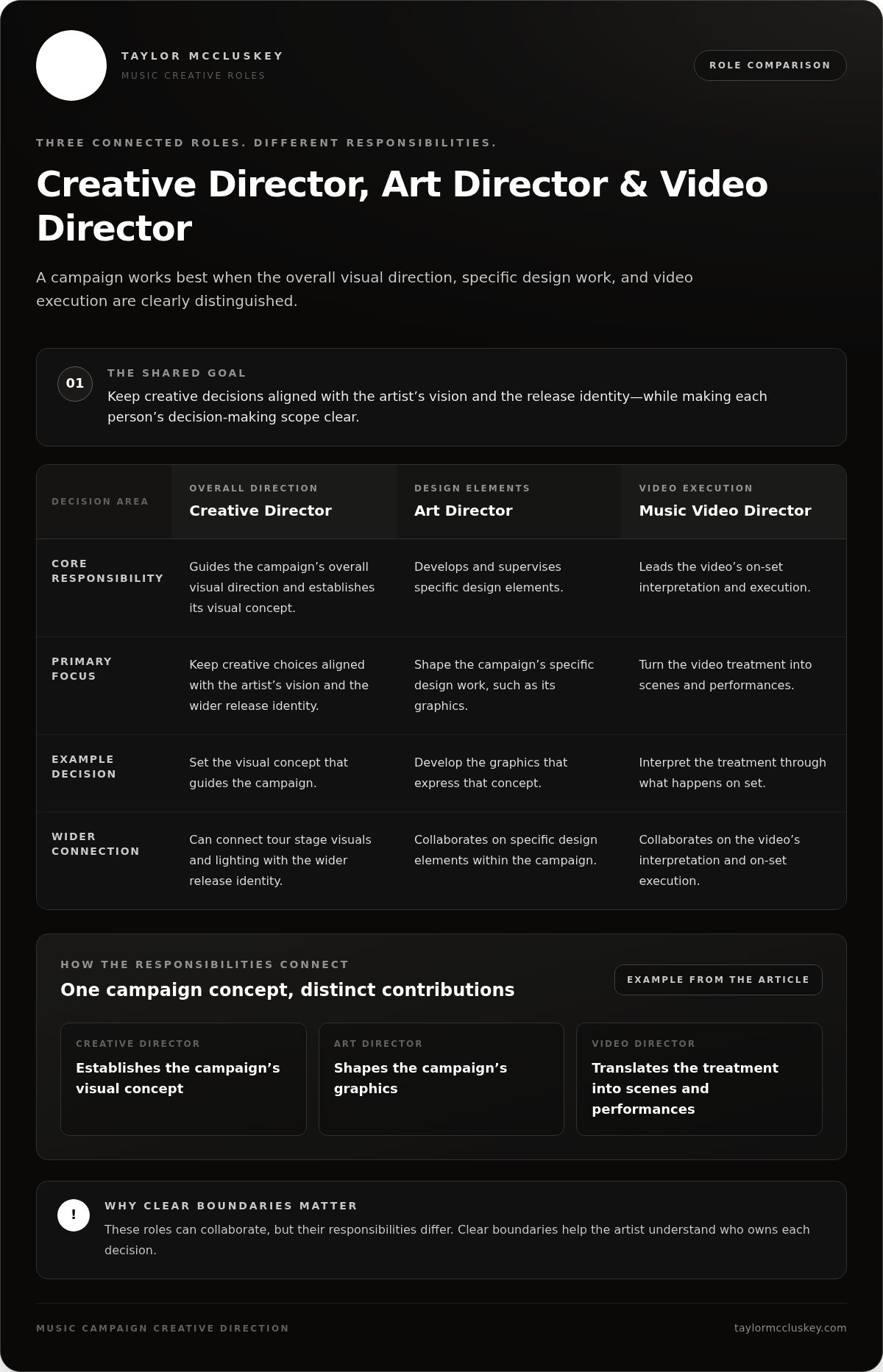
A creative director guides the overall visual direction, while an art director typically develops and supervises specific design elements. A music video director leads the video’s on-set interpretation and execution. These roles can collaborate, but their responsibilities differ; clear boundaries help the artist understand who owns each decision.
For example, the creative director may establish the campaign’s visual concept, the art director may shape its graphics, and the video director may translate the treatment into scenes and performances. On a tour, creative direction can also connect stage visuals and lighting with the wider release identity.
Skills and Hiring a Music Creative Director
The work calls for visual judgment, communication, organization, and the ability to turn an artist’s ideas into a clear brief. To find a suitable creative director, review their portfolio for relevant campaign concepts and visual work, then discuss how they would interpret the music and collaborate with the team.
Creative directors may charge hourly, per project, or through a retainer. The arrangement should match the scope and duration of the work. A contract should define deliverables, approvals, revision expectations, payment terms, and rights to use the resulting assets. Unclear responsibilities can lead to conflicting feedback, budget pressure, or visuals that drift from the artist’s vision.
Listening closely to an artist’s music albums and singles can help clarify the sound and mood that visual direction needs to serve.
Adapting designs to changing ideas during production
A production plan gives a creative team direction, but discoveries on set can reshape the original idea. The creative director helps decide which changes strengthen the concept and which would pull the project away from its purpose.
OK Go’s music-video process included six weeks of experimentation in a warehouse. This shows how testing can become part of the creative work, not just a final check. During a shoot, a camera move may read differently in the space, or a visual effect may not land as expected. Designers and directors can adjust their approach while preserving the core idea.
Start by separating the concept’s essentials from its flexible details. If a video treatment depends on a moving set, for example, the essential element might be the feeling of motion, not a specific piece of machinery. The creative director can explore another practical method with the director and cinematographer, then assess whether the new solution still serves the song.
Use a clear decision process when new ideas surface. First, describe the proposed change and the problem it solves. Next, consider its effect on the image, schedule, budget, and other planned scenes. Then share the decision with the artist, producer, and designers. A concise update helps the whole team work from the same version of the plan.
Some productions leave little time for revisions. Director Tobman had three days between Marvel’s first call about “All the Stars” and its first shoot day. On a compressed schedule, teams need to distinguish urgent creative decisions from details they can refine later. Locking the central visual idea early gives collaborators a reference point when practical constraints emerge.
Testing can also reveal new creative opportunities. The OK Go illusions shot was rehearsed hundreds of times, showing how repeated trials can refine timing and execution. If a camera move or performance changes during rehearsal, the creative director can assess whether the variation adds meaning. A useful adjustment should improve the viewer’s experience, not change things for its own sake.
After each approved change, update the treatment, references, and production notes. For example, if a location shifts from an interior to an exterior, designers may need to revise set details, while the cinematographer reassesses lighting and framing. Recording the decision and its impact keeps the revised direction visible to the team and helps later edits remain coherent.
Album artwork and art direction
Album art gives a record a visual point of entry, while art direction shapes how that image supports the music. A creative director’s deliverables can include the cover concept, visual references, design direction, photography brief, and campaign artwork. The exact set of deliverables depends on the release’s needs and formats.
Begin with the record itself. Identify its emotional center, recurring themes, and contrasts between tracks, then find an image idea that expresses those qualities. A restrained acoustic album might call for a quiet portrait, while a record built around vivid characters could suggest more theatrical imagery. The goal is a meaningful cover, not decoration alone.
Translate the concept into a practical brief for the photographer, designer, or illustrator. Define the subject, composition, mood, typography, and important visual details. For example, a close portrait with open space around the artist gives the designer room to place the title without obscuring the image. Clear direction lets specialists contribute while keeping the cover coherent.
Before the digital era, music creative directors focused on album artwork and promotional materials. The physical record made the cover central to how listeners encountered music. Today, artwork may appear on screens, printed materials, and merchandise, so legibility and composition need consideration at different sizes. A strong design preserves its main idea even when reduced to a small thumbnail.
Art direction also connects the cover to the release’s surrounding materials. A consistent typeface, color treatment, or photographic approach can carry into promotional images and related assets. These choices should support the artist’s identity without making every image identical. The director can define which elements remain consistent and where each designer has room to interpret the concept.
Archival material offers another route. The Yardbirds ’68 box set combines archival music design with creative direction in a collector’s edition, and its artwork and products were produced over six months. That example shows how curation and design can work together: historical images and materials gain a deliberate visual structure for a release.
For a smooth approval process, review the artwork against the brief at each stage. First, assess whether the image expresses the record’s character. Then check the typography, composition, and relationship between the cover and supporting visuals. Finally, confirm that the concept works across the intended formats. This sequence keeps feedback focused and makes revisions easier to direct.
Creative direction at major and indie labels
Label structure shapes how a creative director works, but the central task stays the same: connect an artist’s identity with a release. At a major label, the director may guide broader creative decisions and collaborate on campaigns. At a smaller label, the role can be more hands-on, bringing the artist and creative work into closer daily contact.
Major-label campaigns often involve distinct creative specialists. The director can align designers, photographers, and video producers around one release direction, then coordinate how their work supports the artist’s goals. For example, a new album cycle might connect its cover concept with video treatments and social assets. The director’s value lies in maintaining a clear creative throughline across those contributions.
That wider scope doesn’t mean the director makes every decision alone. The artist’s vision guides the campaign, while label teams and creative collaborators contribute their expertise. A useful working process defines who approves concepts, who leads each asset, and how feedback reaches the people producing it. Clear roles help a major-label team keep multiple campaign elements aligned.
Smaller labels often work differently. An indie label may hire one freelance creative director to handle creative responsibilities. That person may work directly with the artist and take on tasks such as styling, photography, set design, or social media management. A single release can therefore involve closer, more varied collaboration than a larger team structure.
The practical difference is the breadth of the role, not the importance of the creative vision. A director working with an indie artist might develop the visual concept and help shape a photo shoot. At a major label, the director may instead coordinate specialists delivering those same campaign elements. In either setting, the artist’s sound, goals, and identity should guide decisions.
An engagement can also focus on a defined moment in an artist’s career. A creative director may join for one release cycle, helping establish a coherent direction for that project without directing every part of the artist’s future. Before work begins, clarify the campaign’s scope, decision-making roles, and deliverables. Those details help the artist and label understand where the director leads and where other collaborators take over.
For a concrete view of how an artist’s releases connect with live appearances, explore music releases and concert dates.
Labels often bring in a creative director during a new album cycle or tour to develop the artistic direction. Aspiring creative directors may study graphic design, communications, journalism, photography, marketing, or art.
Taylor McCluskey: Music Albums and Singles
Taylor McCluskey offers Music Albums and Singles for listeners exploring how an artist’s work takes shape across releases. After learning how creative direction connects music with visual ideas, you can experience the music itself and follow its artistic world. Concert tickets and artist merchandise offer further ways to engage with Taylor’s work, while Film Production Services reflect his filmmaking practice.
Visit the website to explore Taylor McCluskey’s music, projects, and updates. If you have a question or want to connect, visit taylormccluskey.com.
Shape the Next Creative Chapter
A new release is an opportunity to make a deliberate creative choice: decide what you want audiences to feel, then let that intention guide the work. A creative director for music projects helps turn that purpose into decisions an artist and team can carry forward. Start with a clear conversation about the music, the audience, and the ideas worth developing.
Taylor McCluskey brings music and filmmaking together through music albums and singles and film production services. Concert tickets offer another way to experience the work live. Explore these projects as you consider how sound, image, and performance can shape an artist’s next chapter.
Have a project or question in mind? Contact Taylor McCluskey to discuss. Keep the conversation focused on the creative direction you want to pursue, and take the next step with purpose.
Frequently Asked Questions
Is a degree required?
No single degree is a universal prerequisite for becoming a music creative director. Study in graphic design, communications, photography, marketing, journalism, or art can build relevant skills. A strong portfolio also matters: show concepts, finished work, and how you developed the ideas. Internships in art, design, or fashion can provide practical experience, while creative assistant or production assistant roles offer a route into the industry.
What does a creative director do for a music project?
A creative director guides how a music project communicates its identity to an audience. For example, they might define the campaign’s central idea, then coordinate decisions across release assets and live presentation. Their work connects creative intent with execution, giving the artist and collaborators a shared direction. Responsibilities depend on the project’s scope and the specialists involved.
How do you become a creative director in the music industry?
Build relevant creative skills, develop a portfolio, and gain experience on productions or campaigns. Start with assistant roles that expose you to planning, feedback, deadlines, and collaboration. Learn design software and practice presenting concepts clearly. A portfolio should show more than polished final images: include the thinking behind a concept and how you adapted it for different formats. Internships can also build practical experience.
How does a creative director collaborate with artists, producers, labels, and managers?
A creative director aligns the artist’s ideas with the production plan and the label’s campaign needs. They can present a visual concept, gather feedback, and clarify which decisions need approval before designers or filmmakers proceed. Producers connect creative choices to production realities, while managers can coordinate communication around the artist’s priorities. A concise brief and clear approval process keep collaborators working toward the same outcome.
What are examples of successful music projects led by creative directors?
Katy Perry’s Circus album campaign included four digital activations. Its album-cover reveal campaign reached number 2 among Twitter’s trending hashtags that day. These examples show how a campaign can extend beyond the cover into audience-facing experiences. A successful project can bring its visual idea into release moments and fan engagement, with the creative director helping connect those elements into a coherent campaign.


