

The shop with the biggest catalogue isn’t always the best place to start. If you’re looking for an indie rock band merchandise shop, first decide whether you want to explore one artist’s official store, compare merchandise across several bands, or keep your search focused and simple.
The right choice depends on what you value: a close connection to an artist’s work, a wider range of artists, or clear product and purchase information. An artist’s own shop keeps the focus on that artist, while a multi-band retailer makes it easier to browse across acts in one place. In either case, read the product listing and store policies before buying. Details such as item options, shipping terms, and returns can vary from shop to shop.
This guide compares both store types and offers practical ways to weigh artist connection, selection, and shopping details. You’ll also find Taylor McCluskey’s official online shop, where you can explore the artist merchandise offering alongside the artist’s wider online presence.
Key Takeaways
- Choose an artist’s store to focus on one creative identity, or a multi-band retailer to browse a broader catalogue.
- Compare the store context and the specific product details that matter to you.
- Shopping through an artist’s own store connects you with that artist’s shop, but doesn’t automatically mean every purchase is a donation.
- Review item information, store policies, and checkout terms before placing an order.
- Explore Taylor McCluskey’s official online shop to see the artist merchandise offering.
What an Indie Rock Band Merchandise Shop Offers Fans
An indie rock band merchandise shop is an online or physical storefront where fans can browse and buy goods connected to an artist or band. There’s no standard catalogue shared by every shop. One may offer apparel, music, or other artist-related items, while another may have a narrower selection. The term describes the shop’s connection to music, not a guaranteed set of products.
The music is often the starting point, but indie rock has a broad history and an evolving sound. For fans, a shop can extend the experience of discovering an artist. A visual design or artist-related item may reflect what a listener enjoys about the music, while a connected website can also make it easy to find releases or updates. Browse with a specific interest in mind, then use the current listings to see what the shop actually offers.
Artist storefronts and multi-band retailers
An artist storefront centers on one musician or band. It may sit alongside that artist’s music, news, or other work, giving fans a focused place to explore their creative identity. A multi-band retailer brings listings from multiple artists together, often organizing them by band, genre, or product type. That can make it easier to compare acts, while an artist-specific store keeps the browsing experience centered on one catalogue.
General marketplaces work differently. They bring together listings from various sellers, and the seller or source may differ from one listing to the next. The platform itself doesn’t establish who made an item, whether it is officially connected to an artist, or what terms apply to a purchase. Check the listing and store information rather than assuming all sellers or products on a platform are alike.
Why fans look beyond streaming and concert experiences
Streaming makes music easy to revisit, and live performances bring fans together in a shared moment. Merchandise offers another, optional way to carry musical taste into everyday life. A fan might choose an item because its design resonates, because it recalls a meaningful release, or simply because they want something tangible connected to a band. No purchase is required to be a fan.
An artist’s own storefront can also bring more of that artist’s work together. A music release, an update, and merchandise may sit within the same online presence, helping a listener move from hearing a song to learning more about the person or project behind it. Shopping there connects you with the artist’s store, but it doesn’t by itself explain how proceeds are distributed.
- For artist-focused browsing: Start with a storefront centered on the musician or band you follow.
- For broader discovery: Browse a multi-artist retailer or marketplace, and review the context for each listing.
- For a clearer picture of a product: Read the store and item information to understand what the listing includes.
The best place to browse depends on your goal: a focused look at one artist, a wider field of musical discovery, or more context around a particular listing. Decide which matters most before opening multiple shops, then compare the details relevant to that choice.
How Independent Artist Merch Shops Connect Music and Fan Support
An artist’s shop can place merchandise in the same creative world as their music, performances, and updates. For a fan, it creates a direct path from listening to exploring more of the artist’s work. An indie rock band merchandise shop can be part of that connection, but “direct” describes where you browse. It doesn’t necessarily mean money goes to the artist without intermediaries.
Shopping through an artist’s store connects you to that artist’s shop, but it doesn’t verify how much of a purchase reaches the artist. Store ownership, payment processing, and order fulfilment are separate details. Some artists may handle parts of the process themselves, while others may use outside platforms or fulfilment partners. Unless the shop explains its setup, don’t assume that every independent store operates in the same way or that a purchase is a guaranteed donation.
What direct-to-fan shopping means
In practical terms, direct-to-fan shopping means starting from an artist’s own online shop rather than a broad retailer or marketplace. It keeps the browsing experience centered on the artist and can make it easier to find their work in one place. The path is direct, but the business arrangements behind the shop can vary.
That distinction helps set realistic expectations. A shop presented under an artist’s name doesn’t necessarily mean the artist personally manages every order or handles each stage of fulfilment. A checkout page also doesn’t explain how revenue is divided. Treat the shop as a useful route to artist-related offerings, and use the store’s own information for details about how it operates.
The role of merchandise in an artist’s creative world
Music merchandise can carry visual elements or ideas associated with an artist, giving fans another way to engage with the work beyond listening or attending a performance. It’s optional, not a measure of loyalty. Some fans enjoy wearing or using something connected to a favourite act; others prefer to engage through listening, sharing, or following updates.
A shop can sit alongside an artist’s wider creative output. Taylor McCluskey is an independent musician and multidisciplinary artist, and the website brings together music, updates, and an online shop. Browsing Taylor McCluskey’s online shop offers a direct way to explore the artist merchandise offering. For broader context on how merchandise can contribute to an artist’s identity and business, WIPO discusses music merchandise as a branding tool.
Think of an artist’s shop as one point of entry into their creative presence, not a promise about where every purchase goes. Explore the work, read the available store information, and choose the ways of engaging that feel right to you.
Artist Shop vs. Multi-Band Retailer: Which Fits Your Search?
The right shop depends on how you want to browse. If you already know the artist, a single-artist store gives your search a clear focus. If you’re comparing bands or looking across product categories, a multi-band retailer may make that search more convenient. Neither format guarantees a particular selection, product quality, or buying experience. Compare the store context and the information shown for the items you’re considering.
| What to compare | Artist’s own shop | Multi-band retailer |
|---|---|---|
| Artist focus | Centers on one artist and may sit alongside their wider creative presence. | Organizes merchandise from multiple artists or bands. |
| Catalogue breadth | Focused on that artist’s shop and its current offering. | Can bring different artists or categories together; the range varies by retailer. |
| Discovery | Useful for exploring more about an artist you already follow. | Can help you browse across acts and encounter artists beyond your usual listening. |
| Store context | May connect merchandise with the artist’s music, updates, or other work. | Provides a retailer-wide setting; artist-specific context varies by page. |
Choose an artist shop for focused browsing; choose a multi-band retailer when catalogue breadth and cross-artist discovery matter more. Then compare the actual listings and store details. A shop’s format tells you how its pages are organized, not who fulfils orders or what is currently available.
When an artist’s own shop is the natural place to start
If you know which musician or band you want to explore, start with their artist-centered shop. The focused layout can make it easier to browse merchandise in the context of the artist’s work. Related updates may also be nearby if the site brings them together. This is a focused route, not a promise of exclusive designs or particular items in stock.
When a larger retailer may suit a broader search
A retailer that brings multiple bands together can be practical if you’re browsing across artists or product categories. Some stores provide filters or sorting tools, but organization and selection vary. Use those tools to narrow the search, then check the individual product page for the details that matter to your decision.
If your search is specifically for a band T-shirt, a guide to buying artist T-shirts online can help you identify the listing details to compare. For a broader search, begin with the shop whose structure fits your goal, then narrow your options by artist, category, and the information each listing provides.
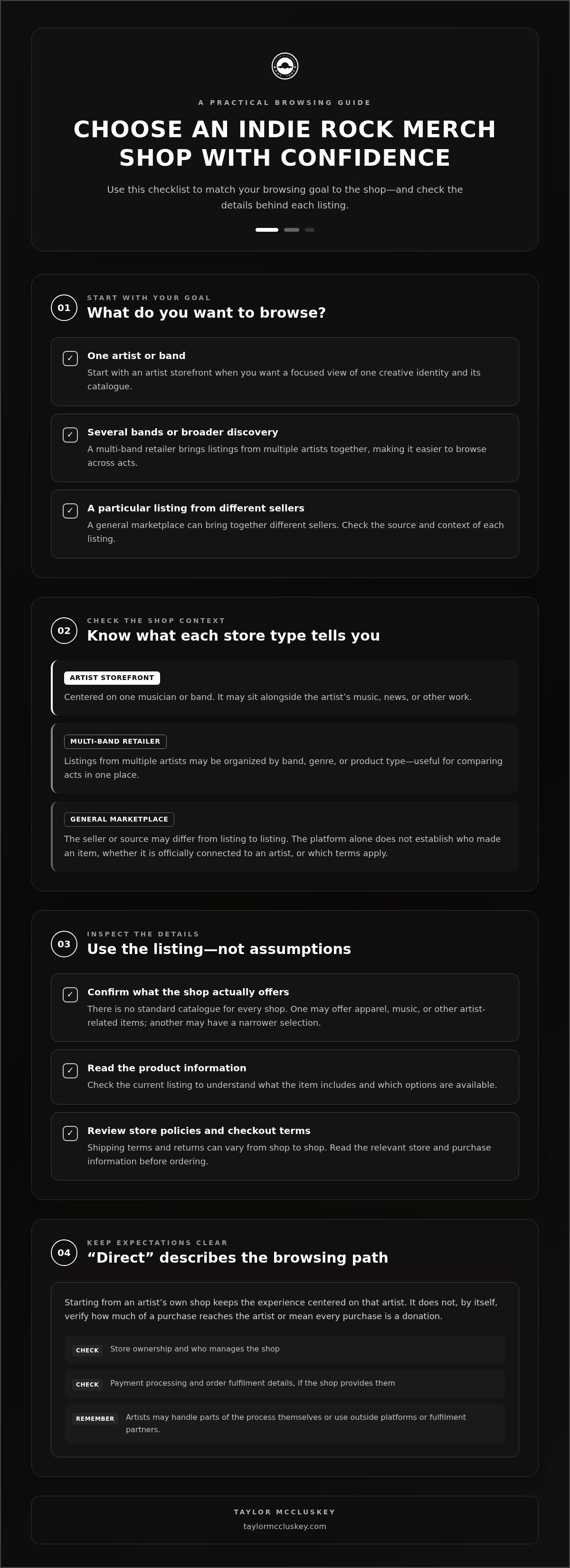
A Practical Checklist for Choosing an Indie Rock Merch Shop
A clear listing helps you make a considered choice. Before buying from an indie rock band merchandise shop, use this checklist to compare the information the store displays. Policies and product details can differ between shops and sometimes between items in the same shop. Rely on the relevant listing and store policy rather than assuming one set of terms applies everywhere.
- Identify the artist connection. Check which artist or band the storefront represents and whether it is linked from that artist’s online presence. On a retailer or marketplace, review the individual listing and seller information. A logo or artist name can provide context, but by itself doesn’t prove who made, sells, or fulfils an item.
- Read the item description. Look for details relevant to your choice, such as the item type, available options, sizing or format notes, and any images or descriptions. Information varies by listing. Don’t assume that a detail is standard across products, or infer material, fit, or other specifications that the page doesn’t state.
- Review the store policies. Read the displayed shipping and returns information before ordering. Terms may vary by shop and, in some cases, by item or destination. If the store explains cancellations, exchanges, or returns, make sure you understand those terms before continuing. Policies you’ve seen at another store may not apply here.
- Check the checkout details. Before placing an order, review the payment options and the information in the order summary. Confirm that the selected item and any chosen options match what you intended. Use the summary to catch selection mistakes before completing the transaction.
Check the artist connection and product information
Start with the store context, then look closely at the specific listing. An artist’s own website may bring the shop together with music or updates, while a larger retailer may identify the band on each product page. Check the description for details and options that are actually provided. Don’t assume licensing marks or manufacturing claims are universal, or that their presence alone answers every question about a listing.
Review store terms before completing an order
Shipping, returns, sizing, stock information, and payment terms aren’t identical across shops. Read the relevant store policy and item notes, especially if fit, format, or delivery arrangements affect your decision. If a detail isn’t displayed, don’t fill the gap with an assumption based on another retailer. Use the information provided for that store and listing to decide whether the purchase suits you.
For a focused example of an independent artist’s online presence, explore Taylor McCluskey’s official merchandise shop and browse its current offering. Taylor McCluskey is an independent musician and multidisciplinary artist, and the website brings music, updates, and an online shop together.
Explore Taylor McCluskey’s Indie Rock Merchandise Shop
After comparing artist storefronts with larger retailers, you can apply the same focused approach to an independent artist’s online space. Taylor McCluskey is an independent musician and multidisciplinary artist with an online shop. The artist merchandise offering sits within a wider creative presence that includes music and updates.
A shop connected to an independent artist
An artist-centered shop gives fans a place to explore merchandise in the context of the person behind the work. Taylor McCluskey’s website brings together music, updates, and the online shop, so browsing can sit naturally alongside discovering the artist’s wider creative activity. You can move between those parts of the site and decide whether you’d like to explore the shop further.
This differs from starting with a multi-band retailer. Instead of opening a broad catalogue, you begin with one artist’s online presence. That focus can suit fans who already know whose work they want to explore, while leaving the decision to browse or buy entirely up to each visitor.
Explore the official shop
If you’re looking for an indie rock band merchandise shop, the store format is only part of the decision. You may want to learn more about an artist, browse the current shop listings, or keep music and merchandise discovery in one online destination. Taylor McCluskey’s official shop offers a direct place to explore the artist merchandise offering without starting in a multi-artist catalogue.
As you browse, use the current listing information to understand what the shop presents. Product names, specifications, prices, shipping terms, and availability can vary or change, so base your decision on the details shown for each listing. The shop is the reference for its current offerings and displayed information.
Whether you’re discovering Taylor McCluskey for the first time or already follow the artist’s work, the website brings music, updates, and shopping together. Explore the official shop and review its current listings at your own pace.
Explore Taylor McCluskey’s official shop
Make Your Next Discovery Your Own
The right next step is the one that suits your curiosity. You might have a particular artist in mind, or be ready to discover someone new. Let that guide where you browse, and use the shop’s current information to decide what feels right. An indie rock band merchandise shop can be more than a place to find artist-related goods; it can also lead you back to the music and creative work that first caught your attention.
Taylor McCluskey is an independent musician and multidisciplinary artist. The website brings together music, updates, an online shop, and an artist merchandise offering. Explore the official shop to see what’s currently presented, then choose how you want to connect with the work.
Explore Taylor McCluskey’s official shop and continue your discovery from there.
Frequently Asked Questions
What is an indie rock band merchandise shop?
An indie rock band merchandise shop is an online storefront for goods connected to an indie rock artist or band. An artist-focused shop centers on one act, while a general retailer may carry merchandise from many acts. The range and store arrangements differ. One shop may group several kinds of goods, while another may have a narrower focus. Read the shop and item pages to understand what they offer.
Is an artist’s official merchandise shop different from a band merch retailer?
Yes. An artist’s official shop centers on a particular artist, while a multi-band retailer organizes merchandise from multiple acts. Either type may offer different product categories and browsing features. Neither format alone guarantees quality, authenticity, lower prices, or a particular share of proceeds for an artist. If you’re deciding between similar listings, compare the product descriptions and terms shown by each store.
Can buying from an indie artist shop support the artist?
Buying through an artist’s own shop is a direct way to engage with their storefront, but it doesn’t establish how revenue is distributed. Artists and shops may have different operating arrangements, including how orders are handled. If your main goal is to understand the financial impact, don’t assume a purchase goes entirely to the artist unless the shop explains this. Merchandise can still be an optional way to connect with an artist’s work.
How do I know whether a rock band merchandise shop is official?
Look for a link to the shop from the artist’s own website, then check whether the storefront clearly identifies the artist or band. Review the listing and store information for context about the seller and item. A familiar logo, visual style, or single badge isn’t conclusive on its own. If you arrive through a search result or social post, compare the destination with the artist’s linked online presence before ordering.
What should I check before ordering from an indie rock merch shop?
Read the item description and the shop’s displayed details about sizing, availability, payment, delivery, and returns. If an item has size options, for example, check the specific listing rather than relying on sizing information from another store. Terms can differ by shop and item. Review the order summary before checkout to make sure the selected item and options match what you intended.
Are indie rock band merchandise shops only for T-shirts?
No. Merchandise categories depend on the artist and retailer. Some storefronts present more than one kind of item, while others focus on a smaller selection or a particular category. Don’t assume a shop carries a specific product based on its genre or name. Browse its current categories and individual listings to see what’s offered. The item pages provide the details you need to decide whether something suits your interests.
Should I shop at an artist’s store or a multi-band retailer?
Choose based on what you want to find. If you have one artist in mind, their own store is a natural place to begin. If you’re comparing acts or browsing across categories, a multi-band retailer may fit your search better. Neither format is universally preferable. A fan seeking a particular release can focus on artist-related pages, while someone exploring new music may prefer browsing several bands together.


