

A vinyl collection doesn’t need to start with a shopping spree. The best way to start building a vinyl record collection is to choose albums you’ll enjoy listening to, then add records gradually around a personal interest rather than treating them as investments. Let your first choices set the direction, not a streaming library or pressure to own everything.
It’s natural to want a clear starting point. Vinyl can bring music into focus, from hearing an album played front to back to holding and displaying its artwork. A purposeful collection makes each addition feel considered.
This guide will help you choose a reason to collect, set a steady pace for finding records, and explore beyond one genre without losing your point of view. You’ll also learn what to consider when buying used albums and assembling a simple listening setup. Start with what moves you, then build from there.
Key Takeaways
- Choose a personal reason to collect, then let it guide which albums earn a place on your shelves.
- Set spending limits and build your collection over time instead of chasing every record at once.
- Use listening habits and curiosity to explore new genres while keeping your collection cohesive.
- Focus on the records and basic listening gear that suit your goals, and assess used albums carefully.
1. Choosing a reason to collect
A clear purpose makes each purchase easier to judge. Treat vinyl as a personal interest, not a financial investment: choose records you want to hear, study, display, or use to support working musicians. A practical answer to how to start building a vinyl record collection is to name your reason first, then let it guide your must-have albums.
Build your first wish list around albums you’ll enjoy engaging with, rather than copying your streaming library. Choose a few personal anchors, such as Miles Davis’s In a Silent Way, FKJ’s Just Piano, or Weyes Blood’s And In The Darkness, Hearts Aglow. Add a title because you love the full album, its artwork, or the story behind its music.
New records are newly manufactured copies; used records have had a previous owner; reissues are later releases of albums first issued earlier. A reissue can be new or used, so check its release details as well as its physical condition.
For a beginner setup, match the turntable’s output to your speaker system. Some turntables connect directly to powered speakers, while others need a receiver or separate phono preamp. Make sure the components work together.
Records come in different sizes, speeds, and formats. Check the record label or sleeve for its playback speed, then select the matching turntable setting. The format determines how the music is presented and played.
Inspect used records under good light. Look for deep scratches, warping, or visible residue, then check the sleeve for seam splits or water damage. A play test can reveal noise or skips that appearance alone won’t show.
Find records in local shops or online listings. In person, handle used records by their edges. Online, compare pressing details, condition notes, seller photos, and shipping costs before ordering.
Clean records with a record brush, keep them in protective sleeves, and store them upright away from heat and direct sunlight. Handle them by the edges rather than touching the playing surface.
For affordable finds, browse bargain bins and compare the exact pressing across listings. Shipping can outweigh a low record price. Avoid impulse buys, vague pressing details, and claims that a record’s value will rise. A common beginner mistake is buying for investment or quantity instead of choosing music you’ll return to.
2. Building a collection gradually
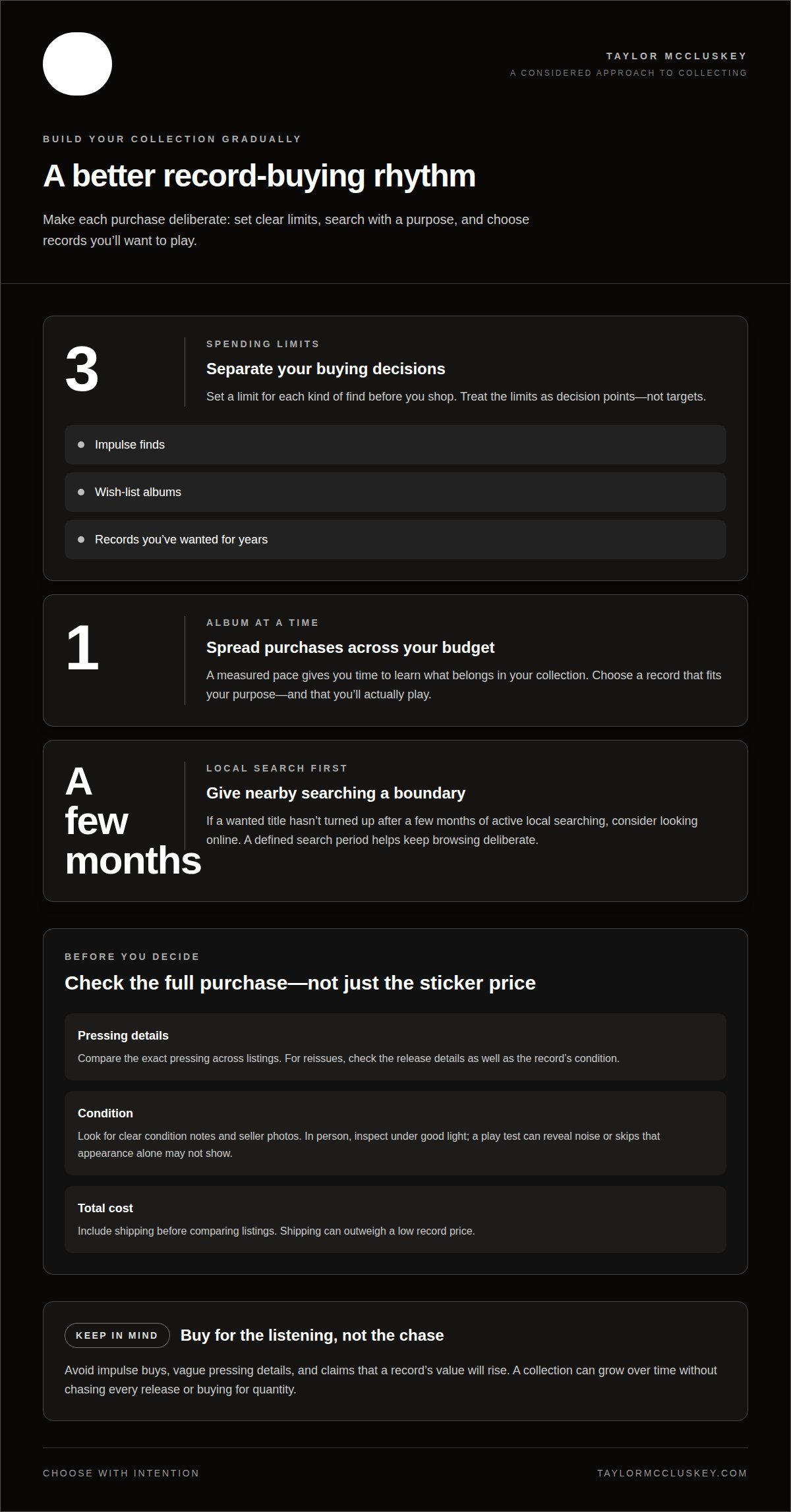
A measured pace gives you time to learn what deserves a place in your collection. Before shopping, set separate limits for impulse finds, wish-list albums, and records you’ve wanted for years. These limits make it easier to leave a tempting copy behind when its condition or price doesn’t suit your plan. Keep a running list of titles, pressing details, and the most you’re willing to spend.
Your starting total depends on whether you already own listening equipment, how many records you buy, and whether you choose new or used copies. Buying one album at a time lets you spread purchases across your budget.
Make a routine rather than chasing every release. Set aside an amount you can comfortably spend, then choose an album that fits your purpose. Inspect the copy and make sure it’s an album you’ll play, not just a cheap addition.
Use your wish list to guide local searches. If a wanted title doesn’t turn up after a few months of active searching nearby, consider looking online. Compare the pressing, condition, and total cost, including shipping, before deciding. A limited search period prevents endless browsing and keeps online purchases deliberate.
Leave room for discovery. When a live performance or a friend’s recommendation introduces you to an artist, add one record and listen closely before buying more. For another path into current music, explore music from working artists as you plan future additions.
Treat spending limits as decision points, not targets. Before shopping, decide what you’re willing to spend on an impulse find, a wish-list album, and a record you’ve wanted for years. Compare each candidate with its limit, and pass if its condition or total cost doesn’t suit your plan.
If a title hasn’t turned up nearby, use a few months of active local searching as a general rule before considering an online purchase. Then assess the pressing, condition, and full cost instead of letting scarcity make the decision for you.
3. Building a diverse collection across genres
A varied collection can still have a clear identity. Connect records through mood, instrumentation, production, or lyrical themes. For example, pair an intimate vocal album with an instrumental record, then notice which details carry across both. This creates a listening path rather than a shelf organized only by genre.
Use a familiar artist as a bridge to a new sound. If you enjoy Bon Iver’s layered arrangements, explore another album with textured vocals or unconventional production. If you like Junip’s understated atmosphere, try a record with similarly spacious arrangements, even if it belongs to a different genre. Let one specific musical quality guide your next choice.
Keep a short discovery list as you listen. Write down an unfamiliar instrument, rhythm, or collaborator that catches your attention, then follow that lead. A Brazilian album such as Arthur Verocai’s self-titled record can open a route into other Brazilian music, orchestral arrangements, or jazz-influenced sounds. Choose one direction at a time, and listen before buying.
Make each addition answer a different question. Does this record introduce a new region, era, vocal style, or production approach? If several albums serve the same purpose, prioritize the one you expect to revisit. A collection can hold familiar favorites alongside deliberate experiments without giving every genre equal space.
Try a simple listening exercise: choose two records that seem unrelated, such as an acoustic folk album and a groove-led instrumental record. Note one element they share, then search for an album that connects those sounds. You might follow percussion, harmony, or atmosphere. This creates a personal chain of discoveries, with each record expanding your collection in a meaningful direction.
Review your shelves periodically. If one sound dominates, choose a contrasting record next. If a genre feels unfamiliar, start with an album recommended by a trusted listener, then explore its credits and related artists. Let curiosity set the direction, and let your own listening keep the collection coherent.
4. Essential Vinyl Records and Gear for Beginners
Start with records you’ll play, then build a listening setup around them. A beginner doesn’t need a large shelf or elaborate equipment. Choose a few albums that suit your listening habits, and prioritize a reliable turntable, compatible speakers, and any receiver or phono preamp the system requires.
Check whether the turntable has a built-in phono preamp, then match its output to your speakers. Powered speakers can connect directly to some turntables; passive speakers need an amplifier or receiver. Compatibility matters more than adding extra components.
Place the turntable on a stable, level surface, away from speakers that could transfer vibration. Keep its dust cover clean, and follow the manufacturer’s setup instructions for the stylus and tracking force. A record brush helps remove loose dust before playback. Handle each disc by its edges and return it to its sleeve after listening.
Choose your first albums for repeat listening, not just shelf appeal. A strong starting selection might include a familiar favorite, a full album you’ve been curious about, and a record with a different sound. Check the playback speed printed on each label or sleeve, and set the turntable accordingly. This simple habit helps prevent playback problems.
Listen closely to a new setup before adding more equipment. If vocals sound distorted, check the stylus, connections, and speaker placement first. If the sound is too quiet, confirm whether the system needs a phono preamp. These basic checks can reveal setup issues without turning a starter system into an unnecessary upgrade project.
Build your listening library alongside your setup. Explore music to add to your listening rotation, then choose albums that fit your own taste and equipment.
Taylor McCluskey: Music Albums and Singles
Taylor McCluskey offers music albums and singles for listeners exploring an artist’s work while building a collection with intention. Listening to an artist’s albums and singles can help you discover a sound, follow its development, and decide what resonates with you. Let each release be a starting point for your own listening, rather than assuming every format or title belongs in your collection.
Use that approach to connect a record-buying habit with music made by a working artist. Listen first, notice which songs or arrangements stay with you, then choose the format that suits your collection. Explore Taylor McCluskey’s music and visit taylormccluskey.com to learn more.
Let Your Listening Lead Somewhere New
A record collection can become a record of your changing taste. Let a track lead you toward a new artist, a live performance, or another creative medium. That curiosity keeps listening active, even after you’ve found your first favorites. If you’re considering how to start building a vinyl record collection, think beyond the next purchase: consider the music and creative work you want to follow.
Taylor McCluskey’s offerings connect music with the wider creative process, including music albums and singles, film production services, and concert tickets. Explore them to discover music, follow film work, or experience a live performance.
Contact Taylor McCluskey to continue exploring. Let your next discovery come from curiosity, and give your collection room to grow with you.
Frequently Asked Questions
How do vinyl record sizes, speeds, and formats work?
Records come in different sizes, speeds, and formats. Check the label or sleeve for the playback speed and set the turntable to match. The format determines how the music is presented and played.
Where can you buy vinyl records online and in local record stores?
You can buy records at local shops or through online listings. When shopping online, compare pressing details, condition notes, seller photos, and shipping costs. Consider searching locally for a few months first.


