

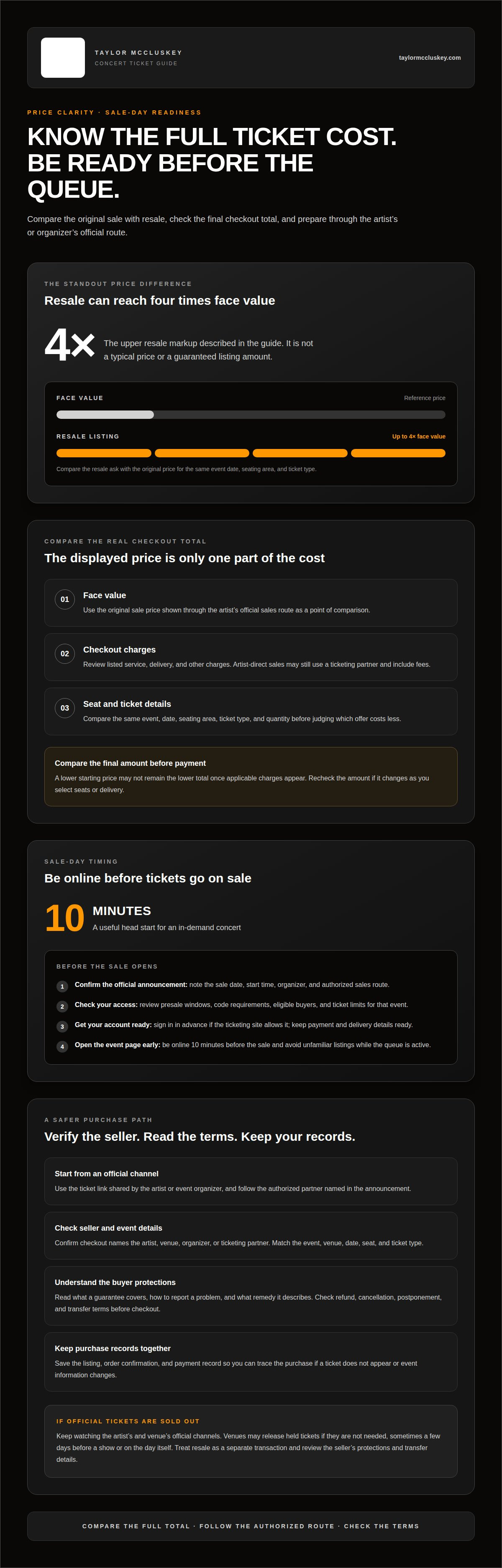
Start with the artist’s official ticket link or the event organizer’s authorized sales channel. Buying concert tickets directly from artists can make it easier to identify the seller and review the purchase terms. Resale listings may reach as much as four times a ticket’s face value.
It’s sensible to want a genuine ticket, clear buyer protections, and a fair comparison before you commit. This guide explains how to assess authenticity and guarantees, compare prices including added charges, and prepare before tickets go on sale. You’ll also learn how artist announcements, mailing lists, and presales can help you find the right sales channel and be ready when the queue opens.
Key Takeaways
- Start with the artist’s or event organizer’s official sales channel, then review the ticket details and buyer terms before purchasing.
- Compare the full checkout total, not just the displayed ticket price, and weigh seat location and purchase conditions.
- Get ready before the sale: follow announcements, join mailing lists, and learn how presales and ticketing queues work.
- When you’re looking for tickets to Taylor McCluskey’s performances, explore his concert ticket offering as your next step.
1. Ticket authenticity and buyer guarantees
Buying concert tickets directly from artists starts with a clear sales path. Follow the ticket link shared through the artist’s official channels, then check that checkout details match the event, venue, date, and ticket type you selected. Keep your order confirmation and payment record together. These details help you trace the purchase if the ticket doesn’t appear in your account or the event information changes.
A familiar logo or polished listing alone doesn’t establish who is selling the ticket. Confirm that checkout names the artist, venue, organizer, or their ticketing partner as the seller. Read the buyer guarantee’s exact terms: what it covers, how to report a problem, and what remedy it describes. A guarantee is useful only if you understand its scope and follow its claim process.
Refund, cancellation, and transfer rules depend on the artist’s and venue’s stated purchase terms. Read the policy before checkout, including what it says about a canceled or postponed show and whether ticket transfers are permitted. Resale purchases are subject to the resale seller’s and platform’s terms, so don’t assume they match the original sale.
If official tickets are sold out, keep watching the artist’s and venue’s official channels for updates. Venues may hold tickets for emergencies and release them if they aren’t needed, sometimes a few days before a show or on the day itself. Third-party resale sites typically list tickets before the organizer’s on-sale day and feature thousands of events. Treat those listings as separate transactions, and review the seller’s protections and transfer details before paying.
Compare the event date and seat details in the listing with those shown at checkout. Save the listing and final order confirmation. If the event page directs fans to an authorized ticketing partner, use that route rather than a search result that only resembles an official page. Checking the seller, policy, and purchase record makes authenticity easier to assess.
2. Concert ticket prices
Buying directly from an artist doesn’t automatically mean a lower ticket price than buying through Ticketmaster or another ticketing platform. The total depends on the event’s face value, the seller’s checkout charges, and the seat or ticket type. Compare the final amount shown before payment, not just the first price displayed.
Resale listings can change the comparison sharply. Third-party resale sites may list tickets for as much as four times their face value. Compare a resale listing with the original price shown through the artist’s official sales route. Check that both listings describe the same date, seating area, and ticket type before deciding.
Direct artist sales may use a ticketing partner, so the artist’s link doesn’t necessarily mean checkout has no service charges. Fees depend on the seller and ticketing process. Review the checkout breakdown for service, delivery, or other listed charges before confirming payment. If the total changes as you select seats or delivery, compare that updated amount.
To compare offers fairly, note the event, seat location, ticket quantity, and full checkout total for each option. A lower starting price may not remain the lower total once applicable charges appear. A resale listing may also carry a substantial markup, even when it shows the same event and seat category. Prioritize the total and exact ticket details.
Artist-direct prices aren’t guaranteed to undercut Ticketmaster or other platforms. The useful distinction is between the original sale price and a resale asking price, which may reach four times face value. For an artist’s own ticket option, explore concert tickets and compare the event details and checkout total shown for your selection.
3. Preparing before tickets go on sale
Start with the artist’s official announcement and note the sale date, start time, and event organizer. Join the organizer’s mailing list to receive concert announcements and ticket-sale details. Keep those messages accessible so you can quickly find the correct sale information.
Next, identify the authorized sales route. The event organizer may sell tickets directly or use a ticketing partner. Follow the route named in the event announcement, then create an account if the ticketing site offers advance login. Having your account ready can reduce setup steps when the sale opens.
For an in-demand concert, be online 10 minutes before tickets go on sale. Open the event page early and sign in if the ticketing site allows it. Keep your payment and delivery details ready, and avoid opening multiple unfamiliar listings while the queue is active.
Ticket limits, presale codes, and eligible-buyer rules are set for each event and sale window. Read the event terms for the permitted ticket quantity, who can use a code, and whether access is limited to a particular group. Don’t assume one event’s code or purchase limit applies to another.
An artist fan-club presale gives eligible fans an earlier chance to buy, which can help avoid long ticket queues. The artist or organizer sets eligibility and access instructions. Any membership fee depends on the fan club’s terms, so review them before joining. A mailing-list subscription may separately provide sale announcements.
Before sale day, save the official event announcement and note any presale window separately from the general sale. If the organizer sells through its own website, contact the organizer for guidance about the buying process and presales. This can clarify which account or access details matter for that specific event.
Use a short preparation checklist: confirm the event page, sale time, account login, ticket limit, and any code requirements. These steps keep your focus on the authorized checkout when tickets become available.
4. Which artist websites and mailing lists offer presales or direct ticket sales?
Start with the artist’s official website and social channels. Look for a tour announcement naming the event organizer or ticketing partner and providing the authorized sales route. Some artists sell tickets directly; others send fans to a ticketing partner. The announcement clarifies which path applies to that show.
An artist mailing list can deliver concert announcements, sale dates, and presale instructions to your inbox. Join through a sign-up form linked from an official artist channel. Keep the confirmation email, then watch for a message naming the event, presale timing, and access steps. A mailing-list subscription and a fan-club membership may have different terms.
Presales can give fans an earlier opportunity to buy, which may help avoid long ticket queues. They don’t guarantee that every subscriber will get a ticket. Access may require a code, account sign-in, or eligibility under the artist’s stated terms. Read the announcement carefully and note whether the presale applies to your chosen city and event.
Before using a presale link, compare its details with the artist’s announcement. The artist name, venue, event date, and ticketing destination should match. If the message names an organizer, use the sales route it identifies rather than an unrelated result. For example, an artist might announce a presale by email while directing purchases to a ticketing partner.
Keep your search focused on official channels. A fan forum or repost can point you to an announcement, but the original artist message provides the relevant sale instructions. Save the email or announcement so you can find the presale code and timing without relying on memory. Don’t share a code if its terms restrict access to eligible buyers.
For a direct artist sale, look for an event page linked from the artist’s own channel. For a presale, look for the artist’s mailing-list message or fan-club instructions. Explore artist ticket information as you plan which announcements to follow.
Official artist websites may link to direct ticket sales, while official mailing lists can send presale instructions. Fan-club communications may also provide access details, subject to the artist’s stated terms.
Taylor McCluskey: Concert Tickets
Taylor McCluskey offers concert tickets for fans who want to attend his live performances. Before purchasing, use the event and checkout details to identify the performance you’re selecting and understand the terms that apply. Focus on the show, ticket information, and purchase conditions rather than assuming they match another artist’s sale.
Buying directly from an artist can give fans a clear path to the artist’s ticket offering. Taylor McCluskey also offers artist merchandise, music albums and singles, and film production services. For this article’s focus, concert tickets are the natural next step if you’re ready to explore his live work. Contact Taylor McCluskey with questions.
Make Your Next Concert Plan Count
A thoughtful approach to buying concert tickets directly from artists starts with deciding what you want from the experience. Is it a night out with friends, a chance to see a favorite performer, or an opportunity to discover someone new? Let that priority guide your choices, so the purchase supports the experience you’re looking forward to.
Give yourself room to make a considered decision. Choose a performance that fits your plans, take time to understand the purchase details, and proceed when the choice feels right for you. Concerts are more than a date on the calendar. They’re a chance to connect with music and the people who create it.
If you’d like to take the next step, contact Taylor McCluskey to discuss tickets. Here’s to finding a show that stays with you long after the final song.
Frequently Asked Questions
What Is the Best Place to Buy Concert Tickets?
Start with the sales channel identified by the artist or event organizer for that specific concert. If the artist’s announcement sends you to a ticketing partner, that partner is the intended route. Follow the event listing from the announcement rather than choosing a result based only on its position in search results.
How can I buy concert tickets directly from an artist's official website?
Open the artist’s official site and look for tour or live-event information. Select the relevant performance, follow its ticket link, and complete the transaction through the destination provided. Before paying, make sure the event and ticket details match your plans. Save the order confirmation as a record of your purchase and selected performance.
How can I verify that an artist's ticket link or ticket seller is official?
Use a link published on the artist’s official website or in an original announcement from the artist. Check that checkout identifies the seller and displays the same artist, event, and venue. A reposted link or familiar-looking logo alone doesn’t establish that a seller is authorized. If the link’s destination differs from the announcement, return to the original source.
Can I buy tickets directly from an artist at the venue box office, and how does that compare?
Some venues sell tickets through a box office, but that option depends on the venue and event. Check the event’s stated sales channels before travelling. A box-office purchase may let you speak with venue staff in person, while an online purchase can be completed remotely. Compare the available ticket details and purchase terms for the same performance.
What are the risks of buying concert tickets through social media or unofficial sellers?
Unofficial posts and sellers can expose buyers to misleading listings, duplicate or invalid tickets, and unclear transfer or refund terms. A seller may also disappear after payment, leaving you with few practical options. Don’t treat screenshots, direct messages, or a low asking price as proof. Use a sales route identified by the artist or organizer instead.


