

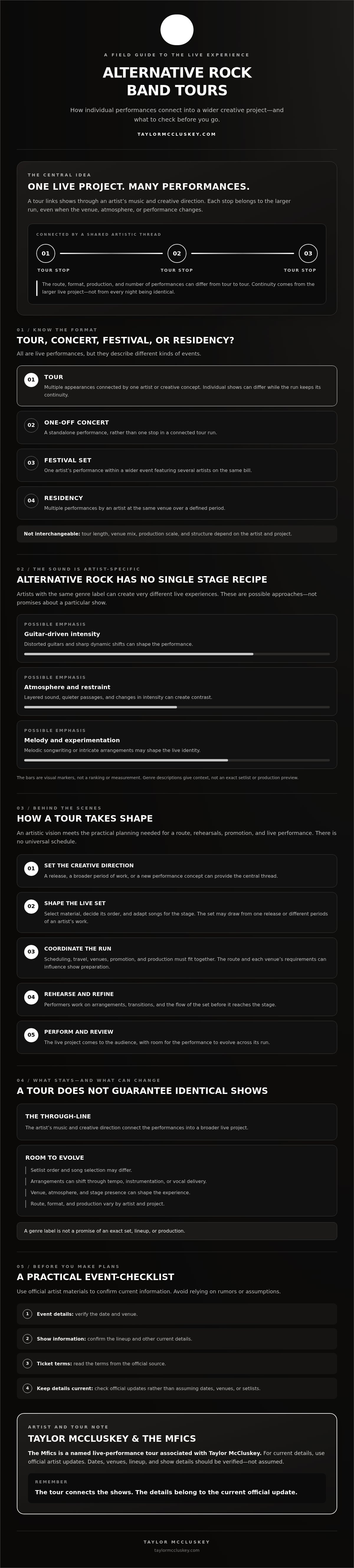
What makes alternative rock band tours more than a run of dates? They connect individual performances through an artist’s music and creative direction. The setlist, venue, and atmosphere may change along the way, but each show belongs to a broader live project.
A tour stop, a one-off concert, and a festival appearance can share the energy of live music, but they serve different purposes. Fans often want to know what’s consistent from show to show, what might change, and where to find reliable details instead of relying on rumors.
This guide explains how tours take shape, how they differ from single concerts and festival sets, and which parts of a performance may vary. It also offers practical tips for checking event information. The Mfics is a named live-performance tour associated with Taylor McCluskey. For current details, check the artist’s official materials rather than assume dates, venues, or setlists.
Key Takeaways
- See how alternative rock band tours connect individual performances to a wider creative period, while each artist’s sound shapes a distinct live identity.
- Understand the broad stages behind a tour, from creative planning and rehearsal to performance and review.
- Learn which parts of a show may vary from night to night, and why a tour doesn’t guarantee identical performances.
- Use a practical checklist to prepare for a show, including which event details and ticket terms to confirm through official sources.
- Follow Taylor McCluskey and The Mfics through official artist updates, and verify current tour details before making plans.
What Are Alternative Rock Band Tours, and What Makes Them Distinctive?
Alternative rock band tours are connected live performances by an artist or band, often linked to a music release, a creative direction, or a period of work. The shows form a larger live project, though the route, format, production, and number of performances can differ from tour to tour. A concert tour gives fans multiple opportunities to experience an artist’s work live, while leaving room for the performance to evolve across its run.
Alternative rock covers a wide range of sounds. It can include guitar-driven intensity, atmospheric textures, melodic songwriting, experimental arrangements, or combinations of these approaches. There isn’t one required sound or stage format. Each artist builds a live identity through musical choices and performance style.
How a Tour Differs from a Single Concert or Festival
A one-off concert is a standalone performance. A tour links multiple appearances under a shared artist or creative concept, giving the run continuity even when individual shows differ. A headline tour typically centers on one main act, while a festival features several artists on the same bill. A festival set is part of a wider event, rather than one stop in a single artist’s tour.
A residency is different again: it brings an artist back for multiple performances at the same venue over a defined period. These formats can serve similar purposes, but they aren’t interchangeable. A tour’s length, venue mix, production scale, and structure depend on the artist and project.
What Alternative Rock Can Sound Like on Stage
Alternative rock isn’t one fixed recipe. Two artists with similar genre labels may create very different live experiences. One performance might emphasize distorted guitars and sharp dynamic shifts; another might lean on layered sound, restrained passages, or intricate arrangements. These are possibilities, not promises tied to the genre label.
Arrangement shapes how recorded material translates to the stage. A quieter section can make a louder passage feel more forceful. Changes in tempo, instrumentation, or vocal delivery can give familiar songs a distinct live character. Stage presence matters, too: an artist’s pacing and interaction with the audience help define the performance without changing its musical foundation.
Genre descriptions offer useful context, not a preview of an exact set or production. To understand a particular artist’s tour, check their official materials. The Mfics is a confirmed live-performance tour associated with Taylor McCluskey, but its dates, venues, lineup, and show details should be verified through current official updates.
How Alternative Rock Band Tours Come Together Behind the Scenes
A tour starts with an artistic direction, then takes shape through creative and practical decisions. A release may provide the central thread, but a tour can also reflect a broader period in an artist’s work or a new performance concept. There’s no universal schedule: timing and responsibilities depend on the artist, the people involved, and the scale of the run.
A tour takes shape when an artistic vision is matched with practical planning for the route, rehearsal, promotion, and demands of live performance.
From Musical Direction to a Live Set
The creative process often begins with a question: what should the audience experience? Artists select material, shape its order, and decide how songs will work in a live setting. The set may draw from one release or move across different periods of an artist’s work. Arrangement choices can shift a song’s energy, highlight a lyric, or help create a cohesive arc across the performance.
This work builds on the craft of writing and developing songs. Explore the songwriting process for rock musicians to learn more about how musical ideas take shape before they reach the stage. Once material is selected, rehearsal gives performers time to refine transitions and establish the flow of the set.
The Coordination Behind a Run of Shows
Creative decisions need a workable framework. Scheduling, travel, venue arrangements, promotion, and production all require coordination. The details connect: the route affects the sequence of performances, while each venue’s requirements can influence how a show is prepared. Technical planning matters, too. Berklee’s overview of live sound production provides context on the sound and production considerations involved in presenting music on stage.
Promotion helps audiences find event information, while each performance brings the planning into public view. After a run or individual show, artists may review how the material and logistics worked, then use those observations to inform future performances. The process isn’t identical for every act. A smaller or more limited run may call for different decisions than a larger production, and no single staffing model or timeline applies across the board.
These are general touring considerations, not a description of the specific arrangements behind The Mfics. For artist news and current information about Taylor McCluskey’s work, visit the official artist website.
Why Alternative Rock Tour Shows Can Differ from One Night to the Next
A tour creates continuity, not a promise that every performance will be identical. Artists may carry the same musical direction from one date to another while adjusting choices to suit the event, venue, or creative priorities. A past show can offer clues about an artist’s live approach, but it can’t confirm exactly what a future performance will include.
What May Stay Consistent Across a Tour
The artist’s identity and broad musical direction are usually the clearest threads connecting dates. A tour may reflect a particular release, a period in an artist’s work, or a live concept. Recurring themes can give the run a recognizable shape, but a shared concept doesn’t guarantee the same song order, arrangements, or transitions at every stop.
For example, an artist might keep a consistent balance between heavier and quieter material while changing how individual songs are arranged. That’s a general possibility, not a prediction about any particular tour. Official artist updates and confirmed event details are the best sources for what’s planned.
What Can Change Between Tour Dates
Setlist choices, song arrangements, pacing, and other performance details may shift. The venue and event format can also influence the context of a show. A festival appearance, for instance, takes place on a bill featuring multiple artists, while a headline tour date centers on one main act. Production and performance choices can vary between headline dates as well. Don’t assume an encore, guest appearance, audience interaction, or specific song unless it’s officially confirmed.
Fan posts and reports from earlier shows can be interesting, but they describe what happened at a particular performance. Treat them as observations, not guarantees for another date. For a specific event, check official artist or event information for confirmed details.
| Format | How it’s organized | What to expect |
|---|---|---|
| Tour date | One performance within a connected run | Part of a broader artist or creative context; details may differ by date |
| Festival appearance | One act among several on a shared bill | Shaped by the event’s lineup and format |
| Standalone concert | A single performance rather than a multi-date run | Organized around that event, without tour-wide continuity |
With alternative rock band tours, expect continuity in the artist’s identity alongside room for variation in the performance. Check the specific event details before you go, and enjoy each show as its own moment rather than a replica of the last.
How to Prepare for an Alternative Rock Band Tour Show
A little planning can make show day smoother, especially when event details or venue policies differ between performances. Before making travel plans, confirm the information for your specific date through official artist, event organizer, and venue channels. Don’t rely on an old listing or fan post for details that could change.
Before the Show: Confirm the Details
Use this checklist to verify the essentials:
- Confirm the date and venue. Check current artist or event-organizer updates, then verify the venue information for the event you’re attending.
- Review entry guidance. Check the organizer’s and venue’s current instructions for arrival, entry, and any event-specific requirements.
- Read venue policies. Review the venue’s rules and accessibility information so you can plan around your needs.
- Review ticket terms. Confirm the details attached to your ticket and use the authorized source identified by the artist or event organizer to check ticket information.
- Recheck before you leave. Look for official updates in case event details or guidance have changed.
Policies and terms can vary by event. Avoid assuming age restrictions, entry rules, or other conditions based on a different show. For a deeper look at evaluating ticket purchases, read this rock concert ticket sales guide.
At the Show: Make Room for the Live Experience
Plan your arrival around confirmed event guidance rather than an assumed door or performance time. Allow flexibility for the venue’s entry process, and check its policies before deciding what to bring. Once inside, follow staff instructions and respect the space of other attendees. Simple consideration helps everyone focus on the performance.
Expect the music to feel different from a recorded track. A live arrangement may shift in energy, pacing, or texture, and the room itself can shape how the sound comes across. That variation is part of experiencing a performance in person, not evidence that a particular song or moment is guaranteed.
For alternative rock band tours, preparation means confirming practical details while leaving room for the show to unfold on its own terms. Check Taylor McCluskey’s official updates for current artist and tour information before you go.
Following Taylor McCluskey and The Mfics Tour Through Official Updates
Tour plans can change, and an event listing shared online may not reflect the latest information. Start with the artist’s official channels, then confirm event-specific details with the organizer or venue. This is useful when following alternative rock band tours, where an announcement, an individual event listing, and a later update may serve different purposes.
What Fans Can Learn from Official Artist Channels
Taylor McCluskey’s website serves as a hub for artist news, updates, photos, and videos. Officially published information helps fans identify what has been confirmed and where to look for changes. If a post is reposted elsewhere, compare it with the original source before relying on its details.
Distinguish an announcement from speculation. Fan discussions, old listings, and reports from a past performance can be useful conversation, but they don’t confirm the details of another event. Check current official information for dates, venues, ticket availability, and show details. If a specific item isn’t published there, don’t treat guesses or outdated posts as confirmation.
For event-day planning, also use current guidance from the relevant organizer and venue. Artist channels may communicate tour news, while a venue or event organizer may provide practical entry information. Checking the appropriate source for each detail helps avoid acting on incomplete or outdated information.
Where The Mfics Fits into the Tour Conversation
The Mfics tour is a confirmed live-performance offering associated with Taylor McCluskey. That’s the reliable point of reference. Don’t assume details about its tour history, musical lineup, repertoire, production, or schedule without support from current official materials.
Specifics matter. Dates, venues, availability, and other show details require current official confirmation. A tour name alone doesn’t establish when or where a performance is happening, what it will include, or whether tickets are available. Verify those details before making plans, and revisit official updates if your plans depend on them.
To follow the artist’s work and check for confirmed news, explore Taylor McCluskey’s official site for music and updates. It’s a straightforward way to stay connected without relying on unverified claims.
Follow the Music and Stay Ready for What’s Next
Alternative rock band tours bring an artist’s creative direction to the stage across a connected run of performances. The experience can shift from show to show, so treat past setlists and fan reports as context, not guarantees. Confirm event details through official artist, organizer, and venue updates before making plans.
The Mfics tour is a confirmed live-performance offering from Taylor McCluskey. Rely on official information for current dates, venues, ticket availability, and show details. Taylor McCluskey’s website also shares news, updates, photos, and videos, making it a useful place to follow the artist’s work.
Ready to keep up with the latest? Explore Taylor McCluskey’s official site for music and updates. Check details at the source, follow the artist’s work, and make room for the energy of a live performance.
Frequently Asked Questions
What is an alternative rock band tour?
An alternative rock band tour is a connected series of live performances by an artist or band, often tied to a release, creative direction, or period of work. Each date is part of a wider run, though the route, venues, production, and performance details can differ. The genre covers varied sounds, so the experience depends on the artist’s own music and choices rather than one fixed alternative rock format.
What should I expect at an alternative rock concert?
Expect a live performance shaped by the artist’s sound, arrangements, and event setting. Songs may feel different from their recorded versions because live delivery can change the energy, dynamics, or texture. The setlist, staging, and other show details vary. Check the event listing and venue guidance before you go, and don’t assume there will be a particular song, encore, special guest, or audience interaction.
How long does an alternative rock band tour show last?
There isn’t one standard duration for an alternative rock tour show. Length can depend on the artist’s plans and whether the performance is a headline concert, festival appearance, or another event format. Check current event information from the artist, organizer, or venue for any published schedule. If an official source doesn’t state the performance length, don’t rely on estimates from a different show or fan discussion.
Do bands play the same setlist at every tour stop?
Not necessarily. A band may keep a similar musical direction throughout a tour while changing song selection, order, arrangements, or pacing between dates. Reports from earlier performances can offer a glimpse of what happened there, but they don’t confirm the next setlist. Treat a setlist as confirmed only if the artist or event organizer publishes it for that specific show. Otherwise, be prepared for variation.
How is a band tour different from a music festival?
A band tour connects performances by one artist or band across multiple dates. A festival brings several artists together on one event bill, with each act performing as part of the wider programme. A festival set may have a different context from a headline tour performance, but the format alone doesn’t confirm a specific set length or repertoire. Check the official event details to understand how each performance is scheduled.
How can I find official alternative rock tour dates?
Start with the artist’s official website or verified artist channels, then confirm event details with the organizer or venue. Taylor McCluskey’s official site shares news, updates, photos, and videos. The Mfics tour is a confirmed live-performance offering, but dates, venues, ticket availability, and show details require current official confirmation. Compare reposts or older listings with the original source before making plans.


